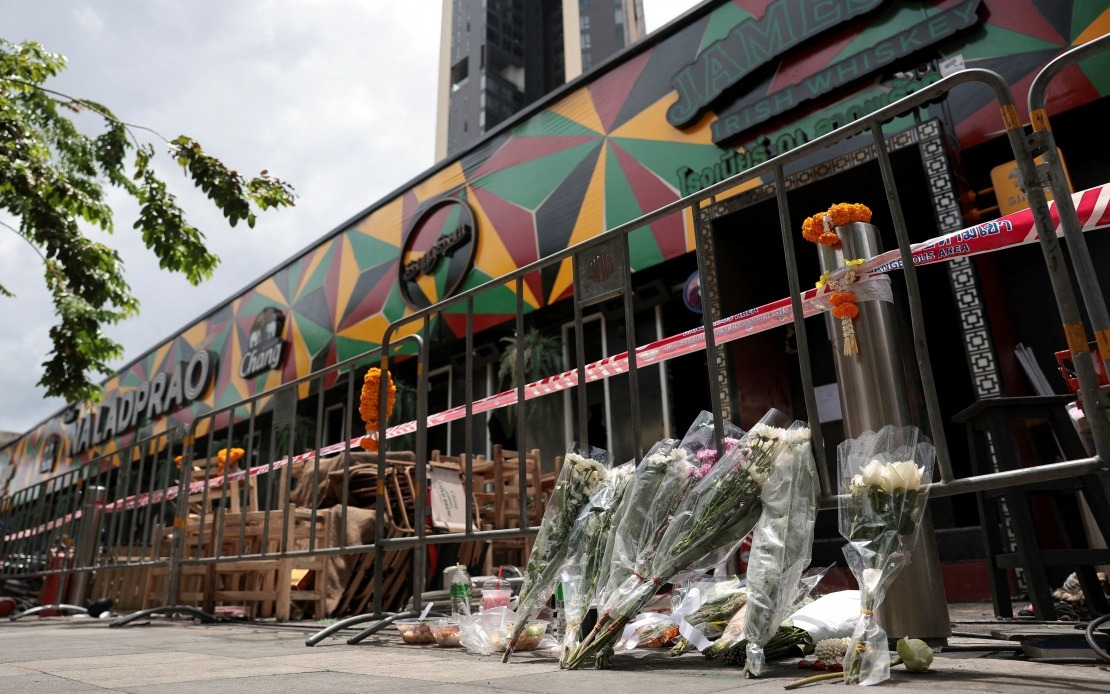
Thailand's deadliest entertainment venue fire in recent memory has claimed 32 lives, with the toll rising on Wednesday as two critically injured victims died in hospital, days after flames engulfed Rong Beer Na Lat Phrao in Bangkok's Lat Phrao district. The Bangkok Emergency Medical Centre, widely known as the Erawan Centre, confirmed that the two additional fatalities occurred at Paolo Kaset Hospital and Nopparat Rajathanee Hospital, bringing the number of victims who perished after hospitalisation to five. This tragic escalation underscores the severity of injuries sustained during the Monday night blaze and the ongoing struggle by medical teams to save those fighting for survival in intensive care units across the Thai capital.
The fire broke out shortly before midnight on Monday at the entertainment venue, which is located in Bangkok's Chatuchak district, though earlier reports identified the venue as being in the Lat Phrao area. The exact timing and rapid spread of the flames claimed numerous lives in what authorities are treating as a catastrophic incident requiring comprehensive investigation into multiple potential causes. As rescue operations concluded, medical personnel have been managing the aftermath, with 79 people injured in total requiring hospital treatment in the immediate aftermath of the disaster.
The current medical picture remains concerning, with ongoing hospitalisation requirements for dozens of survivors. According to the Erawan Centre's latest assessment as of 10 am on Wednesday, 44 injured persons had been discharged from various hospitals, representing those with less severe injuries who recovered sufficiently for release. However, 30 patients remain under medical care, including 15 individuals in intensive care units where they continue to receive life-support treatment for severe burn injuries and smoke inhalation. The remaining 15 hospitalised patients occupy general wards, indicating injuries requiring continued observation but not the critical intervention necessary in ICU settings.
The investigation into the cause of the blaze has identified several critical areas of concern that may have contributed to the high casualty toll. Investigators are examining whether emergency exit routes were blocked or inadequately maintained, a common factor in entertainment venue fires across Southeast Asia. The presence of flammable interior materials and furnishings—likely including decorative elements, seating, and other combustible fixtures typical in bars—is also under scrutiny as a potential accelerant that may have allowed the fire to spread with devastating speed throughout the venue. Additionally, authorities are probing the possibility of electrical faults or malfunctions that could have sparked the initial ignition, a concern often overlooked during routine safety inspections.
The tragedy has prompted swift governmental action aimed at preventing similar incidents across Thailand. Thai Prime Minister Anutin Charnvirakul issued directives on Tuesday ordering the Ministry of Interior to undertake nationwide inspections of buildings and entertainment establishments. This comprehensive safety audit will be conducted in coordination with the Bangkok Metropolitan Administration, which oversees the capital's municipal affairs, alongside local administrative organisations responsible for neighbourhood-level governance. The Department of Public Works and Town & Country Planning will assess structural and design compliance, while the Royal Thai Police will investigate potential criminal negligence or violations of building codes.
The scope of the government's response reflects the political pressure surrounding the incident and broader concerns about regulatory enforcement in Thailand's entertainment sector. By involving multiple agencies, authorities are signalling a commitment to systematic change, though questions remain about implementation capacity and whether existing regulations were adequately enforced before the fire. The coordination between these bodies will determine whether the inspections represent genuine safety improvements or more perfunctory compliance exercises that fail to address underlying systemic weaknesses in venue management and emergency preparedness.
For Malaysian readers, the Bangkok tragedy carries sobering implications for the region's entertainment and hospitality industry. Fire safety standards and enforcement mechanisms in Thailand, while comprehensive on paper, appear to have failed in this instance, raising questions about similar venues across Southeast Asia. Malaysia's own regulatory framework for entertainment establishments, overseen by state and federal authorities, should be viewed through the lens of Bangkok's experience—a reminder that written codes mean little without rigorous enforcement and workplace safety culture among venue operators.
The incident also highlights the vulnerability of workers and patrons in Southeast Asian entertainment venues, many of which operate in aging buildings with substandard safety infrastructure. The concentration of casualties at a single venue suggests rapid fire spread and evacuation difficulties, conditions that might exist in similar establishments throughout the region. Venue owners and managers across Malaysia, Singapore, and other ASEAN countries should review their emergency protocols, exit routes, and fire suppression systems as a precautionary measure inspired by this tragedy.
Investigators will likely face challenges in determining precise causation given the extensive fire damage that typically destroys evidence of ignition sources and early fire behaviour. Witness accounts from survivors currently in hospital may eventually provide crucial details about how the fire began and spread, but these investigations typically extend over weeks or months as forensic teams examine structural remains. The involvement of multiple agencies also raises the possibility of institutional finger-pointing rather than unified action, a common pattern in Thai disaster investigations that can delay necessary reforms.
The human cost of this disaster extends beyond the confirmed death toll, with long-term consequences for survivors suffering severe burns and trauma. Families of the deceased face grieving and potential financial hardship, as compensation claims and liability disputes typically follow such incidents in Thailand. International media attention to the fire has also drawn scrutiny to Thailand's safety standards in the tourism and entertainment sectors, potentially affecting the country's image and business confidence in these critical economic sectors.

