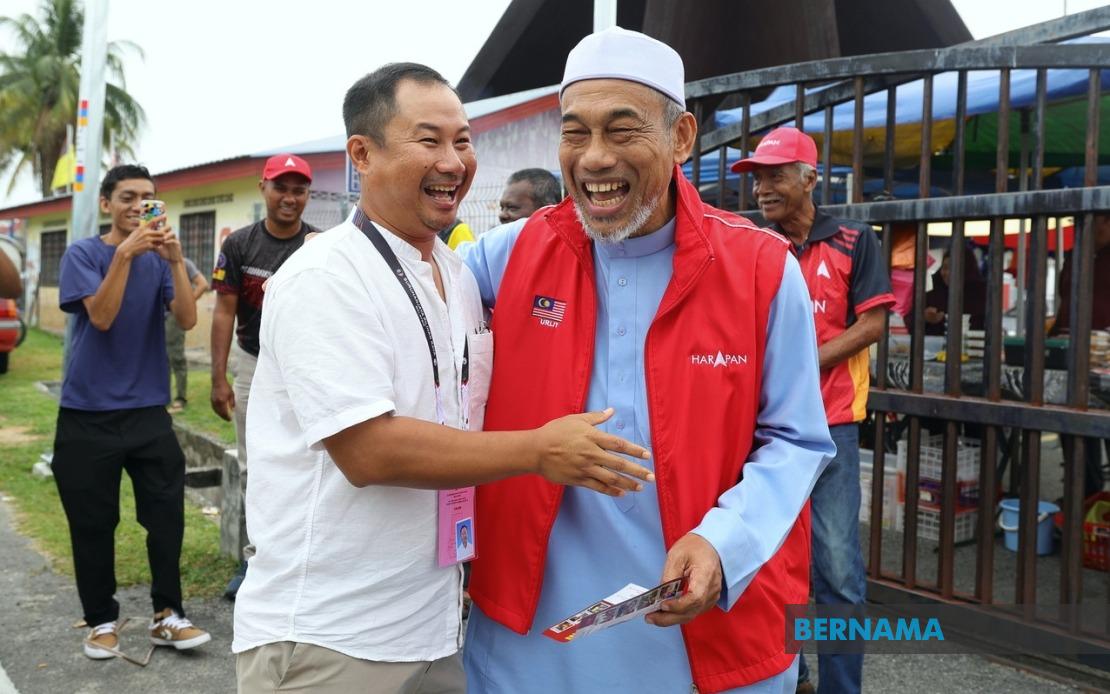
Pakatan Harapan's Datuk Bakri Sawir is making his bid to secure a third consecutive term representing the Klawang state constituency in the 16th Negeri Sembilan State Election, anchoring his campaign firmly on his service record as a two-term assemblyman and his emphasis on direct, personal engagement with constituents. At 67 years old, Bakri is running in a three-way contest that also includes Danni Rais, 38, representing Perikatan Nasional, and Muhammad Adib Musa, 25, from Parti Pribumi Bersatu Malaysia. The August 1 polling day represents a critical moment for the incumbent, who has made his accessibility and presence within the constituency a defining feature of his political identity since first winning election in 2018.
The Klawang constituency, with its comparatively modest electorate of fewer than 14,000 voters, has allowed Bakri to cultivate what he describes as close, personal relationships with many residents. This intimate scale of representation contrasts sharply with larger urban constituencies and has shaped his preferred campaign methodology. Rather than maintaining a traditional service centre model where constituents queue to present their problems, Bakri has pioneered what he terms a door-to-door approach, where he visits residents directly and delivers assistance at their homes. This strategy reflects a broader philosophy about the nature of political service that he believes resonates particularly well in a community where personal relationships and direct contact carry significant weight.
Central to Bakri's campaign messaging is the argument that consistent presence distinguishes him from opponents who appear only periodically. His commitment to living within the Klawang constituency since becoming assemblyman in 2018 means he remains accessible to residents throughout the year, not merely during election campaigns. This residential continuity, he contends, provides him with an informational advantage about local concerns and a relationship depth that cannot be quickly replicated by newcomers to the seat. The implicit comparison to representatives who emerge from the wider district to contest elections speaks to frustrations some constituencies experience with part-time or disconnected political representatives.
Beyond the mechanics of constituent service, Bakri frames his political engagement through a somewhat philosophical lens, describing politics as a vehicle for spiritual purpose. He has stated that he seeks to make politics an act of worship and a path to paradise, a framing that situates his service work within a moral and religious context. This positioning may appeal to voters who view effective governance as inseparable from ethical conduct, particularly in a constituency with significant Malay-Muslim demographics. Simultaneously, he demonstrates respect for political pluralism, acknowledging that not all constituents will support him and treating differing political views as legitimate choices rather than personal slights.
Looking forward, Bakri has identified several development initiatives that he intends to pursue if granted a third term. His longest-standing proposal involves establishing a higher education institution in the Jelebu district, specifically a Universiti Malaysia Negeri Sembilan, intended to bolster human capital development in the region. He acknowledges that current financial constraints present substantial obstacles to this ambitious vision, reflecting realistic appreciation for the fiscal limitations facing state governments. Nevertheless, the proposal demonstrates his thinking about the constituency's longer-term trajectory and positioning Jelebu as an education hub.
More immediately achievable projects form part of his practical development agenda. A Rest and Recreation Area planned for Tembun, Hulu Klawang represents infrastructure designed to create a proper stopover facility for travellers along key routes. Bakri frames this project explicitly in economic terms, contending that improved infrastructure will attract increased tourist traffic and generate commercial opportunities for local businesses and residents. The emphasis on infrastructure attracting economic activity reflects contemporary thinking about how rural constituencies can participate more fully in tourism-driven development without large-scale industrial transformation.
Additionally, Bakri proposes converting Bukit Tajali into a recreational park that would diversify local leisure and tourism offerings. Such transformation would extend beyond passive scenic visits to include active outdoor adventure tourism, potentially appealing to younger demographics and creating employment in hospitality and recreational services. These tourism-focused initiatives reflect broader regional trends toward positioning rural areas as destinations for urban visitors seeking experiential leisure rather than relying solely on traditional agricultural or extractive economies.
The Jelebu district's agrotourism potential also features in Bakri's vision, with particular emphasis on capitalizing on the British Memorial Stone's historical significance. This approach acknowledges how heritage sites can become anchors for broader tourism ecosystems, drawing visitors who then patronize local accommodation, dining, and retail services. The strategy represents economic diversification rooted in existing local assets rather than wholesale economic restructuring, a pragmatic approach for constituencies with limited capital resources and existing established attractions.
The electoral context adds urgency to these campaign promises. The Negeri Sembilan State Legislative Assembly was dissolved on June 5, with the Election Commission scheduling August 1 as polling day and July 28 for early voting. A total of 889,490 registered voters across the state will participate, comprising 867,151 ordinary voters along with 16,884 military personnel and their spouses and 5,455 police personnel voting early. The state-level contest occurs within Malaysia's broader political landscape of coalition competition, where Pakatan Harapan's performance in Negeri Sembilan contributes to the national political balance.
Bakri's three-way fight in Klawang reflects the fragmentation occurring across Malaysian electoral contests, where traditional two-candidate races have given way to multi-candidate competitions that can benefit candidates with concentrated support bases. His reliance on accumulated local goodwill and demonstrated service record suggests he is betting on voter loyalty and satisfaction with incumbent performance, a strategy that typically performs better in smaller constituencies where relationships matter significantly. Whether his grassroots engagement and development promises prove sufficient against two competing candidates remains uncertain as voting approaches, but his emphasis on continuous presence and practical constituent service addresses real voter concerns about political accountability and accessibility in rural constituencies.

