Bahrain has not accessed a $5.3 billion currency swap facility agreed with the United Arab Emirates, according to the kingdom's Minister of Sustainable Development and Chief Executive of the Bahrain Economic Development Board Noor bint Ali Alkhulaif, speaking to Reuters this week. The announcement comes as the island nation grapples with the economic fallout from escalating regional tensions and seeks to restore its cancelled Formula One Grand Prix to the international racing calendar.
The decision not to tap the emergency liquidity arrangement signals confidence in Bahrain's ability to weather current challenges despite mounting pressures on its finances. Yet the timing remains delicate, with the economy facing severe headwinds. Credit rating agency S&P Global has projected a 3 per cent economic contraction for the year coupled with a fiscal deficit approaching 8.5 per cent of gross domestic product, painting a troubling picture of a nation scrambling to maintain equilibrium amid geopolitical turbulence.
Bahrain finds itself particularly vulnerable among Gulf states to the reverberations of regional conflict. The kingdom was already wrestling with one of the heaviest debt burdens in the region when hostilities intensified, forcing policymakers to balance fiscal discipline against immediate survival needs. Recent Iranian attacks underscore the precariousness of the situation, with each incident threatening to compound economic damage at precisely the moment when the government had envisioned a year of structural reform and economic reconstruction.
Alkhulaif acknowledged the disruption bluntly: the year was supposed to herald a new chapter for Bahrain's development, but instead the kingdom has been forced into crisis management mode. Yet she insisted recovery momentum is already evident across multiple sectors. Manufacturing and logistics companies, facing unprecedented risks in shipping through the Strait of Hormuz, have begun establishing alternative routing arrangements that reduce exposure to the volatile waterway. More tellingly, regional tourism—which represented approximately 90 per cent of the country's 15 million visitors last year—has rebounded to near pre-war levels, suggesting that Gulf travellers' appetite for Bahraini leisure and business destinations remains largely intact despite safety concerns.
The decision to preserve the UAE currency swap rather than deploy it reflects a strategic calculation about maintaining future optionality. By keeping the facility in reserve, Bahrain signals to international creditors and investors that it retains emergency resources should conditions deteriorate further. This posture also preserves diplomatic flexibility with the United Arab Emirates, the provider of the lifeline, by avoiding immediate reliance on emergency support that might signal desperation to credit markets.
Foreign exchange reserves, however, have contracted to approximately $3 billion—their lowest level since the Covid-19 pandemic—raising legitimate concerns about the kingdom's ability to sustain its currency peg and meet import obligations. This vulnerability explains why the currency swap carries such symbolic importance, even if currently unused. The facility, secured by Bahrain's central bank in April, provides a crucial safety net that allows policymakers to make decisions based on economic needs rather than pure desperation.
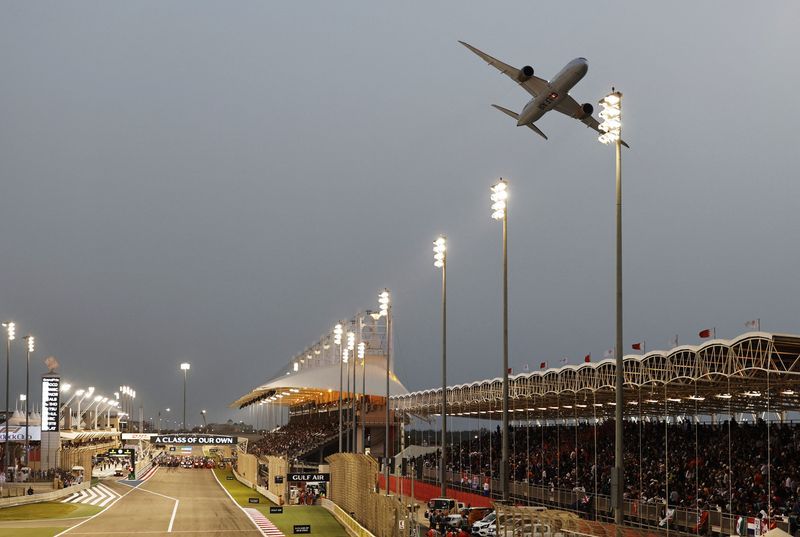
Parallel to financial negotiations, Bahrain is pursuing reinstatement of its Formula One Grand Prix, which was cancelled in March alongside Saudi Arabia's race following the outbreak of hostilities. The sport's calendar-makers are reportedly considering October 3-4 as a potential window, positioned between the Azerbaijan Grand Prix in Baku and the Singapore Grand Prix scheduled for October 11. The timing would require significant de-escalation of regional tensions, particularly any reduction in direct United States-Iran hostilities that currently keep regional actors on high alert.
Formula One's commercial and tourism value to Bahrain extends beyond mere sporting prestige. The weekend typically draws approximately 105,000 spectators, with international high-spending visitors representing 10 to 15 per cent of total attendance. For a nation seeking to project stability and normalcy to global investors and travellers, hosting a major international sporting event carries outsized symbolic weight. Alkhulaif suggested negotiations are ongoing over potentially reintegrating cancelled races into the calendar, though no formal confirmation has materialised and industry sources indicate a decision will be required fairly soon to permit teams adequate preparation time.
Longer-term, Bahrain appears positioned to reclaim the prestigious opening race slot of the 2026-27 season, owing partly to Ramadan scheduling shifting earlier that year. The kingdom would also host standard pre-season testing operations, cementing its status as a cornerstone venue for international motorsport. Yet all such projections remain contingent on sustained regional de-escalation, creating a frustrating uncertainty that compounds the broader economic anxiety already gripping policymakers.
For Malaysian and Southeast Asian observers, Bahrain's experience illuminates the vulnerability of Gulf economies to regional political instability and the interdependence of Gulf states despite rivalries. The willingness of the United Arab Emirates to provide substantial financial support to Bahrain, despite historical tensions, reflects shared interest in regional stability. The episode also underscores how international sporting events function as economic engines and diplomatic tools for smaller nations seeking to maintain global relevance and investor confidence during periods of geopolitical turbulence.

