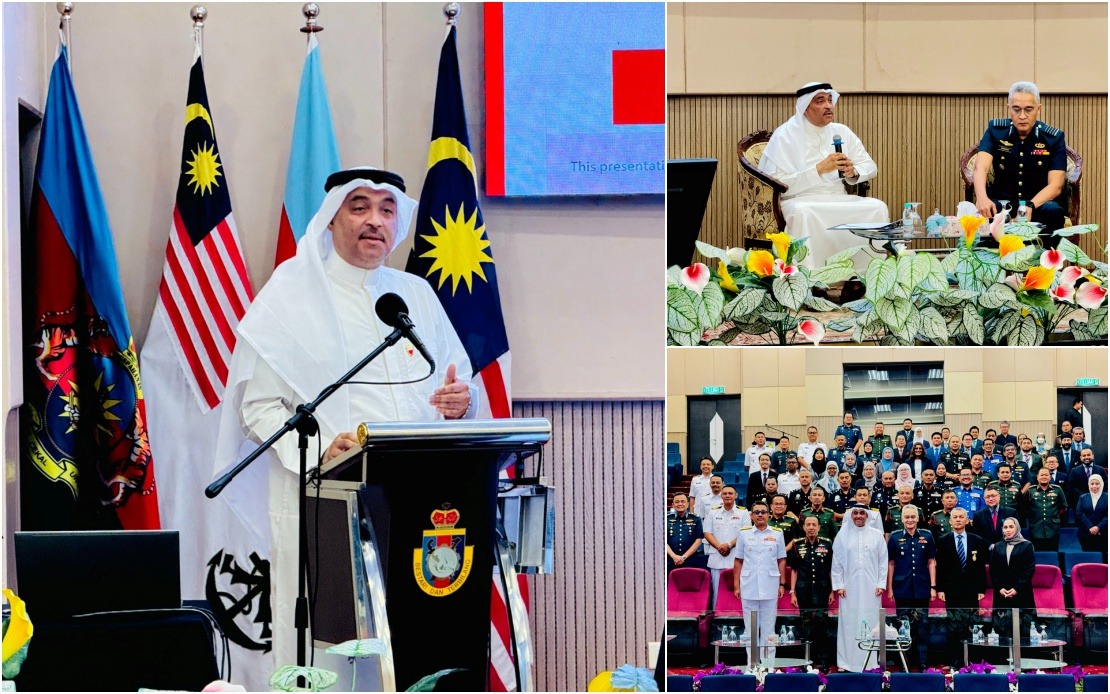
Bahrain and Malaysia are moving to consolidate their strategic relationship, with both countries pursuing expanded cooperation that spans defence, diplomacy and economic sectors, according to Bahrain's Ambassador to Malaysia Dr Waleed Khalifa Al Manea. The envoy outlined the scope of this partnership during a significant address at the National Resilience College in Putrajaya, underscoring how bilateral engagement serves the broader interests of both peoples in an increasingly complex geopolitical environment.
The foundation for deepening ties rests on the personal commitment of senior leaders. His Majesty King Hamad bin Isa Al Khalifa, King of Bahrain, and His Majesty Sultan Ibrahim, King of Malaysia, have cultivated strong relations that guide state-level cooperation. This relationship is reinforced through the efforts of Bahrain's Crown Prince and Prime Minister, His Royal Highness Prince Salman bin Hamad Al Khalifa, and Malaysia's Prime Minister Datuk Seri Anwar Ibrahim, who have made bilateral coordination a priority. Such top-level engagement signals that both governments view the partnership as strategically significant and worthy of sustained investment.
Among the concrete expressions of this growing partnership is Malaysia's hosting of the 2026 Formula 1 Gulf Air Bahrain Grand Prix. While sporting events are often viewed through a cultural lens, Al Manea characterised the Grand Prix as an "advanced expression" of strategic alignment, suggesting that such high-profile collaborations carry diplomatic weight beyond their entertainment value. For Malaysia, securing a Formula 1 race reinforces its status as a major regional hub, while for Bahrain, the arrangement demonstrates the practical benefits of deepened bilateral engagement with a significant Southeast Asian economy.
Al Manea's lecture to the National Resilience College, attended by military and security officials, members of Parliament and defence analysts, reflected the security dimension of the relationship. His presentation focused on Bahrain's vision for regional stability, diplomatic approaches and collective security mechanisms—themes that resonate across the Gulf and beyond. The lecture revealed how both nations perceive interconnected challenges in the wider Middle East and the implications those challenges carry for maritime security and economic stability that affect Southeast Asia.
The shifting security landscape in West Asia has direct implications for Malaysia and the broader ASEAN region. Al Manea highlighted Bahrain's experience with Iranian attacks targeting Gulf Cooperation Council member states, including civilian areas, critical infrastructure and shipping lanes. These tensions extend beyond the Gulf itself; maritime disruptions in the region affect global trade routes and energy security, with consequences felt in Southeast Asian ports and economies. Malaysia, as a major trading nation and maritime power, has legitimate reasons to monitor developments and coordinate positions on these matters.
Bahrain's comprehensive security approach, as outlined by the ambassador, combines three elements: defending sovereignty, protecting civilians and advancing diplomatic solutions. This framework reflects lessons learned from regional tensions and represents a model that emphasises collective responsibility rather than unilateral action. For Malaysia, which prizes non-interference while maintaining openness to diplomatic engagement, such a balanced approach aligns with ASEAN principles of peaceful resolution and dialogue.
During Bahrain's presidency of the United Nations Security Council in April, the kingdom prioritised safeguarding maritime routes and protecting critical infrastructure. These initiatives directly served international stability and had practical applications for nations dependent on freedom of navigation. Bahrain's willingness to champion maritime security at the Security Council level demonstrated proactive leadership on issues that extend far beyond Gulf waters.
Malaysia's co-sponsorship of UN Security Council Resolution 2817 signalled the country's commitment to these principles. By aligning with Gulf partners on language affirming state sovereignty, protecting civilians and opposing attacks, Malaysia demonstrated that Southeast Asian nations view regional stability as interconnected with global stability. Al Manea's commendation of this Malaysian position reflected appreciation for a strategic stance that bridges regional interests without departing from ASEAN's core commitments to dialogue and non-alignment.
The cooperation between Bahrain and Malaysia illustrates how middle-power nations can build substantive partnerships around shared interests in stability, maritime security and multilateral solutions. Rather than limiting engagement to ceremonial exchanges, both countries are structuring cooperation around concrete challenges and opportunities. This pragmatic approach—combining defence sector dialogue, diplomatic coordination at international forums and visible economic partnerships through events like the Formula 1 race—creates multiple channels for sustained interaction.
For Malaysian policymakers and strategic thinkers, the Bahrain relationship offers insights into Middle Eastern security dynamics while positioning Malaysia as a credible partner for Gulf states seeking Southeast Asian cooperation. As global supply chains and maritime routes remain vulnerable to disruption, Malaysia's engagement with Gulf security discussions enhances its voice in international forums and strengthens its ability to defend regional interests. The partnership also demonstrates that ASEAN nations need not choose between non-alignment and substantive engagement with partners facing concrete security challenges.
The National Resilience College event itself highlighted how Bahrain and Malaysia are formalising strategic dialogue through defence and academic institutions. By hosting the ambassador's lecture to senior military officers, senior directing staff and parliamentary representatives, Malaysia signalled institutional commitment to understanding Gulf dynamics. Such forums build long-term relationships and create networks of officials and analysts who understand each other's perspectives and constraints.
Looking ahead, the strategic partnership appears set to deepen further. The scheduled Formula 1 event in 2026 provides a visible milestone, while ongoing diplomatic coordination at the UN and other multilateral bodies creates less visible but equally important foundations. Malaysia's demonstrated willingness to support Bahrain on maritime security and regional stability issues, coupled with Bahrain's recognition of Malaysian interests, suggests mutual benefit underpins the relationship rather than transactional advantage. Such partnerships, rooted in genuine alignment on key issues, tend to prove more durable than those based solely on ceremonial goodwill.

