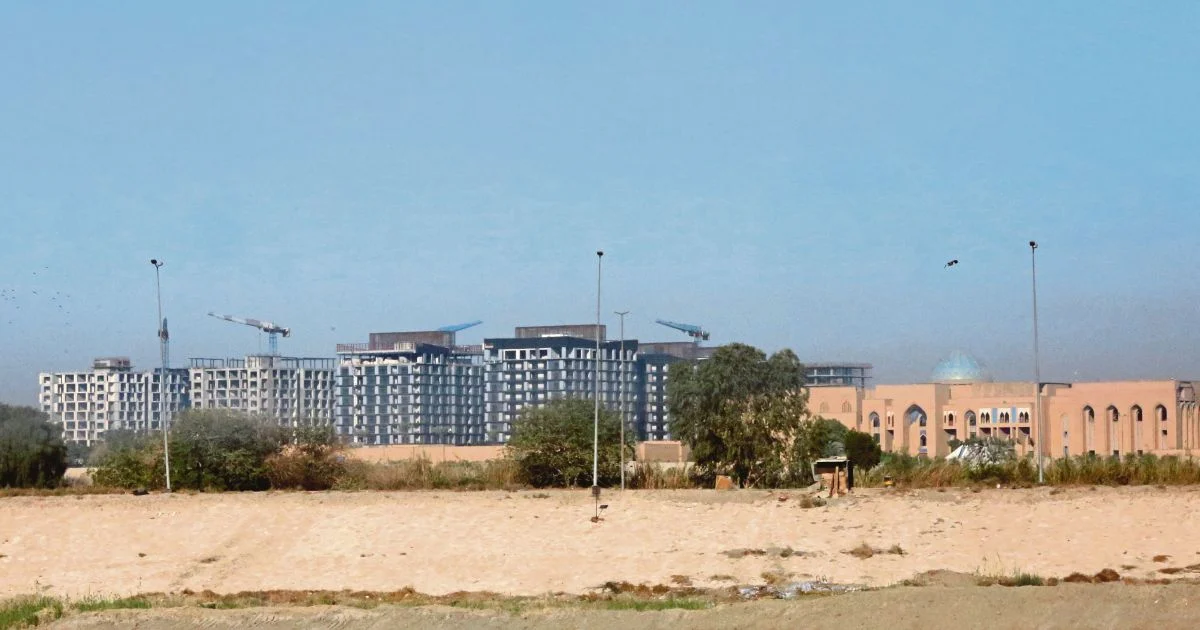
Iraqi security forces executed a major crackdown operation across Baghdad's Green Zone in the early hours of Sunday, moving against officials and members of parliament accused of involvement in corruption schemes. The coordinated raids marked a significant escalation in anti-corruption efforts within Iraq's governing institutions, with heavily armed personnel deployed throughout the heavily fortified district to ensure compliance during the enforcement action.
The Green Zone has long functioned as the seat of Iraq's political and administrative power, housing government ministries, parliament buildings, and diplomatic missions behind concrete barriers and checkpoints. Its designation as a restricted security zone has historically shielded high-ranking officials from public scrutiny, making Sunday's raids particularly noteworthy as they represented a rare penetration of these protective barriers by security forces pursuing corruption allegations. The scale and intensity of the operation suggested coordination at the highest levels of the Iraqi government.
Detentions during the sweep included sitting members of parliament alongside ministerial officials, indicating that the corruption investigation extended across multiple branches of government rather than targeting a single agency or political faction. This broader approach reflects mounting domestic and international pressure on Iraq to address systemic graft that has drained state resources and undermined public confidence in institutions. The detained individuals faced allegations ranging from embezzlement to misappropriation of public funds, though specific charges against each person remained unclear as the operation unfolded.
The heavy security presence maintained throughout the Green Zone during and after the raids demonstrated the sensitivity surrounding the enforcement action. Military and police units remained on high alert to manage potential resistance or complications as authorities processed detainees and gathered documentation. Such visible shows of force can serve multiple purposes: ensuring operational security, preventing interference with the investigation, and sending a message about governmental resolve on corruption matters.
For Malaysian observers, the Baghdad operation illustrates persistent governance challenges facing Iraq as it attempts to consolidate democratic institutions and reduce the clientelism that has characterized Middle Eastern politics for decades. The willingness to pursue sitting parliamentarians suggests that some Iraqi stakeholders recognize that institutional credibility depends on demonstrable accountability, regardless of political affiliation. However, the pattern of selective enforcement and questions about politicization of anti-corruption efforts remain concerns in post-conflict governance transitions across the region.
The timing of the Green Zone operation carries significance within Iraq's volatile political landscape, where competing power blocs and foreign interests continue to influence institutional development. Anti-corruption campaigns can function simultaneously as legitimate governance improvements and as political weapons, making it essential to monitor whether the detained officials represent a genuine cross-party purge or reflect factional conflict masked as institutional reform. Historical precedent in Iraq suggests both dynamics have operated concurrently in previous enforcement campaigns.
Regional implications extend beyond Iraq's borders, as governance failures and institutional corruption in major Middle Eastern states can precipitate broader instability affecting trade, energy markets, and security arrangements throughout Southeast Asia's neighbourhood. Iraq's oil production and export capabilities, crucial to global energy markets, depend partly on government capacity to manage state resources effectively. Corruption that diverts petroleum revenues or undermines investment in infrastructure weakens Iraq's economic resilience and consequently its geopolitical influence.
The international community has repeatedly emphasized anti-corruption efforts as essential to Iraq's stabilization and democratic consolidation. Several nations, including major trading partners, have made assistance and investment conditional on measurable progress in tackling graft and strengthening institutional transparency. Sunday's raids potentially demonstrate willingness to meet these expectations, though sustained follow-through and impartial prosecution will ultimately determine whether the operation produces lasting institutional change or represents performative governance.
Observers should note that anti-corruption investigations in post-conflict settings frequently encounter complications including witness intimidation, document destruction, and political interference in judicial proceedings. The success of Sunday's detention operation depends not merely on initial arrests but on whether Iraqi authorities can mount credible prosecutions that result in convictions capable of withstanding legal challenge. International monitors and civil society organizations will likely scrutinize the fairness and transparency of subsequent court proceedings.
The Green Zone operation also reflects tensions within Iraq's security apparatus regarding appropriate use of force and investigative authority. Multiple security agencies with overlapping jurisdictions have historically competed for influence and resources, sometimes leading to uncoordinated or conflicting actions. That Sunday's raids proceeded with apparent coordination suggests either strengthened institutional discipline or deliberate political alignment among security leadership around the anti-corruption agenda.
Looking forward, the trajectory of detainees through Iraq's judicial system will provide crucial indicators regarding the sustainability and impartiality of the anti-corruption campaign. Cases that proceed transparently and produce credible convictions, regardless of defendants' political affiliation, could meaningfully strengthen institutional legitimacy. Conversely, selective prosecution, acquittals perceived as politically motivated, or prosecutorial failures could reinforce public cynicism about governmental seriousness on accountability matters.
For Malaysian policymakers and observers tracking Middle Eastern developments, Iraq's ongoing struggle to establish functional anti-corruption mechanisms while managing competing political interests presents both cautionary lessons and potential opportunities for technical cooperation. Southeast Asian nations with experience establishing independent anti-corruption bodies and judicial reforms might contribute expertise and institutional models, strengthening regional stability through improved governance outcomes in neighbouring strategic regions.

