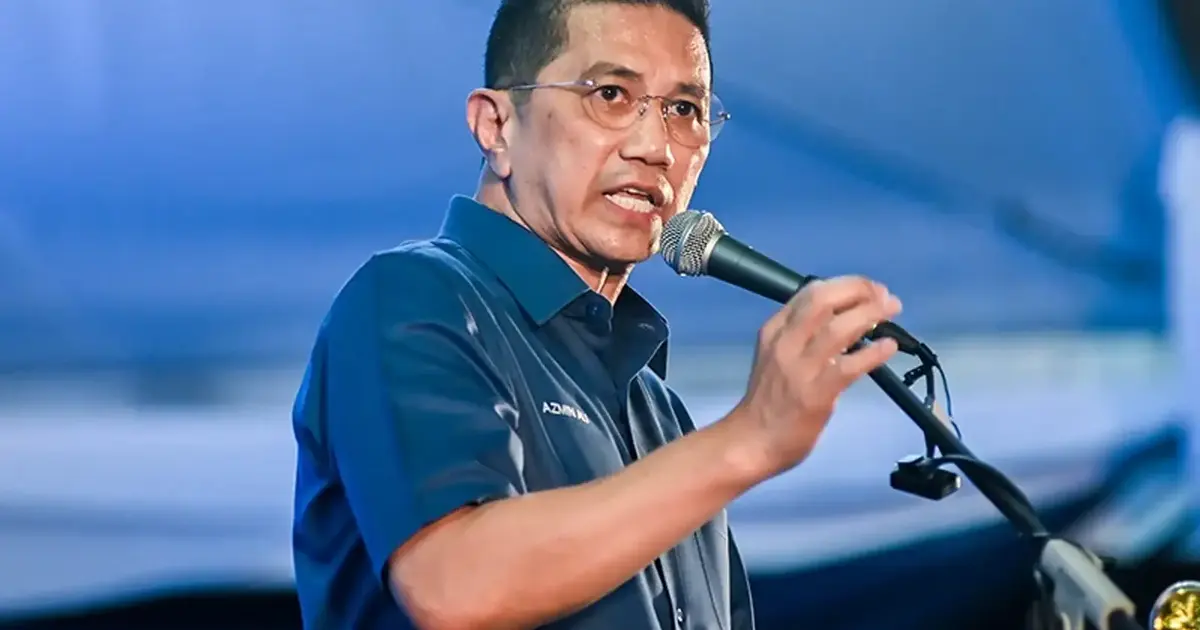
Political analysts are increasingly viewing Bersatu secretary-general Azmin Ali as a crucial intermediary who could potentially bridge the fractured relationship between Bersatu and Pakatan Harapan if party president Muhyiddin Yassin were to relinquish his leadership position. The assessment reflects recognition of Azmin's deep institutional knowledge of PKR's machinery and his sustained connections across the opposition coalition spanning multiple administrations.
Azmin's trajectory within PKR forms the cornerstone of this analysis. He served as deputy president of Keadilan Rakyat for a decade, a tenure that positioned him at the heart of the party's strategic decision-making and internal networks. During this extended period in one of the coalition's most influential roles, Azmin cultivated relationships with key figures, understood the party's ideological foundations, and developed credibility across different factions within the broader Pakatan structure. This experience contrasts sharply with many other Bersatu leaders whose connections to the original opposition coalition remain more tenuous or were severed acrimoniously during political realignments.
Bersatu's current isolation from Pakatan Harapan represents one of Malaysia's most significant political fractures since 2020. The party's transition from opposition stalwart to government partner and subsequently to its present ambiguous positioning has created substantial institutional distance from former allies. Muhyiddin's stewardship through these turbulent transformations has left considerable baggage within Pakatan circles, with leaders in DAP, PKR, and Amanah nursing grievances stemming from perceived betrayals during the Sheraton Move and subsequent coalition negotiations. Any path toward reconciliation would require a leadership transition credible enough to signal genuine philosophical realignment rather than mere tactical repositioning.
Azmin's potential candidacy for party leadership gains particular relevance given current Malaysian coalition mathematics. The absence of a stable government majority has prompted ongoing speculation about coalition fluidity, with Bersatu's fourteen parliamentary seats potentially offering strategic value to different configurations. Yet reintegrating Bersatu into Pakatan would require overcoming substantial trust deficits accumulated through multiple political cycles. A leadership change from Muhyiddin to someone with demonstrated PKR credentials could provide the symbolic and substantive shift necessary to restart dialogue.
However, Azmin's own political history contains complications that would require careful navigation. His departure from PKR amid leadership disputes, his previous alignment with former Prime Minister Mahathir, and his subsequent pivots have generated skepticism among some Pakatan constituencies. Analysts note that while his PKR tenure provides institutional legitimacy, his subsequent political journey demonstrates pragmatism that critics characterise as opportunism. Rebuilding credibility would necessitate clear articulation of political principles beyond immediate coalition convenience.
The timing of such potential transitions carries significance for Malaysia's broader political trajectory. If Anwar Ibrahim's government solidifies and demonstrates sustained governing capacity, opposition realignment becomes less urgent from Pakatan's perspective. Conversely, if governance challenges persist, Bersatu's parliamentary support could become more strategically valuable, potentially accelerating reconciliation discussions. Azmin's positioning as a figure acceptable to both Bersatu cadres and key Pakatan personalities suggests he could emerge as a consensus builder if circumstances shift toward negotiation.
Pakatan's receptiveness to Bersatu reintegration remains conditional and contested. DAP's leadership has demonstrated skepticism toward party reconciliation absent fundamental political change, while PKR maintains more pragmatic openness given factional dynamics. Amanah's positioning reflects concerns about absorbing Bersatu members while maintaining ideological coherence. Azmin's decade within PKR might provide a pathway familiar enough for cautious engagement, though former allies would require substantial reassurance before embracing formal reintegration of the broader party structure.
From Bersatu's internal perspective, any transition of the party presidency would reflect ongoing tensions between those prioritising government relationships and those advocating for stronger positioning within potential alternative coalitions. Azmin's leadership bid, should it materialise, would likely emphasise bridge-building and coalition flexibility rather than ideological purity or partisan loyalty. This approach aligns with significant sections of Bersatu's membership seeking stable political positioning after years of turbulent realignments.
The broader context involves Malaysia's evolving political culture and coalition dynamics. The transition from Pakatan's 2018 electoral victory through the government's fragmentation has prompted reconsideration of coalition architectures and the possibility of reconfigured alignments. Political scientists observing these developments note that Azmin represents a generational cohort spanning the pre-2020 opposition coalition and the subsequent government partnerships, positioning him uniquely to navigate between constituencies otherwise increasingly separated by institutional divisions and historical grievances.
Analysts emphasise that any formal Bersatu-Pakatan reconciliation remains speculative and contingent on multiple factors beyond leadership transitions alone. Organisational integration would involve complex negotiations regarding ministerial positions, seat allocations, and internal governance structures. Nevertheless, the identification of Azmin Ali as a potential bridge figure reflects serious consideration of pathways toward reducing Malaysia's fractious political polarisation. His availability as an intermediary with credible historical connections to the original coalition structure distinguishes him from other contemporary politicians attempting similar bridge-building roles across Malaysia's increasingly segmented political landscape.