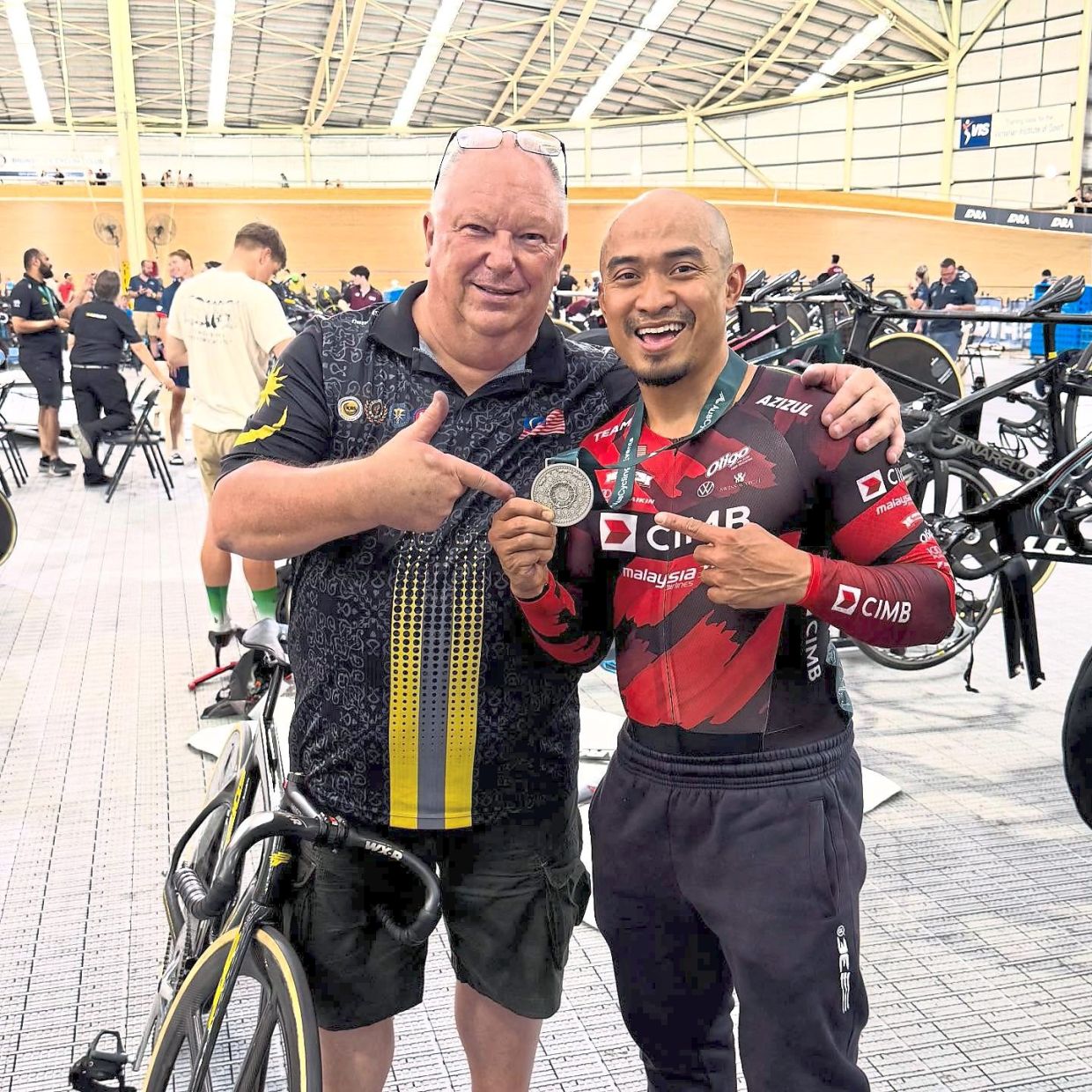
Petaling Jaya-based national track cyclist Azizulhasni Awang has made clear he understands the potential fallout from his recent decision to publicly back technical director John Beasley, even as detractors continue to question the Australian coach's methods and influence. The two-time Olympic silver medallist acknowledged that stepping into this controversy exposes him to attacks from various quarters, yet he remains resolute in his position that Beasley deserves defence given his substantial contributions to Malaysian track cycling over two decades.
Azizul's willingness to absorb potential criticism stems from his conviction that certain principles transcend personal risk. He reasoned that if performances at the upcoming Commonwealth Games and Asian Games disappoint, critics will inevitably target him alongside Beasley, yet he accepts this as the natural consequence of taking a principled stand. Rather than viewing this as reason to remain silent, the cyclist has chosen to speak openly about his beliefs and defend those he feels have genuinely advanced the sport domestically.
The backdrop to Azizul's comments involves mounting scrutiny of Beasley, whose tenure has generated both acclaim and controversy within Malaysian cycling circles. Beasley's role in developing world-class performers including Azizul himself cannot be disputed, yet recent public criticism from state-level federation figures has intensified pressures on both the coach and his supporters. The situation highlights an ongoing tension between those convinced of Beasley's value and those questioning whether alternative approaches might better serve Malaysian cycling.
What distinguishes Azizul's position is his explicit acknowledgment that defending Beasley carries personal cost. He recognises that media scrutiny will likely intensify should international competition results fail to meet expectations, with headlines potentially turning against him as well as his mentor. Yet rather than allowing this prospect to silence him, he frames his willingness to speak out as rooted in something deeper than tactical calculation—a conviction about what is right regardless of consequence.
The spiritual dimension underpinning Azizul's resolve merits attention within the Malaysian sporting context. His repeated reference to divine will, invoking the Quranic phrase "Kun Fa Ya Kun" (let it be, and it is), reflects how faith guides his decision-making beyond mere athletic performance metrics. This perspective allows him to decouple his public stance from anxiety about personal repercussions, positioning moral clarity as more important than self-preservation.
Meanwhile, formal disciplinary measures have begun within Malaysian cycling governance structures. The Malaysia National Cycling Federation president Datuk Amarjit Singh Gill announced that two individuals from state affiliates would face show-cause letters for publicly criticising Beasley outside official administrative channels. The federation characterised their actions as damaging to institutional reputation by circumventing proper procedures. This development underscores how the Beasley situation has escalated from individual coaching decisions to federation-level governance matters.
For Malaysian cycling enthusiasts and sports observers, Azizul's stance carries particular significance given his demonstrated international pedigree. As a Tokyo 2020 Olympics silver medallist, his endorsement lends credibility to arguments supporting Beasley's continued involvement. Yet his willingness to court controversy by making this public defence also signals potential fractures within Malaysia's cycling establishment that could affect team cohesion during crucial upcoming competitions.
The Commonwealth Games and Asian Games loom as definitive tests for both Beasley's methods and Azizul's gamble in defending him. Success in these competitions would vindicate both men and silence detractors, while disappointing results would intensify pressure and validate those who questioned Beasley's approach. Azizul has essentially placed his reputation alongside Beasley's, creating mutual stakes in upcoming performances that extend beyond individual medals or records.
Looking forward, Azizul has emphasised that his immediate priority remains ensuring smooth preparations for both Commonwealth and Asian Games competitions. He has appealed for united support from all stakeholders—federation officials, athletes, coaching staff, and the broader cycling community—toward the shared objective of international success. This call for unity attempts to transcend the current controversy by redirecting attention toward collective ambitions rather than internal disputes.
The episode reveals broader dynamics within Malaysian sports governance, where coaching decisions, institutional authority, and public opinion intersect in complex ways. Azizul's willingness to accept personal consequences for defending Beasley demonstrates how elite athletes increasingly recognise their influence extends beyond competition results into matters of institutional credibility and professional reputation. His stance ultimately argues that sporting success requires not just tactical excellence but also loyalty and principled support among key personnel—factors that cannot be reduced to technical metrics alone.