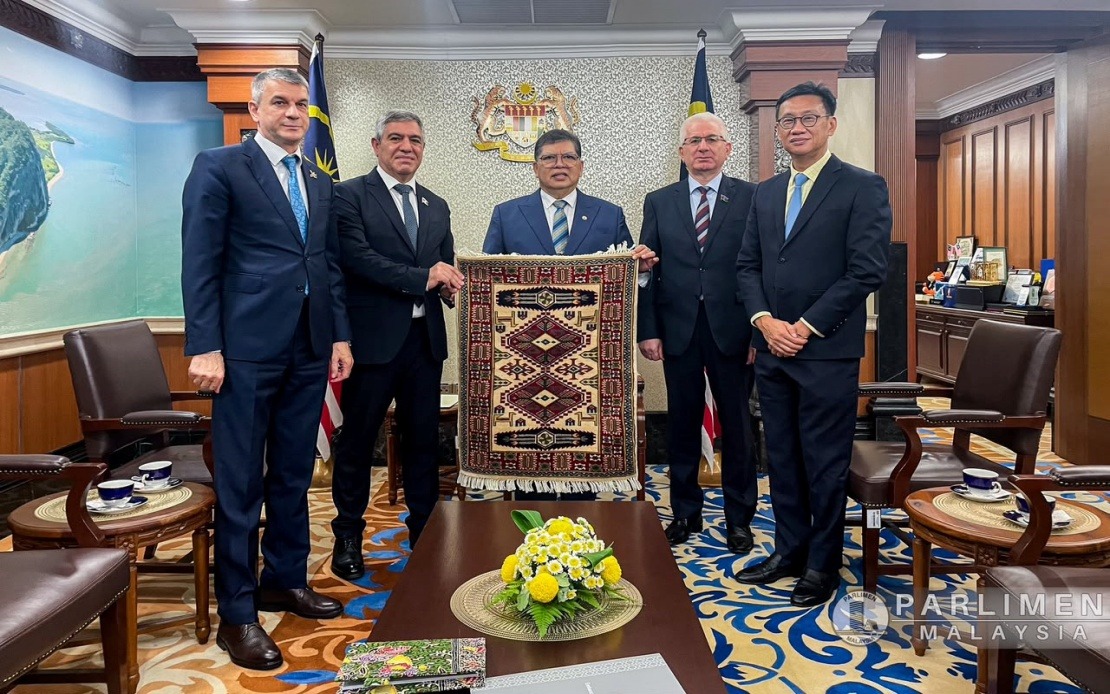
A parliamentary delegation from Azerbaijan recently concluded a working visit to Malaysia aimed at deepening institutional relationships and unlocking new avenues for economic collaboration between Baku and Kuala Lumpur. Vugar Bayramov, who heads the Working Group for Azerbaijani-Malaysian Interparliamentary Relations in the Azerbaijani Parliament, led the mission alongside fellow parliamentarian Bakhtiyar Aliyev, signalling the importance both nations attach to sustained dialogue at the legislative level.
The timing of the delegation's visit reflects a broader pattern of engagement across Southeast Asia by Central Asian nations seeking to diversify partnerships and reduce geopolitical isolation. For Malaysia, the visit underscores the country's continued commitment to maintaining balanced diplomatic relations with nations across multiple regions, from the Middle East to Central Asia. The delegation's formal reception at Malaysia's highest parliamentary levels—including courtesy calls on Dewan Rakyat Speaker Tan Sri Johari Abdul and Dewan Negara President Datuk Awang Bemee Awang Ali Basah—signals official recognition of Azerbaijan's diplomatic overtures.
Beyond ceremonial exchanges, the parliamentary meetings carried substantive weight. Discussions with Wong Chen, chairman of the Dewan Rakyat's Special Select Committee on International Relations and International Trade, and Zahir Hassan, head of the West Asia Friendship Group, provided focused forums for examining how Malaysia and Azerbaijan might cooperate on regional trade frameworks and geopolitical issues. These engagements are particularly relevant given Malaysia's strategic positioning in global commerce and its influence within ASEAN, making parliamentary-level consultations valuable for exploring mutual interests in areas ranging from economic integration to regional stability.
The delegation's parallel engagement with Malaysia's private sector revealed the economic dimension underpinning the diplomatic mission. By convening with the Malaysian National Chamber of Commerce and Industry and representatives from more than twenty Malaysian business entities, the Azerbaijani parliamentarians effectively bridged governmental and commercial spheres. This two-track approach—combining formal state interactions with direct business networking—has become standard practice for delegations seeking to generate immediate, tangible outcomes beyond symbolic cooperation. The breadth of Malaysian business participation suggests genuine interest in exploring opportunities with an energy-rich nation positioned at a crossroads between Europe, Asia, and the Middle East.
During these commercial discussions, both sides identified specific areas for expanded cooperation. The focus on business-to-business ties and investment collaboration aligns with Azerbaijan's broader economic diversification strategy following its conflict with Armenia over the Nagorno-Karabakh region. For Malaysian enterprises, engagement with Azerbaijan offers access to a market increasingly open to foreign investment and positioned along major transport corridors connecting Europe to Asia. The conversations around trade and investment opportunities appear designed to move discussions from the aspirational stage toward concrete commercial partnerships.
Speaker Johari's subsequent commentary on the visit elevated the discussion beyond transactional cooperation to embrace a philosophical dimension about modern diplomacy. His reflection on people-centred initiatives and human connections transcending borders speaks to a recognition that in an era of heightened international tensions and shifting alliances, parliamentary exchanges serve functions beyond formalised state business. Such people-to-people engagement, when cultivated through sustained dialogue, can build constituencies within each country's legislative body that understand and support bilateral relationships even during periods of broader regional instability.
For Malaysia specifically, deepening ties with Azerbaijan carries several strategic implications. The country represents a gateway to the Caucasus region and could facilitate Malaysian business expansion into markets currently underdeveloped in terms of Asian trade relationships. Conversely, Azerbaijan gains from Malaysia's extensive experience in regional economic integration and its standing within ASEAN, potentially positioning Baku for closer engagement with Southeast Asian markets and institutions. The parliamentary-level dialogue establishes frameworks through which such cooperation can advance with governmental support.
The visit also reflects broader regional diplomacy patterns in Southeast Asia, where nations maintain relationships with diverse partners to avoid overreliance on traditional allies. Malaysia's engagement with Azerbaijan demonstrates this balancing act, maintaining robust ties with Middle Eastern states while simultaneously building relationships with Central Asian counterparts. This approach serves Malaysia's long-term interests by preserving diplomatic flexibility and creating multiple avenues for economic cooperation.
The delegation's focus on parliamentary cooperation specifically carries weight because legislatures are increasingly recognised as vehicles for sustained bilateral engagement. Unlike executive branches, which can shift priorities with changes in government, parliamentary working groups and friendship committees tend to maintain longer-term institutional relationships. By establishing formal mechanisms for Azerbaijani-Malaysian parliamentary cooperation, both nations signal commitment to sustained engagement regardless of changes in political leadership.
As both countries move forward, the real measure of this visit's success will lie in whether the relationships established translate into concrete outcomes. The business meetings and parliamentary discussions provide foundations, but sustained cooperation requires follow-up mechanisms, regular contact, and demonstrated progress on identified priorities. Malaysia's track record in maintaining parliamentary ties with diverse partners suggests it possesses the institutional capacity to nurture these connections effectively.
The broader context for this engagement includes Azerbaijan's ongoing reconstruction efforts and regional repositioning following recent conflicts, combined with Malaysia's positioning as a prosperous, stable Muslim-majority nation with significant regional influence. These complementary interests create natural foundations for deeper cooperation. The parliamentary delegation's visit, therefore, represents not merely a diplomatic courtesy but a deliberate step toward building a more substantive bilateral relationship capable of generating mutual benefits across multiple sectors and contributing to broader regional stability.

