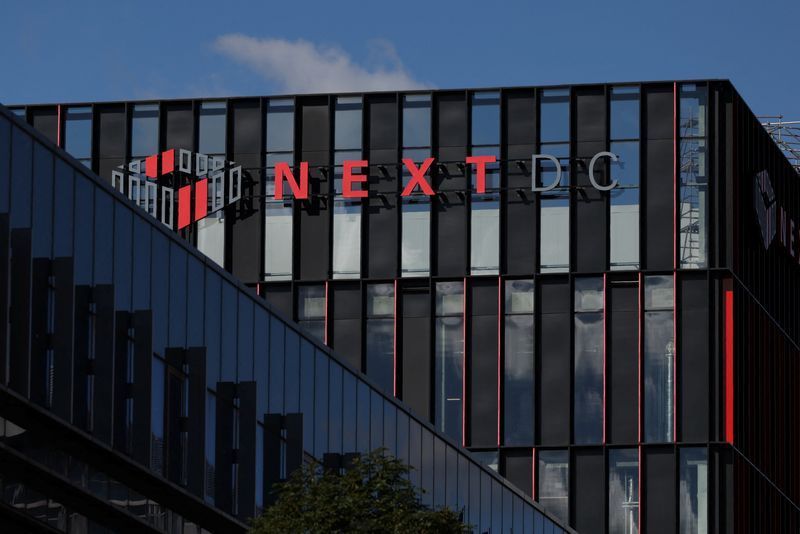
Australia's leading data centre developer NextDC has delivered a financial performance that exceeded analyst expectations, yet the company's operating metrics reveal a mounting environmental cost that is drawing regulatory attention across the Asia-Pacific region. The Sydney-based firm swung to profitability with A$82.1 million in net profit for the year ending June, reversing a A$60.5 million loss from the previous period, while underlying EBITDA grew 15 per cent to A$248.8 million, comfortably surpassing consensus forecasts among analysts tracked by Visible Alpha.
Behind this impressive financial trajectory, however, lies a troubling efficiency trend that underscores the resource-intensive nature of artificial intelligence infrastructure expansion. NextDC's water usage effectiveness ratio deteriorated to 2.40 litres per kilowatt-hour from 2.25 the previous year, while the company's power usage effectiveness metric—a critical gauge of how efficiently data centres operate their cooling systems and ancillary equipment—slipped to 1.49 from 1.44. What makes these figures particularly significant is that both indicators have tracked downward for three consecutive years, suggesting a structural challenge rather than a temporary fluctuation.
The company attributed the efficiency decline to several operational factors that offer insight into the rapid scaling of data centre infrastructure. NextDC explained that newly commissioned capacity was running cooling systems at partial efficiency while information technology deployment was still ramping up, a common dynamic during the construction and activation phases of major facilities. Additionally, the firm undertook comprehensive data reconciliation work across its portfolio that exposed previously unaccounted water leaks, utility meter malfunctions, and discrepancies between site-level measurements and official utility records. This transparency, while increasing reported consumption figures, likely reflects a more accurate picture of actual resource use across the operating network.
The efficiency metrics have become flashpoints in a broader global debate about whether the artificial intelligence boom can be reconciled with environmental sustainability and resource constraints. Across jurisdictions from North America to Europe and increasingly throughout Asia-Pacific, elected officials and their constituents are questioning whether the computational demands of emerging technologies justify the drain on electricity grids and freshwater supplies. Visibility into these metrics has become a proxy through which voters and policymakers evaluate the true cost of the digital transformation underway.
For Malaysia and Southeast Asia, the implications are substantial. Regional governments are observing the global pattern whereby data centre expansion has begun triggering resource conflicts. Australia's experience provides an instructive case study as the nation grapples with balancing the economic benefits of positioning itself as a regional digital hub against mounting environmental and community concerns. The efficiency degradation at NextDC, despite sophisticated operations and investment in best-practice infrastructure, suggests that simply building more and larger facilities may inherently carry efficiency trade-offs.
Canberra's policy response demonstrates how governments are beginning to intervene actively in the data centre sector. Australian regulators are developing mandatory, nationally consistent standards that would govern data centres' energy consumption, water usage, and geographic location. More significantly, the federal government recently proposed requirements that data centre operators must construct new renewable energy generation capacity rather than relying exclusively on grid electricity. Such regulatory frameworks are likely to influence how multinational operators approach expansion across the Asia-Pacific region, including in Malaysia where energy and water considerations are already policy concerns.
NextDC faces direct competitive pressures from substantial rivals with different ownership structures and strategic positioning. Blackstone-owned AirTrunk and Infratil-owned CDC represent well-capitalised competitors with institutional backing that may enable accelerated infrastructure deployment. The relative financial performance and efficiency metrics among these operators will increasingly matter to investors evaluating where to allocate capital for data centre expansion, particularly as environmental performance becomes a material consideration in institutional investment decisions.
The market initially responded positively to NextDC's results, with shares gaining 3.3 per cent by mid-session trading on Friday. Yet this price movement may reflect investor focus on the profit beat and revenue growth rather than deeper engagement with the efficiency challenges. As environmental concerns gain prominence in investment frameworks—particularly through environmental, social and governance considerations—the long-term valuation implications of persistently worsening resource efficiency metrics remain uncertain.
For operators and policymakers across Southeast Asia, NextDC's experience illustrates that the data centre sector faces a fundamental tension. The computational capacity required to support artificial intelligence, cloud services, and digital transformation cannot be deployed without tangible resource consumption. Yet the industry's current trajectory suggests that efficiency improvements may not keep pace with capacity growth, meaning total resource demands will climb substantially even as per-unit efficiency metrics may eventually stabilise or improve. This dynamic creates a complex policy challenge: facilitating the economic and technological benefits of data centre infrastructure while managing environmental and community impacts.
The disclosure of worsening efficiency metrics alongside financial outperformance also signals that profitability and environmental stewardship are not automatically aligned in this sector. Companies earning strong returns from data centre operations face limited immediate incentives to constrain growth or accept lower utilisation rates to improve efficiency metrics. This structural misalignment between private profit incentives and public resource conservation goals explains why governments are increasingly adopting prescriptive regulatory approaches rather than relying on market mechanisms alone.

