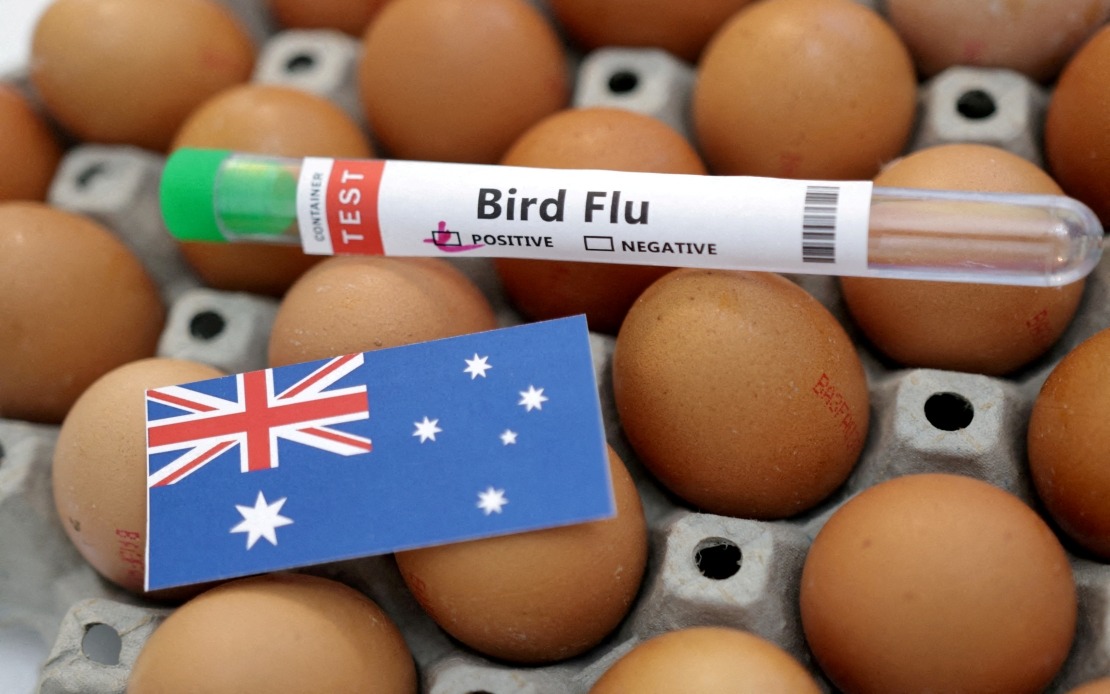
Australia is grappling with a rapidly escalating bird flu crisis as H5N1 cases surged past 200 by mid-August, prompting state governments to implement emergency biosecurity protocols. The federal Department of Agriculture, Fisheries and Forestry reported 203 confirmed or presumed positive cases as of Saturday, marking a dramatic acceleration in infections that reflects the virus's expanding foothold across the country's wildlife and farming sectors. The trajectory is particularly alarming: the nation recorded just 52 cases by the end of July, meaning August alone brought nearly a 290 per cent surge in detections within a single month.
South Australia has emerged as the epicentre of the outbreak, accounting for 147 of the 203 total cases—nearly three-quarters of Australia's burden. On a single day, the state confirmed 28 new infections, all of them detected in wild seabirds that naturally congregate along coastal regions. This concentration in a single state underscores how H5N1 exploits the interconnected networks of migratory bird populations, which serve as vectors for spreading the virus across vast geographic areas. Victoria, with 43 recorded cases, represents the second-most affected jurisdiction, though the infection pattern there differs meaningfully from South Australia's experience.
Victoria's recent cluster of 36 birds confirmed positive on Thursday and Friday suggests an entirely fresh wave of infection, with cases concentrated in the state's western reaches near the South Australian border. This geographic clustering raises concerns about cross-border transmission and the role of shared ecological corridors in facilitating viral spread. The cases underscore how state boundaries mean little to highly mobile wild bird populations that migrate seasonally across vast distances, creating a challenge for any containment strategy that relies solely on regional isolation measures.
Recognising the escalating threat to its commercial poultry sector, the Victorian government implemented precautionary measures on Friday designed to interrupt the transmission chain between wild birds and domesticated flocks. The directive requires poultry producers along the state's south coast—encompassing the Melbourne metropolitan area and surrounding agricultural zones—to confine birds indoors if their operations house at least 50 birds. The initial mandatory period lasts 14 days, though the measure could be extended depending on epidemiological developments.
Victorian Agriculture Minister Michaela Settle framed the indoor housing requirement as a preventive intervention meant to shield commercial operations from contact with infected wild birds. By eliminating outdoor access, producers eliminate the primary route through which wild avian populations could transmit H5N1 to domestic flocks. The logic is sound: H5N1 spreads through contact with infected birds' respiratory secretions and faeces, particularly through water sources where wild and domestic birds might converge. Indoor confinement, while economically burdensome for farmers and potentially stressful for the birds, remains one of the few proven methods for breaking transmission chains during acute outbreak periods.
The scale of Australia's outbreak has regional implications for Southeast Asia, where Malaysia and neighbouring countries maintain intensive poultry industries vulnerable to similar incursions. H5N1 remains one of the most lethal and transmissible avian pathogens known, capable of jumping species barriers under certain genetic conditions. Australia's experience—demonstrating how swiftly cases can multiply and how widespread wild bird populations make containment difficult—offers a cautionary template for governments across the Indo-Pacific region. The virus's presence in Australia, a developed nation with sophisticated surveillance systems, indicates that no country's biosecurity infrastructure guarantees immunity from outbreak escalation.
Malaysia's poultry farmers and agricultural authorities should monitor the Australian situation closely. The country's own experience with bird flu outbreaks, though generally contained through rapid culling and movement restrictions, demonstrates that vigilance remains essential. The Victorian case illustrates that proactive measures—such as requiring indoor confinement during periods of elevated wild bird viral circulation—can be implemented without waiting for confirmed domestic cases to emerge. Such precautionary approaches have become increasingly accepted practice among agricultural authorities managing high-risk periods.
The concentration of cases in South Australia's wild seabirds highlights a pattern consistent with previous H5N1 cycles: the virus establishes itself in wild bird populations before spilling over into domestic operations. This temporal lag provides an opportunity for intervention. By monitoring wild bird populations for signs of infection and alerting domestic producers when risk levels rise, authorities can activate containment protocols before commercial operations suffer direct losses. Australia's outbreak response, while reactive in some respects, demonstrates how data sharing and rapid decision-making can at least limit the rate of spread once detection occurs.
The economic costs of such outbreaks extend beyond immediate culling losses. Mandatory indoor confinement disrupts production schedules, increases feed and operational costs, and can compromise animal welfare and product quality if sustained over prolonged periods. For small and medium-sized poultry producers, these burdens can prove existential. Victoria's 14-day initial confinement window was presumably calibrated to balance biosecurity imperatives against economic sustainability, though whether this timeframe proves sufficient remains uncertain given the outbreak's momentum.
Federal and state coordination remains critical to Australia's response effectiveness. The Department of Agriculture, Fisheries and Forestry's role in publishing case counts and coordinating across state jurisdictions provides a unified command structure often lacking in response efforts elsewhere in the region. Malaysia's own animal health authorities should assess whether equivalent data-sharing mechanisms and decision-making protocols are sufficiently robust to enable similarly rapid, coordinated responses should H5N1 re-emerge domestically.
The outbreak also highlights the limitations of relying solely on surveillance of domestic operations. Wild bird populations serve as the ultimate reservoir and vector for H5N1, yet monitoring these dispersed, mobile populations presents immense logistical challenges. Australia's case surge suggests that wild bird surveillance—though crucial—arrives at conclusions only after infections have already proliferated substantially. A more integrated approach combining environmental monitoring, early-warning systems based on species migration patterns, and pre-positioned response capabilities could potentially enable faster interventions before case counts explode exponentially as occurred in Australia during August.

