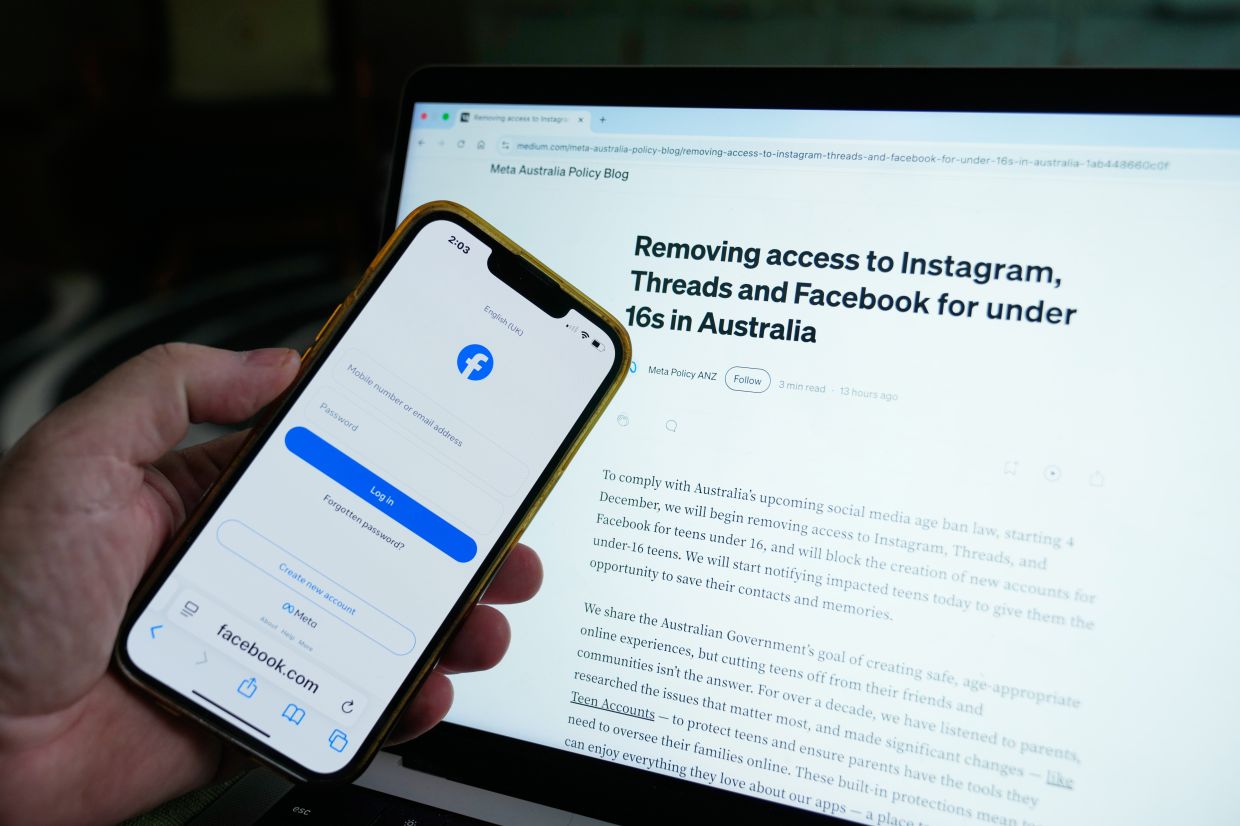
Prime Minister Anthony Albanese has publicly rebuked the opposition parties for stalling crucial amendments designed to bolster enforcement of Australia's landmark ban on social media use by children under 16, which took effect in December. The government submitted legislative changes to Parliament aimed at expanding the authority of eSafety Commissioner Julie Inman Grant, the nation's online safety watchdog, to crack down on platforms circumventing the restrictions. Rather than proceeding with debate, the Liberal Party opposition and the Australian Greens referred the draft amendments to an eight-week Senate inquiry on July 2, a move that has frustrated the Labour government, which lacks a Senate majority to pass legislation unilaterally.
The proposed amendments represent a significant escalation in the regulatory arsenal available to Inman Grant. Currently, she possesses the authority to request information from platforms regarding their compliance efforts, but the new provisions would grant her the power to demand production of documents and detailed reports about how platforms are implementing age-verification systems and removing child users. This distinction carries substantial practical implications, as formal document requests carry greater legal weight and provide enforcers with clearer paper trails for potential violations. Albanese emphasized to the Australian Broadcasting Corporation that delaying these powers creates a dangerous window for misconduct. Once passed, he argued, the amendments would have established an immediate date from which the commissioner could issue formal demands, triggering the machinery for imposing financial penalties on non-compliant platforms.
The legislative package would also extend the commissioner's investigative reach by permitting her to seek information from third-party providers, including companies offering age assurance technology services. This provision directly addresses a central compliance challenge: verifying whether platforms' claims about their efforts to keep children off their services are truthful. By interviewing technology vendors and examining their agreements with platforms, the eSafety Commissioner gains independent means to test the credibility of industry assertions. Furthermore, the amendments would double the maximum financial penalty for platforms failing to implement reasonable child-exclusion measures from A$50 million to A$99 million (US$68 million), substantially raising the financial stakes for non-compliance and theoretically incentivizing stronger enforcement mechanisms.
The opposition's stance reveals internal disagreement about the ban's legitimacy and effectiveness. Greens Senator David Shoebridge, who has consistently opposed the social media restrictions on principle, questioned whether increasing fines addresses the core problem, particularly given that existing penalties have never been deployed. His skepticism reflects a broader libertarian critique: that regulatory penalties appear punitive without necessarily producing better outcomes for young users. Meanwhile, the Liberal Party's communications spokesperson, Senator Sarah Henderson, took a different approach, arguing the amendments do not go far enough. She characterised the original legislation as hastily drafted and poorly implemented, suggesting that tougher measures rather than merely enhanced commissioner powers represent the genuine solution to what she described as a "failing" ban.
Australia's social media ban entered history as one of the world's most aggressive regulatory interventions targeting platform access by minors. Parliament passed the initial legislation in 2024 with overwhelming cross-party support, and the 10 targeted platforms—including Facebook, Instagram, YouTube, TikTok, Snapchat, X, Kick, Reddit, Threads, and Twitch—received more than a year to implement compliance systems. The initial results appeared promising: the government reported that platforms removed, deactivated, or restricted accounts belonging to more than 5 million children following the ban's introduction. This figure suggested rapid industry mobilization and substantial compliance.
However, subsequent monitoring has revealed a more troubling reality that underpins the government's push for stronger enforcement mechanisms. Data released by the eSafety Commissioner in March disclosed that roughly seven in ten children who maintained accounts on restricted platforms on December 10—the ban's effective date—remained active on Facebook, Instagram, Snapchat, and TikTok. This statistic fundamentally undermines confidence in the ban's practical implementation, suggesting that either children have successfully circumvented age-verification systems, platforms are not adequately verifying user ages, or platforms are deliberately maintaining child users despite regulatory obligations. The persistence of juvenile account holders despite the stated prohibition indicates that the initial wave of account removals may have represented lower-hanging fruit rather than comprehensive enforcement.
Confronted with this evidence of non-compliance, Commissioner Inman Grant escalated her response in April by signalling her intention to pursue legal action against Facebook, Instagram, YouTube, and TikTok, alleging they have failed to adopt reasonable measures for excluding children. Simultaneously, she indicated satisfaction with progress from the secondary platforms X, Kick, Reddit, Threads, and Twitch, suggesting that regulatory pressure yields differential results depending on the platform's resources, architecture, and business model. This bifurcated assessment underscores a central challenge in digital regulation: larger, more complex platforms operate with greater technical capabilities to resist compliance, while smaller services may find enforcement less economically burdensome.
Communications Minister Anika Wells reinforced the government's frustration by confirming that monthly updates from the eSafety Commissioner since March have consistently indicated stagnation rather than improvement in platform compliance efforts. The absence of measurable progress across a five-month period suggests that existing enforcement tools have reached their limits without producing meaningful behavioural change from major platforms. This assessment directly supports the government's case for expanded commissioner powers, as the current regulatory framework appears insufficient to compel compliance from entities with substantial financial incentive to retain child users.
The Australian ban has attracted international scrutiny as multiple other jurisdictions contemplate similar restrictions. The United Kingdom, European Union nations, and other democracies have monitored Australia's experience closely, recognising that lessons from this pioneering intervention could inform their own policy responses to concerns about children's social media engagement. If Australia's enforcement proves ineffectual despite legislative action, the reputational damage could undermine the international credibility of regulatory approaches to child online safety. Conversely, if enhanced commissioner powers demonstrably improve compliance, the model may gain traction globally among legislators concerned about youth mental health and digital wellbeing.
The Senate inquiry now threatens to derail this momentum at a critical juncture. While formal legislative scrutiny serves important democratic functions, the eight-week delay creates operational ambiguity for the eSafety Commissioner and potentially provides platforms additional time to refine circumvention strategies. The opposition's positioning—combining principled opposition from the Greens with effectiveness criticisms from the Liberals—complicates the government's ability to build consensus for amendments. The outcome of the Senate inquiry will likely determine whether Australia's regulatory experiment strengthens through enhanced enforcement powers or weakens through extended uncertainty and political division.

