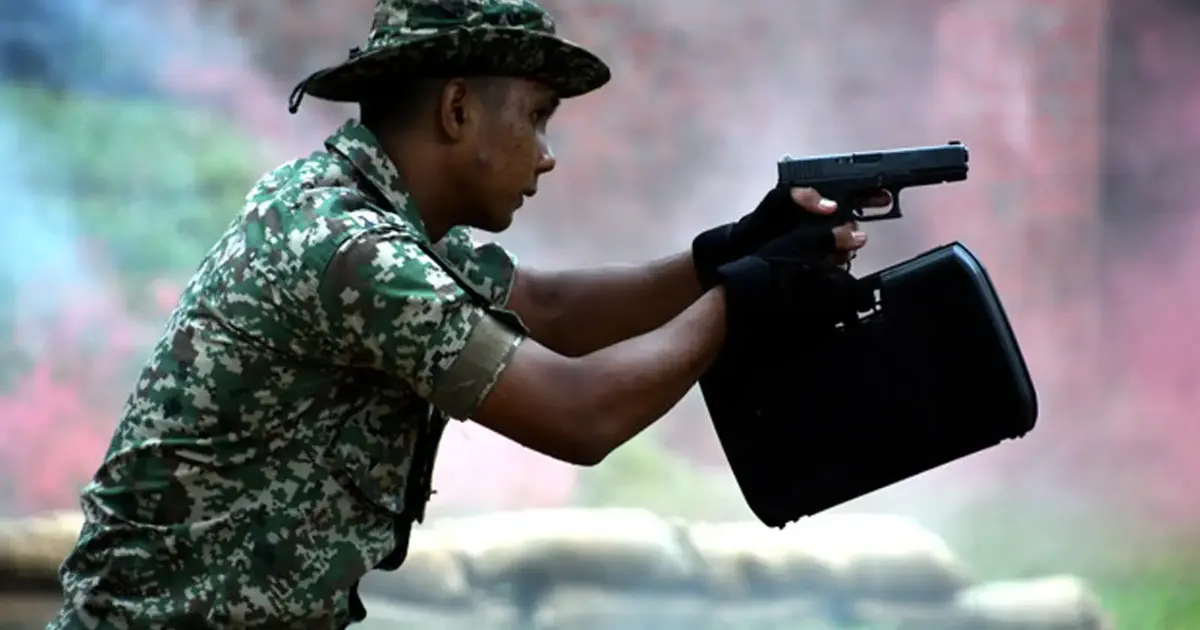
The Australian Defence Force has initiated a formal investigation following the latest incident at Hobart Camp, signalling renewed scrutiny of safety protocols at one of Tasmania's major military installations. As part of the inquiry process, authorities have suspended operations at the live-firing training area, effectively halting all related activities until investigators complete their work and determine what transpired.
This development underscores the Defence Force's commitment to rigorous accountability whenever operational incidents occur at military facilities. The temporary closure of the live-firing range represents a precautionary measure designed to preserve the integrity of the investigation while ensuring no further incidents can occur in the affected zone. Such decisions, while operationally disruptive, reflect the seriousness with which defence authorities now treat safety management across their training establishments.
Hobart Camp has been central to Australian military training operations for decades, serving as a critical venue for personnel to develop and maintain essential combat skills. The facility hosts regular exercises that prepare soldiers for deployment and operational readiness. However, military training environments inherently carry significant risks, necessitating strict adherence to established safety protocols and continuous oversight mechanisms.
For Malaysian and regional observers, this incident highlights how even well-resourced defence forces must grapple with the challenges of maintaining safety across sprawling military installations. The Australian example demonstrates that comprehensive investigation procedures and willingness to temporarily curtail operations constitute best practices in defence management. Such transparency and accountability measures strengthen institutional credibility and public confidence in military operations.
The scope and timeline of the investigation remain subject to Defence Force discretion, though such inquiries typically examine multiple factors including equipment functionality, personnel training standards, adherence to established procedures, and environmental conditions at the time of the incident. Investigators will likely interview relevant personnel, review documentation, and conduct physical inspections of the affected area.
Temporary closures of training facilities, while necessary from a safety perspective, can impact operational scheduling and personnel training pipelines. The Defence Force must balance investigative thoroughness with the practical need to maintain training momentum across the broader defence establishment. This tension between safety and operational continuity represents a recurring challenge in military management worldwide.
The incident fits within a broader pattern of military establishments globally reassessing their safety frameworks. Recent years have seen increased emphasis on preventing training accidents, with defence forces investing substantially in technology, procedure refinement, and personnel development. Australia's approach aligns with international standards that prioritise human safety within military contexts, recognising that personnel represent irreplaceable national assets.
Hobart Camp's location in Tasmania, while geographically removed from Australia's population centres, means incidents there receive less media attention than similar events at mainland installations. Nevertheless, the Defence Force applies consistent investigation standards regardless of facility location, reflecting uniform commitment to safety across all operational areas. This consistency demonstrates institutional integrity in handling sensitive matters.
The investigation's findings will likely inform broader policy discussions within Defence circles about training protocols, equipment standards, and risk management approaches. Should the inquiry identify systemic deficiencies, recommendations may cascade across multiple installations, potentially triggering facility-wide reviews or procedural amendments. Such ripple effects exemplify how individual incidents can drive institutional evolution.
From a regional security perspective, maintenance of robust defence capabilities requires that armed forces sustain operational readiness while simultaneously protecting personnel welfare. Nations throughout Southeast Asia, as they modernise their defence establishments, can observe how mature military institutions balance these sometimes-competing imperatives. Australia's transparent handling of incidents at Hobart Camp and comparable facilities offers instructive examples of defence governance.
Stakeholders including defence personnel, families of military members, and the broader Australian public will closely monitor the investigation's progress and conclusions. Military safety investigations serve multiple constituencies simultaneously, providing technical findings whilst also offering reassurance about institutional responsiveness to safety concerns. Public communication about such matters therefore carries both practical and symbolic significance.
The temporary closure decision, while disruptive to scheduled training operations, demonstrates that Defence leadership prioritises thorough investigation over maintaining training schedules without interruption. This principled stance, though operationally inconvenient, ultimately strengthens institutional credibility and personnel confidence in safety management systems. Such decisions reflect mature institutional approaches to risk governance.

