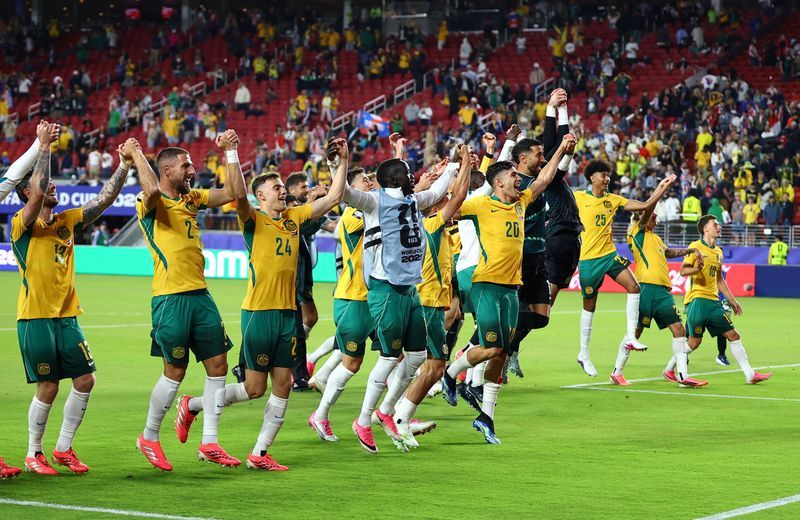
Australia has booked their passage into the World Cup knockout stages following a cautious 0-0 stalemate against Paraguay on Thursday night at San Francisco Bay Area Stadium in the heart of California's tech region. The result seals the Socceroos' place in the tournament's round of 32 for the third time in their history, capping a campaign that comes four years after they last reached this stage in Qatar. The two teams served up a tightly contested affair that lacked genuine goal-mouth drama, though Paraguay will now endure an anxious few days awaiting confirmation that their performance proves sufficient to advance from the remaining matches in Group D.
Tony Popovic's Socceroos engineering their progression from Group D with authority, finishing comfortably in second position behind co-hosts the United States. Australia's knockout opponent will emerge from Group G, a bracket that remains wide open heading into Friday's concluding fixtures, when Egypt face Iran and Belgium take on New Zealand. The mathematical permutations across that group suggest multiple scenarios could yet unfold, leaving genuine uncertainty about which team the Australians will eventually confront.
Paraguay's position remains decidedly precarious despite accumulating four points from their group-stage matches. The South Americans, who reached the quarter-finals back in 2010, must now wait for other results to determine whether they finish among the eight best-performing third-placed teams and thus qualify for the knockout round. Coach Gustavo Alfaro's squad will have endured a tense waiting period as other Group D matches conclude, a common but uncomfortable experience for teams in their position.
Popovic demonstrated tactical boldness by reshuffling his starting lineup with six alterations, reinvigorating his attack through the inclusion of Nestory Irankunda's dynamism and Cristian Volpato's forward play. The Australian manager clearly signalled his intent to pursue an aggressive approach, while Jordan Bos transitioned from his customary left-back role to the right flank to compensate for Jacob Italiano's injury absence. This tactical repositioning nonetheless could not translate into the cutting edge required to breach Paraguay's stubborn defensive resistance.
The opening phase belonged almost entirely to Australia, who constructed several promising opportunities down the right channel. Early in the contest, Volpato's astute positioning freed Jackson Irvine inside the penalty area, yet the midfielder's angled effort travelled directly toward Paraguay goalkeeper Orlando Gill without testing his reflexes. Further chances materialised for Bos and Volpato as the first half progressed, both drawing routine responses from Gill without generating genuine danger or forcing the custodian into genuine heroics.
Paraguay's first-half influence proved minimal, restricted to occasional forays that rarely troubled Australian shot-stopper Thomas Beach. Alfaro recognised the need for reinvigoration and introduced Mauricio, a Brazilian-born attacking option, at the interval. Within five minutes of the restart, Mauricio dispatched an ambitious effort from distance that sailed harmlessly wide, indicating Paraguay's growing determination to establish meaningful attacking momentum. The Paraguayan pressure intensified noticeably as the contest wore on, with the energetic Julio Enciso proving particularly troublesome for the Australian defensive line, repeatedly penetrating down the flanks and creating momentary discomfort.
Enciso squandered what constituted one of Paraguay's superior opportunities with approximately eight minutes remaining when his low strike slipped wide of the left upright, suggesting the South Americans possessed realistic opportunities to breach the deadlock. The match developed into an end-to-end contest characterised by mounting intensity as both teams sensed the importance of breaking through. Bos came agonisingly close to snatching a winning goal in the 89th minute when he surged forward from the right flank, burst between two defenders, and powered a shot that missed the target by the narrowest of margins.
Maurico troubled Beach during the final moments when space opened briefly near the penalty area, though his subsequent effort lacked sufficient conviction and pace, allowing the Australian goalkeeper to gather comfortably. The Socceroos ultimately held firm through concentrated resistance and defensive discipline, advancing into the knockout stages with considerably more pragmatism than aesthetic polish. The victory represents a significant achievement for Australian football, reinforcing their credentials as a competitive force within modern tournament football while simultaneously extending their record of qualifying from the group stage in their recent World Cup campaigns.

