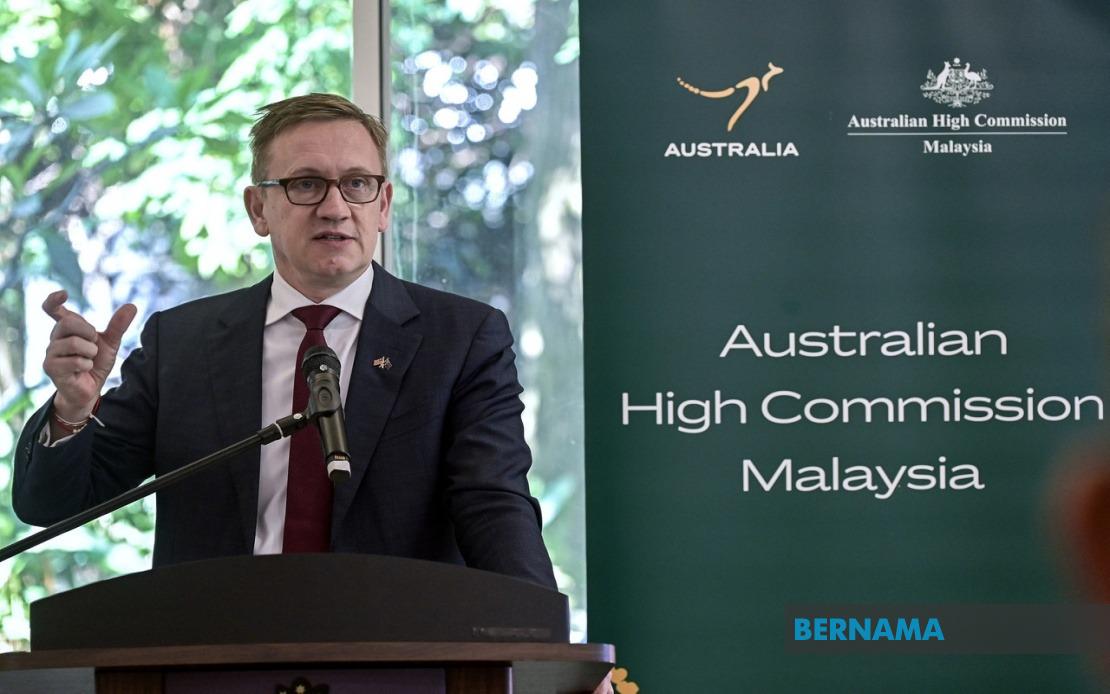
The Australian High Commission in Malaysia has formally established the Australia Awards-Malaysia Semester Programme, marking a fresh approach to educational exchange that aims to increase the number of Malaysian undergraduates and postgraduates gaining direct exposure to Australian academic institutions. The initiative was unveiled at a ceremony in Kuala Lumpur attended by Assistant Minister for International Education Julian Hill, who positioned the scheme as a logical extension of Australia's decades-long educational relationship with Malaysia and a manifestation of Canberra's strategic commitment to deepening engagement across Southeast Asia through human capital development.
The symbolic weight of this announcement extends beyond the mechanics of student mobility. Hill emphasised that over half a million Malaysians have studied in Australia throughout modern history, a figure that underscores Malaysia's position as a significant source market for Australian higher education. The assistant minister framed these alumni networks as informal diplomatic assets, suggesting that graduates who return to Malaysia carry Australian values and perspectives into their professional lives, effectively functioning as informal bridges between the two societies across decades. This human dimension of educational exchange—often overlooked in purely economic analyses of the knowledge sector—reflects Australian policymakers' recognition that soft power flows through personal networks and shared experiences as much as through formal trade agreements.
At the structural level, the programme addresses a specific gap in Malaysia's existing pathways to Australian education. Rather than requiring Malaysian students to relocate entirely for multi-year degrees, the scholarship covers up to two semesters of study at Australian universities while students remain enrolled at Australian branch campuses operating in Malaysia. This hybrid model reduces financial and personal barriers to international education, making the Australian experience accessible to talented students whose families might otherwise lack resources for extended overseas relocation. The scheme covers comprehensive support including international travel, accommodation, living expenses, visas, and insurance—essentially removing the financial hardship excuse that Hill acknowledged can prevent capable young people from accessing premium educational experiences globally.
The participating institutions in the pilot phase—Curtin University Malaysia, Monash University Malaysia, and the University of Wollongong Malaysia—represent Australia's established institutional footprint in Southeast Asia. All four Australian university campuses operating in Malaysia, including Swinburne University of Technology Sarawak Campus, have been invited to expand their participation as the programme matures. This structure is strategically significant for Malaysian stakeholders: it ensures that students from Sarawak and Sabah can access the programme through regional campuses rather than being disadvantaged by geographic distance from Peninsular Malaysia's major urban centres.
The inaugural cohort of sixteen Malaysian students departed for Australia in July for the programme's first intake, establishing a proof-of-concept that Hill expressed confidence would expand substantially. The Australian government's commitment to fund the initiative for an initial four-year cycle reflects budget-planning realities in Canberra, though Hill explicitly signalled hope that successful early results would justify converting the pilot into permanent policy. For Malaysian students and their families, this four-year commitment provides reasonable certainty, though the ultimate longevity of the scheme depends on political and budgetary conditions in Australia evolving favourably over the coming years.
The bilateral context framing this initiative warrants careful examination. Hill argued repeatedly that education must operate as a two-way street, expressing concern that educational exchange had historically flowed predominantly from Malaysia to Australia rather than in reverse. He called for expanded participation by Australian students in Malaysian university branch campuses through mechanisms such as the New Colombo Plan, a regional scholarship scheme that prioritises Australian students studying across Asia. This reciprocity framing—insisting that Australia's investments in bringing Malaysian students to Australian campuses should be matched by Australian students engaging with Malaysia—reveals underlying anxieties about asymmetrical people-to-people connections that might inadvertently position Australia as merely a destination for aspiring students rather than as a partner in genuine cultural exchange.
Beyond student numbers, Hill articulated a vision of Australian universities in Malaysia functioning as research nodes capable of tackling shared regional challenges. He specifically identified medical science, clean energy, mining, and agriculture as problem domains where Australia-Malaysia academic collaboration could generate innovation benefiting both nations. This framing repositions Australian branch campuses from being peripheral teaching operations into integral components of regional research ecosystems. For Malaysian policymakers concerned about ensuring that foreign institutional presence contributes substantively to local knowledge creation rather than merely extracting talent and tuition revenue, Hill's emphasis on collaborative research offers reassurance that Australian universities in Malaysia aspire to more than comfortable market positions.
The programme also reflects Australia's broader strategic recalibration toward Southeast Asia, a region increasingly central to Canberra's economic and security calculations. Education represents a relatively non-controversial arena for deepening ties compared to defence or political discussions that generate regional sensitivities. By investing in semester-exchange scholarships, Australia is essentially funding the creation of generational cohorts with personal experience of Australian universities, Australian peers, and Australian professional networks. These individuals, upon returning to Malaysia, will comprise influential decision-makers in business, government, and civil society—a long-term soft-power investment with compound returns across decades.
For Malaysian students and families, the practical implications are substantial. The scholarship removes significant financial barriers to experiencing world-class education at Australian institutions ranked among the region's highest-tier universities. Malaysian undergraduates can now envision structured pathways to spending formative semesters immersed in Australian academic culture, social networks, and professional ecosystems without requiring their families to finance multiple years of overseas living costs. Postgraduate students benefit similarly, gaining opportunities to access specialised programmes or conduct research at Australian institutions without committing to full-degree enrolment. The scheme thus democratises access to premium international education, tilting advantage toward talented students from middle-class and aspirational families who might previously have viewed Australian study as exclusively available to wealthy families.
The timing of this initiative's launch reflects shifting dynamics in Australia's approach to Southeast Asian education engagement. Historically, Australia's principal strategy involved attracting Southeast Asian students to Australian campuses—a model generating substantial revenue and meeting labour-force needs in key sectors. The new scholarship programme inverts the logic by subsidising Malaysian students' semester study in Australia, effectively positioning Australia as making the investment rather than extracting value from the exchange. This shift suggests Australian policymakers increasingly view educational engagement as a strategic partnership worthy of Treasury expenditure rather than purely as a commercial service-export opportunity. For Malaysian stakeholders, it signals Australia's commitment to deeper bilateral relationships extending beyond transactional higher-education markets.
The role of the Malaysian-Australian Academic Council and MARA, represented by Chairman Dr Asyraf Wajdi Dusuki at the launch, indicates institutional coordination at governance levels that should facilitate programme implementation and expansion. MARA's institutional weight in Malaysian educational policy suggests government commitment to nurturing the initiative at official levels. This backing potentially smooths administrative procedures, facilitates student selection processes aligned with Malaysian educational objectives, and ensures the programme receives symbolic prominence within Malaysia's higher-education landscape—advantages that pilot programmes lacking institutional endorsement might struggle to achieve.
Looking forward, the programme's success will likely be measured through multiple lenses. Enrollment numbers and student satisfaction represent obvious metrics, but equally important will be whether returning Malaysian students translate their Australian experiences into sustained professional and personal connections with Australia. Hill's invocation of alumni networks as human bridges between nations suggests Australia will track not merely whether Malaysian students participate in the programme, but whether they subsequently remain engaged with Australian institutions, contribute to bilateral business or research collaborations, and maintain networks with Australian peers developed during their semester abroad. For Malaysia, success similarly encompasses whether these students bring back skills, perspectives, and connections that enhance Malaysian universities, research institutions, and professional sectors. The bilateral relationship, in this framing, represents the programme's true objective—and its ultimate measure of impact.

