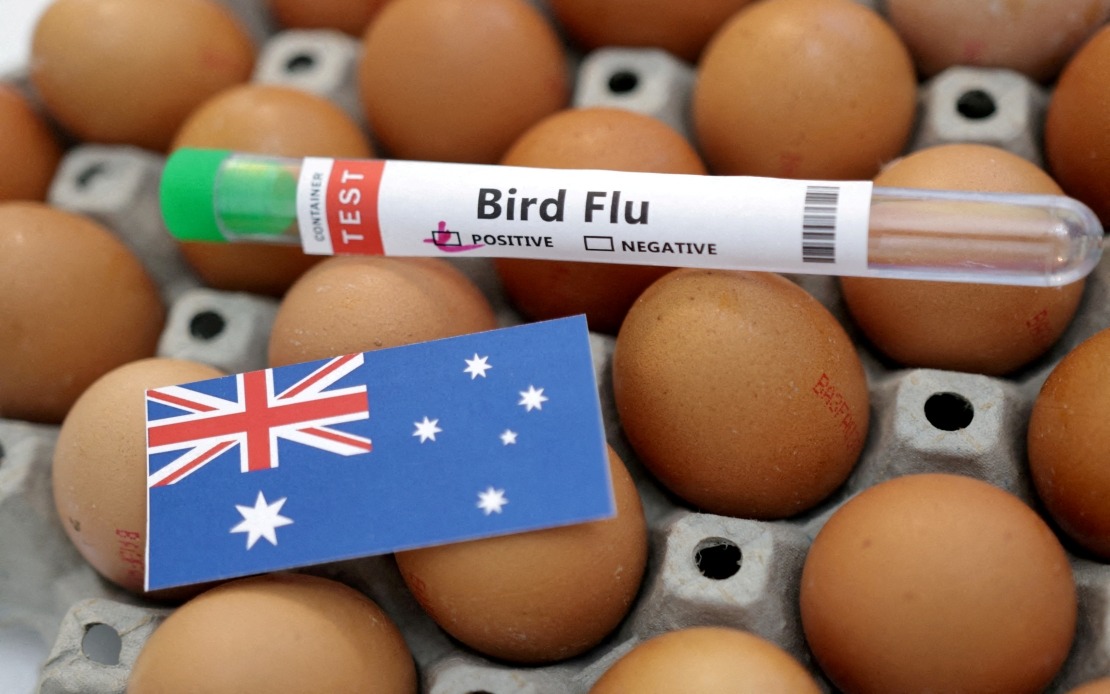
Australia has confirmed the first detection of H5N1 avian influenza in locally-occurring wildlife, marking a potential turning point in the virus's regional trajectory. The identification came after a greater crested tern, discovered dead near the South Australian coastal town of Robe, tested positive for the highly pathogenic strain. Minister for Agriculture Julie Collins announced the finding on Friday, signalling that the disease has now reached the Australian mainland in native bird populations rather than exclusively in migratory species arriving from distant regions.
The significance of this development lies in the distinction between the bird species involved. Unlike all previous Australian detections, which occurred exclusively in migratory birds from sub-Antarctic regions, the infected greater crested tern is non-migratory. This critical difference suggests a potential shift from imported cases to locally-acquired infection, though authorities remain focused on determining the precise transmission pathway. Collins stated that scientists are actively investigating how the seabird contracted the virus, with enhanced surveillance now underway in the coastal area surrounding Robe.
The Australian government has characterised the discovery as concerning but not entirely surprising, framing it as evidence that the nation's biosecurity infrastructure is functioning effectively by detecting the threat. The Minister emphasised that detection capability—rather than prevention alone—represents a core strength of Australia's animal health monitoring system. This defensive framing reflects the reality that H5N1 has become entrenched across multiple continents and regions, making Australia's historical status as the sole H5N1-free continent increasingly difficult to maintain.
The confirmed cases have expanded rapidly in recent weeks. Beyond the greater crested tern, Australian authorities have now documented two additional H5N1 cases in South Australia and one further case in Western Australia, bringing the total mainland count to twelve confirmed infections. This cluster development occurred within a compressed timeframe, with the first Australian mainland detection reported only in June when a case emerged in Western Australia. The acceleration of case identification raises questions about whether the virus is actively circulating or whether enhanced testing protocols are uncovering previously undetected infections.
For Malaysian and broader Southeast Asian observers, the Australian situation carries direct implications. The region's migratory bird populations connect Australia to Southeast Asian wetlands and breeding grounds, particularly through the East Asian-Australasian Flyway corridor. Should H5N1 become established in Australian bird populations, the risk of introduction into regional ecosystems—including Malaysia's important wetland habitats such as Tasek Bera, Pantai Remis, and Kuala Selangor—increases substantially. These areas serve as critical refuelling and wintering sites for migratory waterfowl that also frequent Australian locations.
The epidemiological significance extends beyond ornithological concerns. H5N1's ability to infect wild bird populations that are non-migratory suggests the virus may be establishing itself across broader geographic ranges and in different ecological niches than previously documented. The greater crested tern occupies coastal marine environments, contrasting with the freshwater and grassland habitats typically associated with initial H5N1 detections in new regions. This ecological diversification indicates the pathogen's adaptive capacity and potential to persist in varied settings.
Australia's biosecurity response now focuses on containment through heightened surveillance and investigation protocols. South Australian authorities have implemented intensive monitoring in areas surrounding the Robe discovery, examining additional bird populations for evidence of infection. The investigation into transmission pathways will likely examine whether the infected tern had contact with other infected birds, whether contaminated water or food sources facilitated infection, or whether other environmental factors contributed. Understanding these mechanisms is essential for predicting spread patterns.
The discovery also reflects global H5N1 dynamics that have intensified markedly since 2021. The virus has spread from Asian origins through Europe, Africa, and the Americas, and now Australia's confirmation represents the final major inhabited continent where the strain had not been previously documented in local wildlife. The pathway for introduction likely involved infected migratory birds from sub-Antarctic regions, potentially including species that winter in Australian waters before returning northward on migration routes that pass through Southeast Asia.
For Malaysian public health and agricultural authorities, the Australian development warrants enhanced vigilance within existing surveillance systems. The Department of Veterinary Services and other relevant agencies should intensify monitoring of wild bird populations in wetland regions during migration seasons, particularly focusing on species that also visit Australian habitats. Increased reporting protocols and rapid diagnostic capabilities become increasingly valuable as H5N1's geographic footprint expands closer to Southeast Asian territories.
The economic implications merit consideration as well. Should H5N1 become established in Australian poultry operations—as distinct from wild bird populations—the consequences for regional trade would be substantial. Australia supplies significant volumes of poultry and poultry products to regional markets, and disease outbreaks could trigger import restrictions affecting Malaysian importers and the broader regional supply chain. Current detections remain limited to wild birds, but the pattern of disease amplification observed in other regions suggests continuous monitoring remains essential.
Collins's statement that the finding represents "another sign that our strong biosecurity system is working" reflects an important principle: early detection enables rapid response, even when prevention proves impossible. For Malaysia and other regional nations, the Australian experience underscores the critical value of investment in surveillance infrastructure, diagnostic capacity, and inter-agency coordination. The coming weeks will reveal whether the Australian cases represent isolated incidents or the beginning of sustained circulation in local wildlife populations, with direct implications for regional biosecurity planning and resource allocation.

