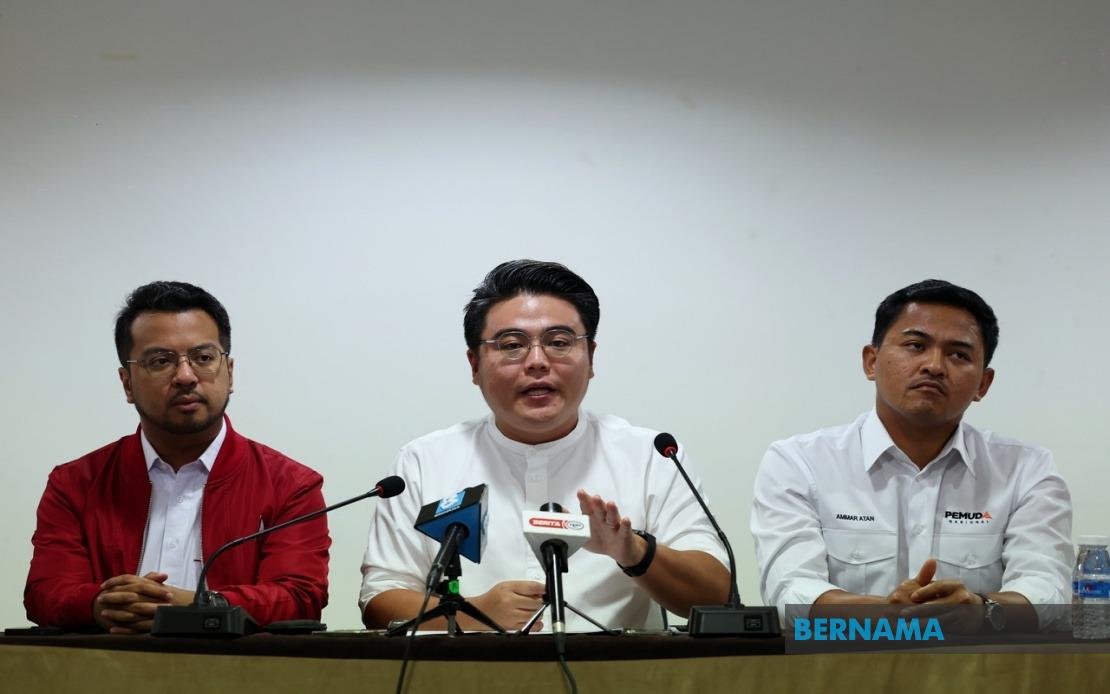
Prime Minister Datuk Seri Anwar Ibrahim's decision to repeal the Universities and University Colleges Act 1971 (AUKU) represents a historic shift in Malaysia's approach to higher education governance, according to prominent youth movement figures who gathered in Kuala Lumpur to celebrate the development. The move has been framed not merely as a symbolic gesture but as a concrete step toward dismantling decades-old restrictions that student advocates argue have stifled intellectual discourse and democratic participation within Malaysia's campuses.
Angkatan Muda Harapan (AMH) chief Woo Kah Leong positioned the repeal as evidence of the MADANI administration's commitment to fundamentally reshaping the relationship between government and the academic community. Speaking at DAP headquarters, Woo underscored the historical significance of having a Prime Minister who himself navigated university activism during his youth take the lead in abolishing legislation that once constrained that very freedom. His emphasis on Anwar's personal experience as a student leader suggested that the repeal emerged from authentic understanding of the constraints rather than mere political calculation, a distinction he deemed crucial to the legitimacy of the reform effort.
The AUKU legislation, enacted in 1971, has long served as a lightning rod for criticism from civil society, academics, and student organisations across the political spectrum. Woo detailed how the act's restrictive provisions had systematically curtailed freedom of expression and inhibited the development of critical thinking skills among undergraduates and postgraduates. By criminalising certain forms of student organising and imposing severe penalties for political activity, the framework created a chilling effect that extended far beyond the letter of the law itself, shaping institutional cultures of self-censorship within Malaysian universities.
The symbolic dimension of repealing AUKU carries weight beyond its immediate legal implications. Woo characterised the abolition as an act of restorative justice aimed at redressing historical wrongs inflicted upon generations of students who faced disciplinary action, expulsion, or legal prosecution under the act's provisions. This framing transforms the policy decision into a broader acknowledgment of systemic unfairness, positioning the government as willing to confront its own institutional legacy. The emotional resonance of such acknowledgment should not be underestimated in a political context where student movements maintain deep historical significance.
To capitalise on this momentum and assess the lived experiences of current students, AMH announced plans to undertake a comprehensive Campus Tour across both public and private higher education institutions. This grassroots engagement strategy aims to harvest perspectives directly from the student body regarding their priorities for campus autonomy and the practical barriers they currently face. The tour represents an effort to ground the legislative change in concrete student concerns rather than allowing it to remain an abstract policy victory.
Amanah National Youth deputy chief Ammar Atan shifted the conversation toward developmental and psychological dimensions of the reform. He argued that student autonomy serves purposes beyond symbolic political freedom, functioning instead as essential infrastructure for cultivating independent-minded citizens capable of resisting various forms of coercion and manipulation. By allowing students to organise, debate, and mobilise around causes they perceive as important—without the constant threat of state intervention—the repeal creates space for young people to develop their intellectual and political agency during the formative university years. Atan's framing challenges purely legalistic understandings of the reform by emphasising its role in character formation and civic development.
DAP Socialist Youth (DAPSY) National deputy chief Raja Ahmad Iskandar Fareez contributed a cautionary perspective by characterising the AUKU repeal as merely an opening move in a longer reform agenda. Rather than celebrating the abolition as the culmination of advocacy efforts, he positioned it as the foundation upon which more comprehensive higher education restructuring must be built. This measured assessment acknowledges that removing restrictive legislation does not automatically generate the institutional conditions necessary for genuine campus autonomy. Bureaucratic inertia, conservative university administrations, and the absence of positive frameworks to facilitate student governance remain formidable obstacles even after legal barriers fall away.
The establishment of a special monitoring committee by DAPSY and AMH indicates serious intent to translate legislative change into institutional practice. Universities across Malaysia have operated for decades within the AUKU framework, developing administrative structures, policies, and cultural norms adapted to that legal environment. The transition to a post-AUKU landscape will require deliberate, sustained engagement to ensure that universities genuinely embrace the autonomy now available to them rather than replicating the old hierarchical patterns through administrative means. This committee structure suggests youth leaders understand that vigilance remains necessary even after legislative victories.
For Malaysian readers and Southeast Asian observers, the AUKU repeal carries implications extending beyond campus boundaries into broader questions about governance, accountability, and the relationship between governments and civil society. Malaysia has long been cited by international human rights organisations as a country where legislation restricts fundamental freedoms in ways uncommon among regional peers. The willingness of the current government to undertake even symbolic reversals of such restrictions signals potential openness to broader reforms in areas from freedom of assembly to press freedom. Whether these opening gestures translate into substantive, systemic change remains an open question that the coming months will begin to answer.
The youth leaders' emphasis on the AUKU repeal as a chapter-opening rather than chapter-closing moment reflects sophisticated political maturity. They appear conscious that genuine transformation of institutional cultures requires work extending far beyond legislative amendments. The decision to organise campus tours and establish monitoring mechanisms demonstrates understanding that the real test of the reform will involve watching whether students actually exercise freedoms previously forbidden, and whether universities genuinely accommodate this new reality or find ways to constrain student activity through means other than explicit legal prohibition.

