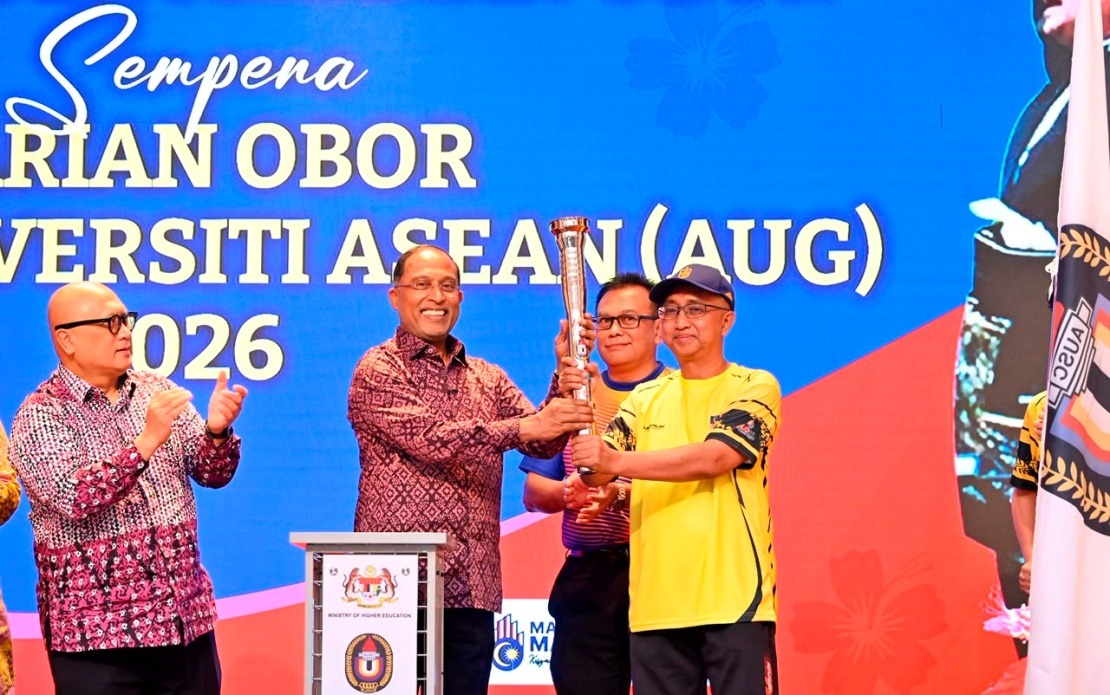
The ceremonial lighting of the ASEAN University Games torch took place at the Ministry of Higher Education in Putrajaya, marking an official countdown to Southeast Asia's premier university sports competition arriving on Malaysian soil this December. The symbolic gesture, conducted during MOHE's monthly assembly, represents both the nation's readiness to host and the collective determination of Malaysian student-athletes preparing for one of the region's most significant athletic gatherings.
Higher Education Minister Datuk Seri Dr Zambry Abd Kadir entrusted the flame to Prof Dr Mohammad Ismail, deputy vice-chancellor of Universiti Malaysia Kelantan and leader of Malaysia's contingent, in a moment designed to inspire the broader student sporting community. The handover carried a clear message about national expectations—that Malaysian competitors should approach competition with both competitive ambition and a profound sense of representing their country's sporting values on a regional platform.
Dr Zambry's remarks underscored a philosophy increasingly central to Malaysia's sporting strategy: the notion that athletic achievement extends beyond individual medals or records. Student-athletes competing in December will carry responsibility not merely for personal glory but for upholding Malaysia's reputation among its ASEAN peers. This framing reflects how Southeast Asian nations view university sports as extensions of soft power and cultural diplomacy, with student competitors serving as de facto ambassadors for their countries.
The torch relay itself travelled a symbolic route encompassing both governmental institutions and academic centres. Beginning at the MOHE's Putrajaya headquarters, the journey proceeded through the Ministry of Tourism, Arts and Culture before returning to the education ministry. This pathway, deliberately connecting tourism and higher education, hints at the Games' broader significance for Malaysia as both a cultural showcase and an academic achievement. Subsequent legs will traverse the nation's most prominent universities—Universiti Kebangsaan Malaysia, Universiti Putra Malaysia, Universiti Pertahanan Nasional Malaysia, Universiti Malaya, and Universiti Teknologi MARA—ensuring the torch reaches the institutions most likely to contribute competitors and demonstrate institutional pride.
The four athletes accompanying the torch relay represented Malaysia's depth across diverse sporting disciplines. Long jumper Andre Anura Anuar and shot putter Nani Sahirah Maryata, both from Universiti Putra Malaysia, embodied track and field excellence, while karate athlete Thevendran Kaliana Sundram from Universiti Pertahanan Nasional Malaysia and taekwondo competitor Lee Hui Yee from Sultan Salahuddin Abdul Aziz Shah Polytechnic showcased Malaysian strength in martial disciplines. Their presence signalled that the host nation fields competitive rosters across traditional Olympic sports and emerging athletic pursuits, positioning Malaysia as a well-rounded sporting nation rather than specialist in narrow fields.
The December Games will unfold across metropolitan and satellite locations surrounding Kuala Lumpur, with competition hubs established in Shah Alam, Kuala Lumpur proper, Serdang, and Bangi. This geographic distribution allows Malaysia to showcase multiple cities' infrastructure while reducing logistical strain on any single venue. The choice of these locations reflects Malaysia's developed transport networks and established sports facilities, presenting an opportunity for neighbouring ASEAN nations to witness Malaysian urban development and sporting capacity.
With 4,669 registered participants comprising approximately 2,849 athletes and officials representing 11 nations, plus an additional complement of 700 referees and competition officials alongside 920 volunteers, the December event will represent one of the largest student sporting assemblies in Southeast Asia. The scale demands sophisticated coordination across accommodation, transportation, catering, and security—a practical test of Malaysian event management capabilities that extends significance beyond competitive results.
Nineteen distinct sports will feature across the Games, spanning both conventional university athletics—track and field, swimming, badminton, volleyball—and disciplines increasingly prominent in regional competition. This breadth ensures representation from universities with varied sporting strengths and enables smaller institutions to compete meaningfully rather than facing dominance by traditionally athletic-focused universities. The inclusive sport calendar reflects ASEAN's commitment to democratic participation in university sports rather than perpetuating hierarchies based on institutional resources.
The thematic framework of "HOLISTIC.EXCELLENCE" carries particular significance for Malaysia's positioning. Rather than emphasising pure athletic prowess, the theme invokes integrated development encompassing physical, intellectual, and character dimensions. This philosophy aligns with Malaysia's broader university mission and resonates across ASEAN societies increasingly concerned with holistic student development rather than narrow specialisation. The torch run, therefore, becomes not merely a ceremonial countdown but a public statement about Malaysian educational values.
For Malaysian universities, hosting ASEAN competitors creates opportunity for institutional visibility and international engagement. Student-athletes gain exposure to regional peers and competitors, potentially fostering networks that extend beyond December's competition calendar. Universities can showcase facilities, academic programmes, and student life to delegations from across Southeast Asia, with implications for future student recruitment and academic partnerships extending well beyond the Games' conclusion.
The timing of this torch relay, occurring several months before competition begins, demonstrates deliberate Malaysian strategy to build momentum and public awareness gradually rather than relying on last-minute promotional efforts. Media coverage of the torch journey, university-by-university relay phases, and athlete features will maintain sustained public engagement, ensuring the Games become established in national consciousness as a significant sporting and cultural moment rather than perceived as a distant regional event.
SEA Games precedent suggests that successful hosting generates broader benefits extending into national sports infrastructure investment, volunteer programme development, and international sporting relationships that persist long after competition concludes. Malaysia's careful ceremonial beginning to AUG 2026 preparation indicates recognition that December's competition represents more than a two-week sporting spectacle—rather, it constitutes an opportunity to advance Malaysia's positioning within Southeast Asian sporting governance and to demonstrate organisational excellence that might influence future major event hosting decisions.

