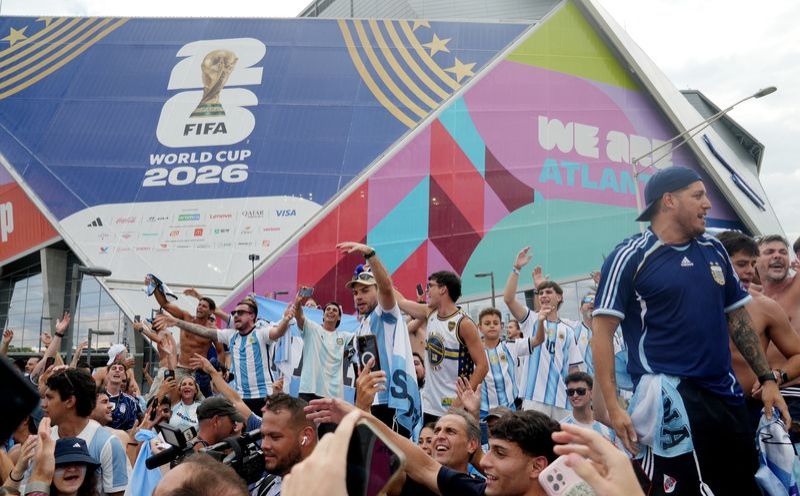
Atlanta spent July marching to an unfamiliar rhythm. Known worldwide as the epicentre of hip-hop culture, America's southeastern metropolis temporarily traded its musical heartbeat for the roar of football crowds. The city hosted eight matches across the Women's World Cup, from Cape Verde's tournament debut to Argentina's dramatic comeback victory over England in the semi-final, creating an international spectacle that transformed public spaces and left indelible impressions on both visitors and residents.
The transformation did not happen overnight. Dan Corso, president of Atlanta's host committee, recalls receiving an exploratory email in July 2017 inviting the city to bid for World Cup hosting rights. The response was swift and decisive. Within weeks of those initial conversations, Atlanta's leadership committed to pursuing the opportunity, recognizing the strategic value and global prestige such an event could deliver to the region.
Atlanta's football credentials had been steadily strengthening in the years preceding the World Cup bid. Major League Soccer franchise Atlanta United launched in 2017 and won the MLS Cup just a year later, establishing immediate credibility within American soccer circles. The team's consistent leadership in regular-season attendance figures demonstrated genuine fan engagement beyond typical American sporting indifference towards soccer. These metrics proved crucial when FIFA evaluators assessed the city's candidacy, signalling a market ready for the world's largest women's sporting event.
Arthur Blank, owner of both Atlanta United and the NFL's Atlanta Falcons, invested substantially in developing Atlanta's soccer infrastructure. A $50 million donation to the U.S. Soccer National Training Center, located just outside the city, reinforced Atlanta's commitment to becoming a continental soccer hub. Additionally, the presence of U.S. Soccer's administrative headquarters in Atlanta provided organizational advantages and demonstrated institutional confidence in the city's capabilities.
Atlanta brought extensive experience hosting major international sporting events. The city staged the 1996 Olympic Games and will host Super Bowl LVIII in 2028, making this the fourth time the NFL championship returns to the city. Yet despite this pedigree, Atlanta had never hosted the FIFA World Cup in any format. The last major FIFA tournament on American soil occurred in 1994, three decades before this summer's competition. For Atlanta residents, hosting marked a historic milestone that aligned with the city's broader aspirations to establish itself as a global sporting capital.
The tournament's public engagement exceeded expectations across multiple metrics. The official Fan Fest, which ran for nineteen days, attracted more than half a million spectators who participated in cultural celebrations, entertainment, and community activities. Beyond the dedicated festival space, the eight matches themselves drew 544,516 fans, including three knockout-round contests that tested the city's venue capacity and logistical systems. These numbers underscore the genuine appetite for women's football within the American public and specifically within Atlanta's diverse population.
Community participation demonstrated that the tournament transcended typical sporting event demographics. Over 2,000 Atlantans and Georgians volunteered to support operations, indicating broad grassroots investment in the competition's success. This volunteer engagement reflected civic pride and provided employment-adjacent opportunities for residents seeking meaningful involvement with an international showcase. The scale of volunteerism suggested that Atlanta's population viewed the World Cup as a collective community achievement rather than merely a commercial enterprise imposed from above.
Course emphasized the broader significance of hosting for international perception. Beyond the matches themselves, he anticipated that visitors and temporary residents would develop lasting memories and deeper understanding of Atlanta's unique character. The city's remarkable diversity, often overshadowed by its hip-hop cultural dominance, became visible to global audiences through the lens of a sporting spectacle that naturally attracts international participants and observers. This soft power dimension carries implications extending far beyond immediate economic metrics.
The tournament's legacy initiatives demonstrate strategic thinking about sustainable impact. The host committee partnered with MARTA, Atlanta's public transportation authority, and the Soccer in the Streets programme to construct a new mini-pitch facility providing free access to football for children across socioeconomic backgrounds. This infrastructure investment explicitly targets youth development and community access, ensuring that hosting benefits extend beyond wealthy demographics typically associated with organized sports.
Atlanta's ambitions now extend beyond the 2024 tournament. The city plans to launch a new National Women's Soccer League franchise in 2028, coinciding with the Super Bowl's return to the city. This timing creates opportunities for cross-promotional development and infrastructure sharing that could strengthen both sporting entities. Additionally, Atlanta is actively pursuing hosting rights for the 2031 Women's World Cup, indicating that this summer's successful competition has positioned the city as a preferred venue for future FIFA competitions.
For Southeast Asian observers, Atlanta's trajectory offers instructive lessons about sports infrastructure development and the role of international competitions in establishing global sporting legitimacy. The city's experience demonstrates how sustained investment, community engagement, and organizational capacity converge to successfully host major events. As nations throughout the region consider hosting bids for various international competitions, Atlanta's model of integrating professional franchises, grassroots development, and volunteer mobilization provides a framework worthy of consideration.
The broader significance extends to how host cities leverage sporting events for long-term repositioning. Atlanta did not simply stage matches; the city fundamentally altered its international sporting narrative. Through the World Cup platform, Atlanta established itself as a destination for women's soccer specifically and world-class sporting events generally. This rebranding has implications for investment flows, tourism patterns, and urban development priorities that will extend well beyond 2024, creating momentum for the city's continued evolution into a multipurpose global sporting capital.

