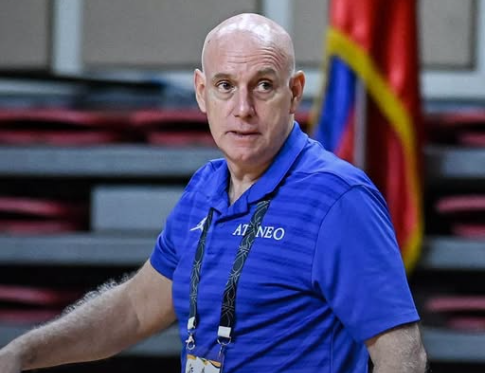
The Philippine National Police Criminal Investigation and Detection Group has recommended that the Department of Justice file charges against former Ateneo de Manila University men's basketball coach Thomas Anthony 'Tab' Baldwin and 10 members of the team's support staff under the Anti-Hazing Act. The recommendation follows investigations into a tragic June 8 training activity in Dipaculao, Aurora, where basketball players Rene Baterbonia and Divine Adili drowned. The case marks a significant moment in Philippine sports accountability, testing how the country's legal system applies anti-hazing legislation beyond traditional fraternity initiation scenarios into the realm of professional athletic conditioning.
Authorities identified the accused as Baldwin alongside strength and conditioning coaches Grant Dearns and Ceasar Vicent Javellana Elumba, assistant coaches Dean Caesar B. Castaño, Sandro Nicholas Romero Soriano, and Reynaldo Jacinto, student managers Paolo Manuel Maceda Adevoso and Andrew Lorenzo 'Drew' Bondoc Salud, physical therapist John Eric Quiambao Rueca, and utility personnel Aris Ramos Pronce and Joel 'Boy' Palmiano Rapa. All 11 individuals were present at the beach activity and, according to investigating officials, none intervened to halt what would ultimately become a fatal sequence of events.
The investigation revealed a pattern of escalating physical demands beginning at 4am on the day of the tragedy, when 20 team members were instructed to complete a four-kilometre run before dawn. This was followed by intense physical games with punishments imposed on losing participants, progressively depleting the athletes' energy reserves and judgment. The seawater training component commenced between 2 and 2:30pm, a timing that proved catastrophically significant given that active high tide was forecast for 2:27pm. The convergence of exhausted athletes, hazardous oceanic conditions characterised by rip currents and varying seabed depths, and peak tidal movement created a perfect storm of danger.
Prosecutors emphasised that the Anti-Hazing Act, formally known as Republic Act No. 11053, extends beyond the traditional understanding of hazing as initiation rites. The legislation explicitly encompasses any practice that causes physical or psychological suffering as a prerequisite for membership. The morning's forced calisthenics and exposure to harsh weather, combined with the afternoon's dangerous marine environment, fell squarely within this expanded definition. Officials noted that the activity served a dual purpose: simultaneously functioning as team-building while simultaneously serving as a roster selection mechanism, with only 17 of the 20 present athletes ultimately making the final squad submitted to the University Athletics Association of the Philippines.
The timing element added particular weight to investigators' assessment of negligence. When the players entered the water at peak tide, environmental conditions were substantially more treacherous than they would have been hours earlier or later. Brian Tomas, the Department of Interior and Local Government legal chief, emphasised that the itinerary of relentless physical exertion—beginning before sunrise and continuing without adequate rest—rendered the athletes physiologically compromised before they entered the ocean. Their depleted physical state combined with powerful natural forces created an environment where drowning became not merely possible but increasingly probable.
One notable detail emerged during the investigation that contradicted speculation about potential weights being used during the activity. When police recovered the bodies of Baterbonia and Adili, no weights or restraints were discovered, yet the young men still could not survive the conditions. This finding underscores that the tragedy resulted from environmental hazards and physical exhaustion rather than intentional drowning methods, yet simultaneously demonstrates how extreme the conditions were that even unencumbered swimmers could not prevail. The absence of weights made the tragedy no less preventable and the negligence no less culpable.
Baldwin previously issued a public apology through a lengthy video statement circulated on Ateneo's social media channels, acknowledging his responsibility in the deaths. Yet the recommendation for formal charges represents the transition from expressions of regret to legal accountability. The coach's position as the activity's architect and primary decision-maker places substantial burden on his leadership and judgment. As the head coach, he bore ultimate responsibility for the safety protocols, environmental conditions assessment, and individual athlete welfare regardless of what subordinate staff members may have suggested.
This case carries broader implications for Malaysian and Southeast Asian sports institutions, particularly university athletic programmes. Many regional universities operate athletic programmes with similar structures: coaching hierarchies, support staff, team-building activities, and roster selection processes. The Ateneo case demonstrates that even at prestigious institutions with substantial resources and facilities, systemic failures in safety assessment and risk management can prove fatal. The case serves as a cautionary template for what occurs when performance objectives, team-building rhetoric, and roster selection pressures override human safety considerations.
The investigation's emphasis on why no individual staff member intervened—despite all 11 professionals being present—highlights the organisational culture problem at play. When multiple authority figures witness dangerous conditions yet none acts to halt the activity, it suggests normalised risk-taking, hierarchical dynamics that discourage challenge to decision-makers, or collective failure to recognise the severity of environmental hazard. This aspect of the case carries particular relevance for Malaysian universities and sports organisations currently evaluating their training protocols, particularly given the tropical climate's own weather and oceanic hazards.
As the case proceeds to the Department of Justice for preliminary investigation and evaluation, it will establish important precedent regarding coach and staff liability in athletic activities. The recommendation to charge all 11 individuals rather than concentrating responsibility on Baldwin alone reflects an understanding that systemic failure extended throughout the entire chain of command and supervision. This distributed accountability approach may influence how Malaysian sports organisations assign responsibility in future incidents, potentially creating stronger incentives for mid-level staff to voice safety concerns rather than silently acquiescing to potentially dangerous decisions.
The Anti-Hazing Act recommendation marks a crucial distinction between legitimate athletic training and practices that cross into abuse or reckless endangerment. Philippine authorities demonstrated that progressive physical stress, exposure to hazardous environments, and roster selection mechanisms can collectively constitute hazing even absent traditional initiation rituals. For Malaysian athletes and coaches operating within university systems and professional sports frameworks, the case underscores that legal and regulatory boundaries exist around how far training protocols can legitimately push athletes, and that tragic consequences trigger thorough investigation and potential prosecution regardless of institutional prestige or coaching credentials.

