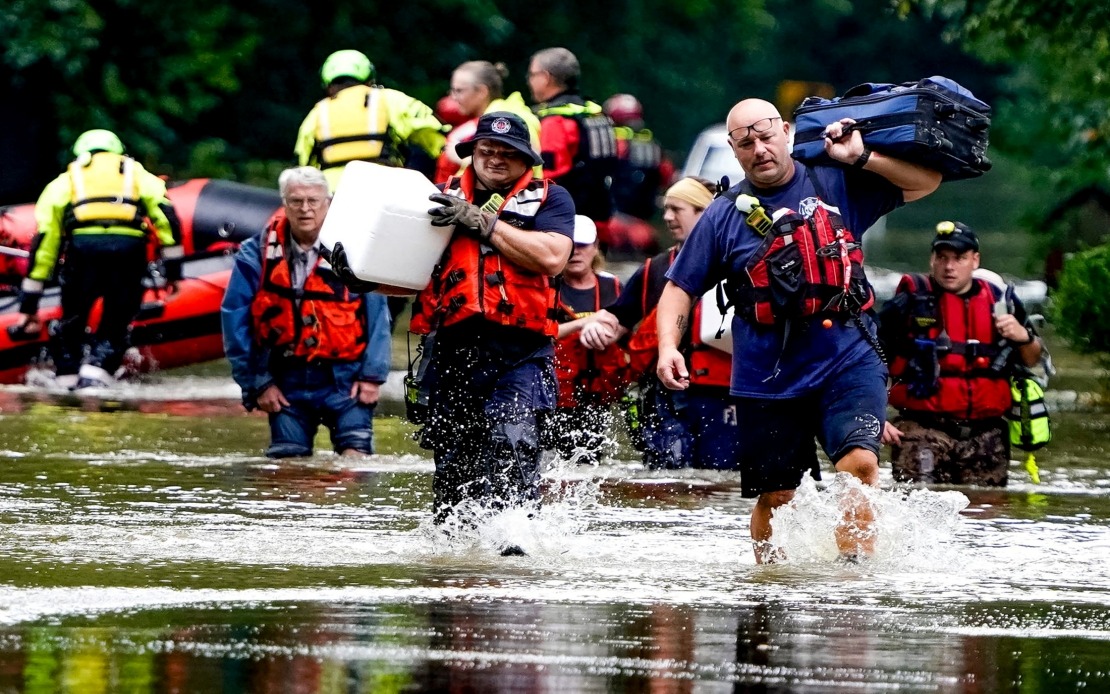
A devastating storm system has ravaged Indiana with unprecedented flooding, claiming at least six lives and displacing hundreds of residents as the state grapples with what officials are characterizing as a once-in-a-lifetime disaster. The extreme weather event, which deposited more than 11 inches of rain across portions of the American midwest state over a two-day period, has overwhelmed critical infrastructure and triggered an urgent emergency response that continues to unfold.
The destruction has been particularly severe along the White River corridor, where floodwaters advanced from Hamilton County and swept through the northern suburbs surrounding Indianapolis. The sheer volume of water moving through this drainage system has forced authorities to execute one of the largest rescue operations the region has witnessed in recent memory. Emergency services have successfully retrieved more than 90 people to safety, along with 45 pets that were trapped in affected areas, underscoring the scale of the displacement crisis affecting ordinary families.
In Indianapolis' Ravenwood neighbourhood, the flooding reached dystopian proportions, with vehicles entirely submerged beneath murky water and flood surges reaching residential front doors and ground-floor windows. Stranded residents have resorted to improvised water transport, navigating submerged streets using kayaks and rowboats to reach safe ground. These haunting scenes have become emblematic of the broader catastrophe unfolding across the state, as infrastructure designed for normal weather patterns has proven wholly inadequate against this exceptional precipitation event.
The meteorological intensity of the rainfall has shattered historical benchmarks for the region. The National Weather Service documented precipitation exceeding 11 inches in certain localities over the compressed timeframe, causing the White River to surge to heights that surpassed water levels recorded during the devastating 1913 floods. In both Anderson and Noblesville, the river climbed above 24 feet, demolishing more than a century of records and providing stark evidence of the severity of this particular meteorological episode. Jacob Spence, who directs emergency management for Marion County, emphasized the historic nature of the unfolding disaster, noting that communities are documenting water levels and damage patterns entirely without precedent in modern records.
Governor Mike Braun has engaged directly with the federal government to mobilize disaster resources, having already initiated contact with President Donald Trump regarding an expedited Federal Emergency Management Agency emergency declaration. Braun's statement reflected the gravity of the moment, expressing compassion for the families of the five Hoosiers confirmed deceased and warning residents to treat flooding with utmost seriousness. The governor's intervention signals the interstate coordination and resource mobilization that such catastrophic events demand, positioning Indiana to receive federal financial and logistical support as recovery efforts begin.
The confirmed fatalities span multiple counties across the state, underscoring the geographic breadth of the disaster. Deaths have been reported in Jennings, White, Porter, and La Porte counties, alongside an additional fatality in Delaware County where a 58-year-old woman perished after apparently attempting to navigate her vehicle through dangerously swollen waterways. This particular death illustrates the peril that floodwaters present even to those who believe they can safely traverse inundated areas, a reminder that the destructive force of moving water frequently exceeds public perception.
Mayoral authorities in Indianapolis recognized the catastrophic scope early in the event's evolution. Mayor Joe Hogsett declared a local emergency and issued evacuation orders for residents in flood-prone zones adjacent to the White River, actions that proved essential in preventing additional casualties. Todd Wilson, who oversees Indianapolis' public works infrastructure, cautioned that water levels continued rising even as initial rescue operations were underway, emphasizing that the flooding emergency remained dynamically dangerous and warned residents to heed official guidance without exception.
The storms that triggered this flooding system also produced tornadoes alongside the deluge, compounding the destructive impact across a vast geographic region. Damage reports have emanated from the Chicago metropolitan area eastward through western Pennsylvania, suggesting that the storm complex responsible for Indiana's catastrophe formed part of a much larger weather disturbance affecting multiple American states. This broader meteorological pattern underscores how severe atmospheric conditions in continental interiors can generate cascading hazards across extensive territories.
Flash flood warnings remained in effect across central Indiana as emergency management officials anticipated additional precipitation and continuing water level instability. The meteorological forecast suggested that supplementary storms could develop, presenting the prospect of renewed flooding in already-saturated communities. This extended forecast outlook means that recovery efforts face potential disruption and that communities may confront secondary flooding phases as additional moisture moves through the affected regions.
The Indiana disaster provides a cautionary framework for examination by Southeast Asian nations experiencing similar patterns of extreme precipitation and flooding vulnerability. Malaysia, Indonesia, and the Philippines have all confronted comparable inundation catastrophes in recent years, and the American response—emphasizing early warning systems, evacuation protocols, and federal resource mobilization—offers potential lessons for regional emergency management frameworks. The role of historical hydrological data in documenting record-breaking conditions demonstrates the value of maintaining long-term water measurement and documentation systems that can inform public understanding of unprecedented events.

