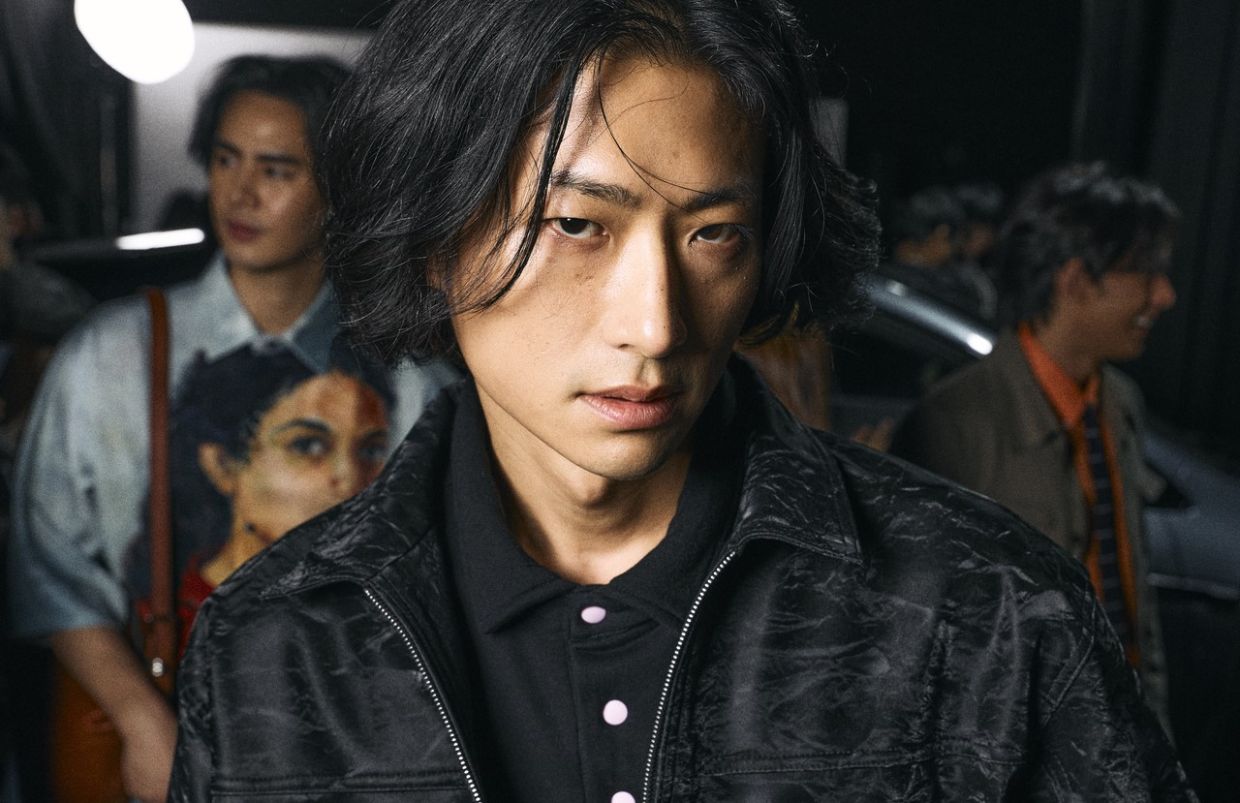
At 40 years old, Heo Yong-jin made a decision that defies conventional career wisdom: he left behind a stable position at one of South Korea's most prestigious law firms to pursue fashion modelling. What might appear reckless to many has instead evolved into a remarkable second act, complete with an exclusive catwalk appearance at a Louis Vuitton trunk show in Bangkok and a growing portfolio of commercial work across Asia. His unlikely trajectory, chronicled in an Instagram reel that has accumulated four million views, challenges assumptions about age, reinvention, and the timing of major life changes.
The turning point came unexpectedly while Heo was living in Spain with his wife in early 2023. He had relocated to pursue studies in sports management and agency operations, intending to broaden his professional horizons beyond his decade-long career in litigation support at Kim & Chang, South Korea's premier law firm. During this period, he joined classmates in recreational activities—football and padel—and found himself gradually shedding weight as his lifestyle became more active. When his wife casually observed the transformation, she posed a question that would alter his entire trajectory: why not try modelling?
Standing 188 centimetres tall, Heo began to seriously consider whether his physical attributes might unlock opportunities in an industry he had never previously contemplated. With only four months remaining on his Spanish visa, he made a decisive move. After researching the modelling landscape, he discovered that European agencies had genuine demand for Asian models, making the prospect feel less like fantasy and more like viable opportunity. Rather than deliberate or consult extensively, he committed himself to building a portfolio from the ground up, personally hiring photographers and contacting potential clients to establish initial work samples.
The European phase yielded early success. Heo appeared in campaigns for various local brands, including a sunglasses commercial and an insurance advertisement in which he portrayed a Malaysian father—work that gave him both confidence and practical experience. These initial credits proved sufficient to motivate him, and he returned to South Korea determined to leverage this momentum into sustained modelling opportunities. However, he encountered an immediate and sobering reality: South Korean agencies showed little enthusiasm for a nearly 40-year-old newcomer with minimal industry experience and no established connections. Age emerged repeatedly as a barrier, with agents suggesting his window for breaking into modelling had closed.
Undeterred by domestic rejection, Heo broadened his geographic search across Asia. He systematically reached out to agencies throughout China and Southeast Asia via email, submitting his portfolio through official channels and persistence. This strategy eventually yielded results when a Thai agency responded positively to his approach. Operating between Thailand and South Korea, he began accumulating campaign work with regional brands and editorial credits that slowly built his professional credibility within Asian markets. The work remained sporadic and uncertain, but each booking reinforced his belief that a path existed for him in this industry.
The most significant milestone came last July when Heo received an invitation to walk in an exclusive Louis Vuitton trunk show in Bangkok. The French luxury house was presenting a collection created through a collaboration between menswear creative director Pharrell Williams and Japanese designer Nigo. Walking in this prestigious venue represented a qualitative leap from previous work—validation from one of the world's most demanding fashion institutions. Reflecting on the experience in an interview shortly afterward, Heo expressed genuine astonishment at the opportunity, describing a sense of wonder that someone from his unconventional path had been selected for such an exclusive event.
Yet even this high-profile appearance did not immediately translate into a steady stream of modelling work. Instead, Heo found himself navigating continued uncertainty, a condition he now recognises as fundamentally different from the structured predictability of his legal career. During his decade at Kim & Chang, he had inhabited a stable professional environment offering clear advancement pathways and reliable compensation. That security came at a cost he did not fully appreciate at the time: a persistent sense of disconnection from his work, an absence of genuine engagement with his professional life. The financial instability of modelling frightens him occasionally, yet he has come to understand that material comfort alone does not produce happiness or fulfilment.
What modelling has provided instead is authentic confidence and a rediscovery of enjoyment in work itself. Heo acknowledges that he previously projected confidence while harbouring profound self-doubt—a common coping mechanism in demanding professional environments. The modelling industry, paradoxically, has given him genuine self-assurance rooted not in external markers of success but in the simple experience of being valued for his appearance and chosen for specific roles. This transformation extends beyond professional benefit; it has fundamentally altered his relationship with ambition and self-worth. When brands contact him to front campaigns or appear in lookbooks, the experience still feels surreal, suggesting that validation from prestigious institutions continues to impact his sense of possibility.
Inquiries from South Korean brands have begun emerging more frequently, indicating that his early European and Southeast Asian work is gaining recognition within his home market. This domestic interest represents a significant shift from the initial rejection he faced upon returning to Korea. The momentum extends to international fashion events, with Heo now targeting the Milan and Paris fashion weeks scheduled for late September through early October. These prestigious events will feature presentations from major fashion houses including Prada, Bottega Veneta, Saint Laurent, and Tom Ford—precisely the calibre of institutions that represent the pinnacle of the industry.
However, Heo remains clear-eyed about the challenges ahead. Securing agency representation for major fashion week participation remains a prerequisite, and the competition he faces from younger, more established models with extensive track records is formidable. At 40 with limited portfolio depth, the odds appear mathematically unfavourable according to industry standards. Yet his entire journey thus far has been constructed from long-shot scenarios that defied conventional probability. What fundamentally appeals to him about modelling—the opportunity to embody different characters, express himself authentically, and collaborate with brands to realise their creative visions—provides intrinsic motivation that transcends the external markers of conventional success.
Heo resists characterising his experience as a conventional success story, preferring to frame it as a genuine exploration of what authentic work might look like when divorced from social expectation and career trajectory. His most distinctive insight concerns the value of uncertainty itself. For individuals spending decades within stable professional structures without understanding what they truly want or what kind of work genuinely fulfils them, the financial precariousness of a new path can paradoxically represent liberation rather than loss. The resonance of his story across Southeast Asia—visible in the millions of Instagram engagement metrics—suggests that his experience speaks to a broader anxiety about authenticity, reinvention, and the courage required to abandon established identity for the possibility of meaningful work, regardless of age or initial probability of success.

