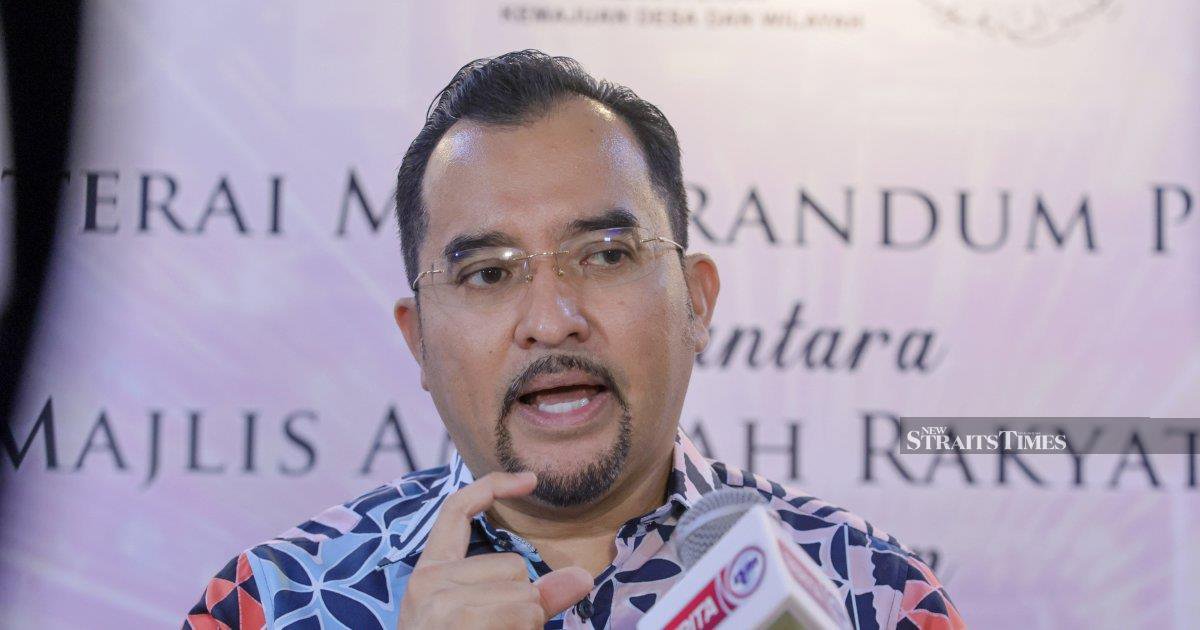
Umno secretary-general Datuk Dr Asyraf Wajdi Dusuki has moved to clear his name regarding a contentious Tabung Haji investment, insisting he wielded no authority over the Islamic pilgrimage fund's commercial dealings while serving as deputy minister in the Prime Minister's Department. The assertion comes amid scrutiny surrounding Tabung Haji's property ventures and represents an effort to distance himself from potential governance issues linked to the fund's administration during that period.
The denial addresses questions about the fund's acquisition of Al-Rawda, a significant property transaction that has drawn attention from regulators and the public owing to concerns about investment oversight and accountability within Malaysia's premier Islamic savings institution. Tabung Haji has long been viewed as both a trusted repository for pilgrims' savings and a substantial holder of real estate assets, making its transactions a matter of national interest, particularly when political figures are implicated in decision-making processes.
Dr Asyraf's clarification is strategically significant given the heightened focus on corporate governance within government-linked organisations. His statement emphasises that his portfolio in the Prime Minister's Department did not grant him executive powers over Tabung Haji's investment committees or transaction approvals. Such distinctions carry weight in Malaysia's political landscape, where ministerial accountability remains a contentious issue following successive governance reforms and anti-corruption initiatives.
Tabung Haji operates as a dedicated financial institution serving Malaysian Muslims preparing for the Hajj pilgrimage. Beyond its core pilgrimage-financing function, the organisation has accumulated substantial property holdings throughout Malaysia and internationally, ostensibly to generate returns that bolster pilgrims' savings and the fund's long-term sustainability. The Al-Rawda property represents one element of this diversified portfolio strategy, though recent transactions have prompted questions about prudent investment management and appropriate oversight mechanisms.
The timing of Dr Asyraf's refutation reflects broader political dynamics within Umno and the current government coalition. As secretary-general, he occupies an influential position within Malaysia's largest Malay-Muslim political party, and any association with problematic institutional transactions could undermine his standing within party hierarchies and influence succession calculations at senior levels. His disavowal therefore serves multiple purposes beyond mere factual correction.
For Malaysian pilgrims and their families, clarity regarding Tabung Haji's governance is paramount. The fund holds accumulated savings for hundreds of thousands of individuals, making its stewardship a matter touching personal financial security. Investment decisions that lack transparent oversight or appear politically influenced erode public confidence in the institution's ability to protect depositors' interests and deliver reliable hajj-related services. This underpins why assertions and denials surrounding high-profile transactions command attention among stakeholder communities.
The broader context involves Malaysia's evolving expectations around institutional transparency. Following high-profile scandals in previous years, there has been mounting pressure on government-linked organisations to demonstrate robust corporate governance, independent auditing, and arm's-length decision-making processes. Tabung Haji, notwithstanding its religious and social mission, remains subject to these heightened scrutiny standards, particularly regarding large property acquisitions or investments that diverge from core pilgrimage-related services.
Dr Asyraf's background in the Prime Minister's Department, a coordinating agency responsible for multiple policy portfolios, positioned him at the nexus of government administration. Yet specific oversight of autonomous organisations like Tabung Haji typically rests with dedicated ministry lines or board structures. His insistence on the absence of decision-making authority thus aligns with formal institutional structures, though it may also invite further examination of exactly which officials and committees controlled the Al-Rawda transaction.
The Al-Rawda deal exemplifies how Malaysian institutional narratives intersect with political scrutiny. Property acquisitions by government-linked entities frequently attract comment because they involve public resources, whether directly through allocated capital or indirectly through tax exemptions and regulatory advantages. Establishing clear chains of responsibility and transparent justifications for such transactions represents best practice in contemporary governance, standards that Malaysian institutions are increasingly expected to meet.
For regional observers, Malaysia's handling of institutional accountability within religious organisations carries broader implications. As Southeast Asia's largest economy by nominal GDP and a model for Islamic finance globally, Malaysian governance standards influence regional perceptions of how countries balance religious institutional autonomy with public accountability. Incidents involving Tabung Haji therefore resonate beyond domestic boundaries, affecting Malaysia's international reputation for institutional integrity.
Moving forward, clarity regarding decision-making processes within Tabung Haji may require formal investigation or independent review to establish comprehensive accountability chains. Dr Asyraf's denial represents one actor's position within a larger institutional narrative. Whether his assertion definitively resolves questions about the Al-Rawda transaction or generates further scrutiny will likely depend on whether additional oversight bodies or media investigations pursue the matter further.
The situation underscores enduring tensions within Malaysian governance between protecting individuals from unfounded accusations and ensuring institutions operate with genuine transparency. Dr Asyraf's disavowal indicates his preferred narrative, but institutional credibility ultimately depends on verifiable documentation, independent oversight, and demonstrated adherence to established protocols rather than solely on ministerial assertions.

