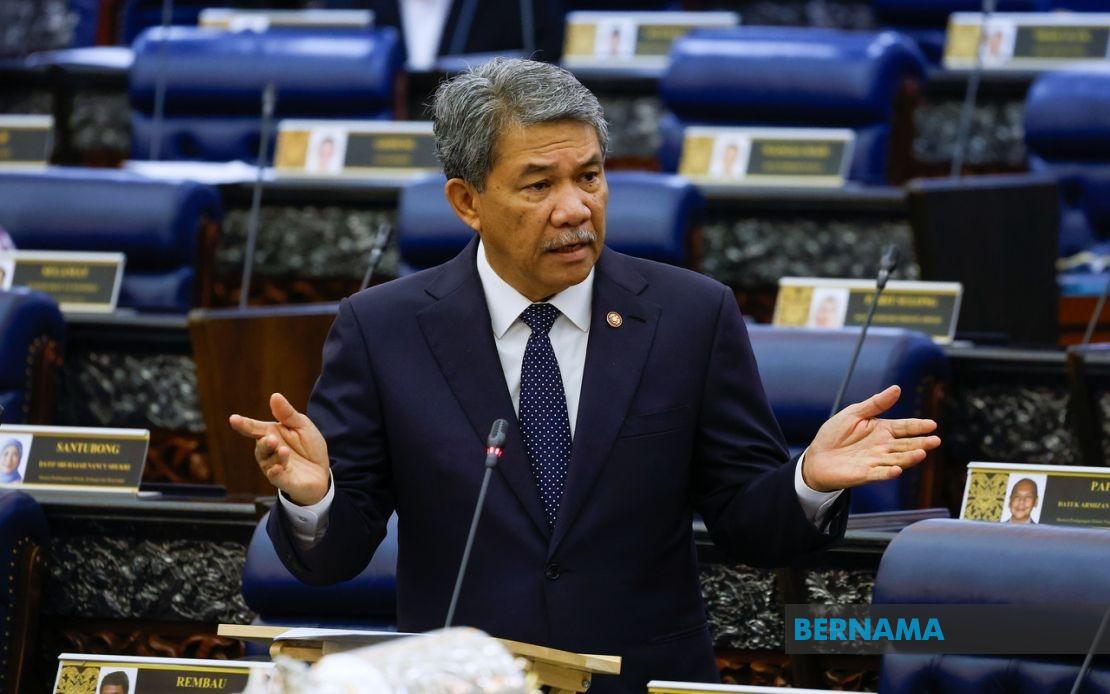
ASEAN is recalibrating its approach to Myanmar's protracted political crisis, with Foreign Minister Datuk Seri Mohamad Hasan confirming that regional leaders are exploring innovative methods to energise the Five-Point Consensus framework. Speaking during parliamentary proceedings in Kuala Lumpur on June 25, Mohamad acknowledged that despite some modest improvements within Myanmar, the country remains far from achieving the benchmarks established by ASEAN leaders under the Five-Point Consensus, which continues to anchor regional peace-building efforts.
The regional bloc's reassessment was formally triggered at the 48th ASEAN Summit held in Cebu, Philippines, on May 8, where member states instructed their foreign ministers to pursue informal dialogues with Myanmar's leadership. These engagements are designed to evaluate the current situation and chart a revised pathway forward. Rather than abandoning the Five-Point Consensus entirely, ASEAN is seeking to adapt its implementation mechanics, with Mohamad emphasising that any substantive modifications require endorsement from ASEAN heads of state. This measured approach reflects the organisation's commitment to consensus-building whilst acknowledging the framework's diminishing effectiveness.
Malaysia has emerged as a vocal advocate for enhanced commitment to Myanmar's peace process, proposing that the country's existing six-month ceasefire, originally scheduled to conclude by the end of July, should be extended as a subsequent phase toward comprehensive conflict resolution. Beyond ceasefire extensions, Malaysian officials have pressed Myanmar to furnish a detailed roadmap outlining how the peace process will advance, with particular emphasis on fostering inclusive dialogue spanning the Myanmar government, the National Unity Government, the People's Defence Force, and various ethnic armed groups. This multifaceted engagement represents recognition that sustainable peace demands participation across Myanmar's fractured political landscape.
The concern driving ASEAN's strategic reconsideration is distinctly regional in character. Senior officials fear that prolonged marginalisation of Myanmar within international forums creates dangerous vacuums vulnerable to exploitation by external powers pursuing their own geopolitical objectives. Mohamad articulated this anxiety explicitly, noting that ASEAN cannot afford to allow Myanmar to drift into spheres of influence dominated by third parties with competing interests. Such a development would fundamentally undermine ASEAN-led peace architecture and potentially destabilise the broader Southeast Asian region, setting a troubling precedent for how the organisation manages internal crises.
Malaysia's dual-track approach to Myanmar engagement illustrates the nuanced diplomacy required to maintain leverage across Myanmar's fractured stakeholder landscape. While maintaining formal relations with the military-led government, Malaysian officials have simultaneously cultivated channels with opposition entities including the National Unity Government and the People's Defence Force. This pluralistic engagement strategy, extending even to ethnic armed organisations, reflects an understanding that durable settlements cannot be imposed from outside but must emerge through inclusive negotiation processes. The approach prioritises dialogue over isolation, distinguishing ASEAN's methodology from Western governments that have imposed targeted sanctions on Myanmar's leadership.
The Five-Point Consensus, established following Myanmar's February 2021 coup, originally outlined five key objectives: immediate cessation of violence, constructive dialogue among all parties, provision of humanitarian assistance, appointment of an ASEAN envoy, and visits by this envoy to Myanmar. Nearly three years into implementation, achievement against these metrics remains piecemeal. Violence has intensified rather than diminished, dialogue mechanisms have faltered, and humanitarian access remains severely constrained. The framework's limitations underscore the difficulties ASEAN faces in wielding meaningful pressure on member states, particularly when internal consensus proves elusive.
The parliamentary questioning that prompted Mohamad's response originated from William Leong Jee Keen, reflecting domestic Malaysian interest in Myanmar policy outcomes. This legislative scrutiny ensures that ASEAN's diplomatic initiatives remain subject to accountability and parliamentary oversight, reinforcing democratic processes within Malaysia's foreign policy formulation. The exchange illustrates how regional crises permeate national political discourse, requiring ministers to articulate coherent strategies capable of withstanding legislative examination.
ASEAN's deliberations also reflect broader anxieties about the organisation's credibility and coherence in conflict management. Myanmar's persistent non-compliance with the Five-Point Consensus has invited criticism from Western governments and human rights organisations questioning ASEAN's capacity for meaningful intervention. Regional leaders face the uncomfortable reality that their preferred mechanisms for conflict resolution through constructive engagement and quiet diplomacy have yielded limited tangible results. Yet abandoning the Five-Point Consensus would require ASEAN to acknowledge fundamental limitations in its conflict-resolution capabilities, a politically costly admission.
The proposed extension of Myanmar's ceasefire represents an interim strategy designed to preserve momentum without requiring dramatic policy shifts. By framing ceasefire extension as a transitional phase toward more ambitious peace-building objectives, ASEAN maintains the appearance of progress whilst acknowledging current stagnation. However, this incremental approach risks conveying weakness to Myanmar's military establishment, potentially suggesting that ASEAN will accept extended periods of limited violence provided structural political transformation remains elusive.
Looking forward, ASEAN's exploratory approach indicates that regional foreign ministers will likely present refined proposals at forthcoming summits, potentially within the broader context of ASEAN's annual meeting cycles. These deliberations will test whether the organisation can generate sufficient consensus among its ten members to implement modified strategies whilst maintaining Myanmar's seat at the table. Malaysia's vocal advocacy suggests that Southeast Asian countries retain appetite for constructive engagement, even as frustration with Myanmar's compliance grows. The challenge lies in designing mechanisms capable of incentivising meaningful political progress without either isolating Myanmar completely or appearing to condone continued military dominance.

