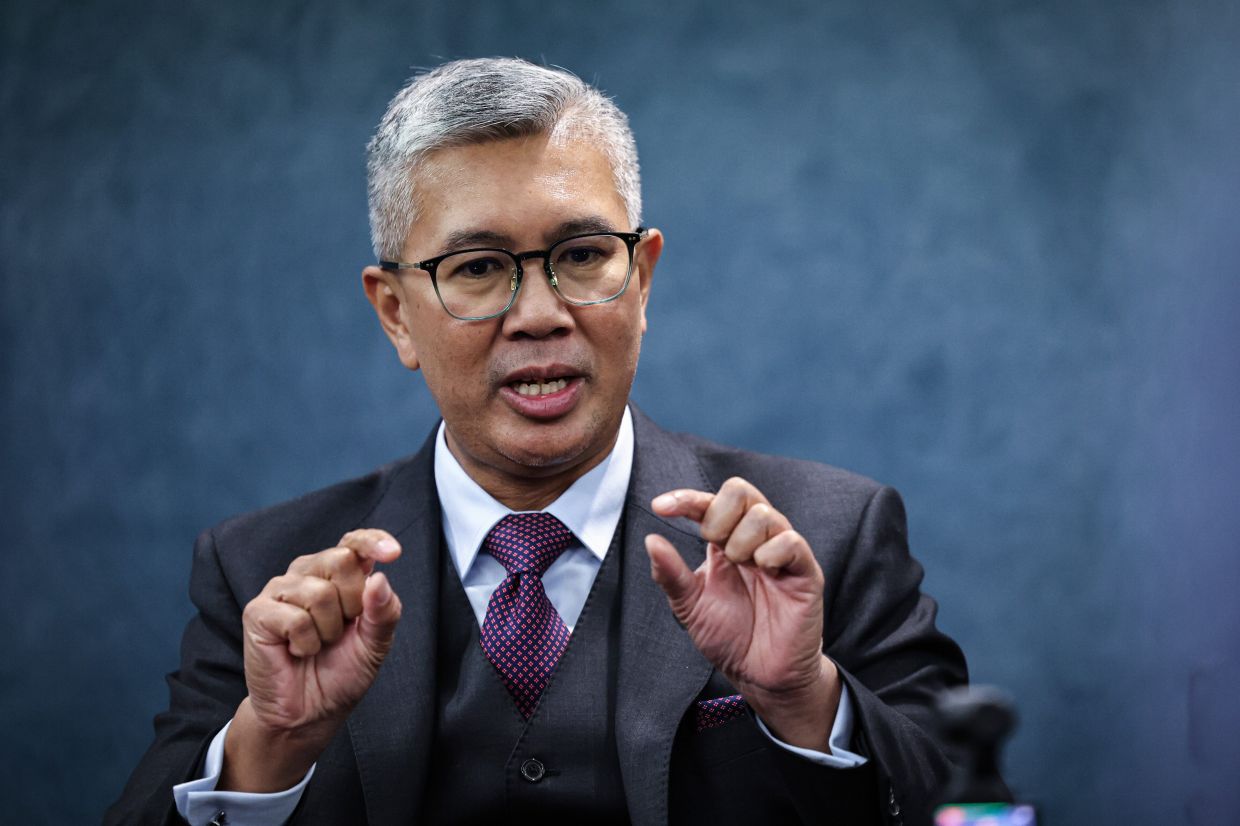
Malaysia's Investment Development Authority chairman Tengku Datuk Seri Zafrul Abdul Aziz has sounded an urgent call for ASEAN nations to deepen their cooperation on energy security, framing the region's energy transition not as an ambition problem but fundamentally as a capital coordination challenge. Speaking at the 7th International Sustainable Energy Summit in Kuala Lumpur, Tengku Zafrul highlighted the vast financial gulf separating ASEAN's climate commitments from their implementation, estimating that the region requires approximately US$200 billion annually through 2030 to finance the shift towards cleaner energy sources. This figure underscores the magnitude of the undertaking facing Southeast Asia as it grapples with simultaneous pressures to decarbonise its economies while managing rapid economic growth and rising energy demand.
The financing shortfall reflects a structural problem that extends well beyond mere budgetary constraints. Tengku Zafrul identified multiple interconnected obstacles hindering the energy transition across ASEAN member states. Project development timelines remain protracted, with ventures frequently taking years to achieve the financial viability necessary for investment. Regulatory frameworks vary significantly from one nation to another, creating inconsistency and reducing investor confidence in cross-border initiatives. International financing mechanisms remain limited in scope, while mechanisms for sharing investment risk across borders remain inadequate. These barriers collectively create a situation where even well-intentioned projects struggle to advance from conception to implementation. The challenge is particularly acute given that virtually all ASEAN economies have formally committed to achieving net-zero emissions, yet the pathway from commitment to capital deployment remains murky and uncertain.
To address these interconnected obstacles, Tengku Zafrul proposed a comprehensive three-pillar regional strategy that would leverage ASEAN's considerable but underutilised comparative advantages. The first pillar centres on the ASEAN Power Grid initiative, a transformative infrastructure project scheduled for complete integration by 2045. This integrated electrical system would enable member nations to share their diverse energy resources efficiently. Laos possesses significant hydroelectric potential, Indonesia commands abundant geothermal capacity, Vietnam has developed considerable wind energy resources, and Malaysia offers substantial solar generation capability. By creating a unified grid spanning the region, ASEAN could optimise energy distribution and buffer individual nations against supply disruptions, while allowing each country to specialise in energy production where it holds natural advantages.
The second proposed mechanism addresses the critical challenge of mobilising sufficient capital at scale. Tengku Zafrul advocated for establishing an ASEAN Green Investment Facility that would aggregate capital from multiple sources including government treasuries, pension funds, and private sector investors. This pooled funding approach would serve a crucial de-risking function, spreading the investment burden across multiple stakeholders rather than forcing individual governments to shoulder infrastructure costs alone. Such a facility would provide stability to major energy transition projects that typically require sustained capital commitments over extended periods. The model recognises that no single Southeast Asian economy possesses sufficient fiscal capacity to independently finance the transformations required, making collective action not merely desirable but essential for progress.
The third pillar addresses the resilience and crisis management dimensions of energy security. Tengku Zafrul called for ASEAN to establish shared emergency protocols, maintain coordinated fuel reserves, develop aligned crisis communication systems, and implement regional supply-chain monitoring mechanisms. These measures would strengthen the region's capacity to withstand future energy shocks, whether caused by geopolitical disruptions, natural disasters, or market volatility. The proposal carries implicit acknowledgment of recent experiences, notably the energy supply disruptions that affected various parts of Southeast Asia in preceding years, which caught policymakers unprepared. By establishing coordinated response systems in advance, ASEAN could prevent localised problems from cascading into region-wide crises that undermine economic stability and development aspirations.
Malaysia itself has positioned itself as a potential leader in advancing this regional energy agenda through three key domestic initiatives. The New Industrial Master Plan 2030 charts Malaysia's trajectory toward more energy-efficient manufacturing and industrial processes. The National Energy Transition Roadmap provides a detailed pathway for phasing out fossil fuel dependence while developing renewable energy infrastructure. The Green Investment Strategy creates financial mechanisms and incentives to attract capital toward sustainable energy projects. These initiatives reflect Malaysia's own commitment to net-zero targets while attempting to create demonstration models that other ASEAN members might study and adapt.
Yet Tengku Zafrul emphasised that genuine leadership in this context means building consensus and bringing other nations along rather than pursuing unilateral advantage. He stressed that the energy transition challenge is inherently regional in scope—no single nation can successfully implement lasting change in isolation, and disruptions in one corner of ASEAN inevitably ripple across borders affecting all member states. Similarly, the solutions must be conceived and executed at the regional level rather than as a collection of parallel national efforts. This framing represents a subtle but important shift in how Southeast Asian policymakers discuss energy security, moving away from zero-sum competition and toward interdependence as a strategic necessity.
The urgency embedded in Tengku Zafrul's remarks reflects the accelerating timeline of climate change impacts and the window for cost-effective action narrowing year by year. Each postponed investment decision increases long-term costs and limits future flexibility. Delayed action also pushes more of the adjustment burden onto future generations, who will face steeper transition costs if current opportunities for orderly change are squandered. The call for unity carries equal weight, grounded in the assessment that a fragmented ASEAN—unable to coordinate on energy infrastructure, financing, and emergency response—represents a vulnerable region exposed to external shocks and unable to leverage its collective strengths.
For Malaysian readers and policymakers, the implications are substantial. Malaysia's position as a significant energy producer and consumer, combined with its relatively advanced financial markets and industrial capacity, potentially positions it as a regional hub for energy transition financing and technology. However, realising this potential requires that Malaysia successfully advocates for and helps architect the regional frameworks Tengku Zafrul outlined. Success would enhance Malaysia's economic influence, create opportunities for Malaysian companies and financial institutions, and help secure long-term energy supplies essential for continued development.
The broader significance extends to ASEAN's credibility in international climate negotiations and its capacity to meet commitments made at global forums. A region unable to finance and implement its own energy transition risks losing negotiating leverage and becoming dependent on external actors to fund its decarbonisation. Conversely, demonstrating that Southeast Asia can coordinate effectively on energy challenges would strengthen ASEAN's position in global discussions about climate finance and technology transfer. The outcomes of this energy cooperation push will significantly shape both the region's economic trajectory and its standing in global affairs during the critical decade ahead.

