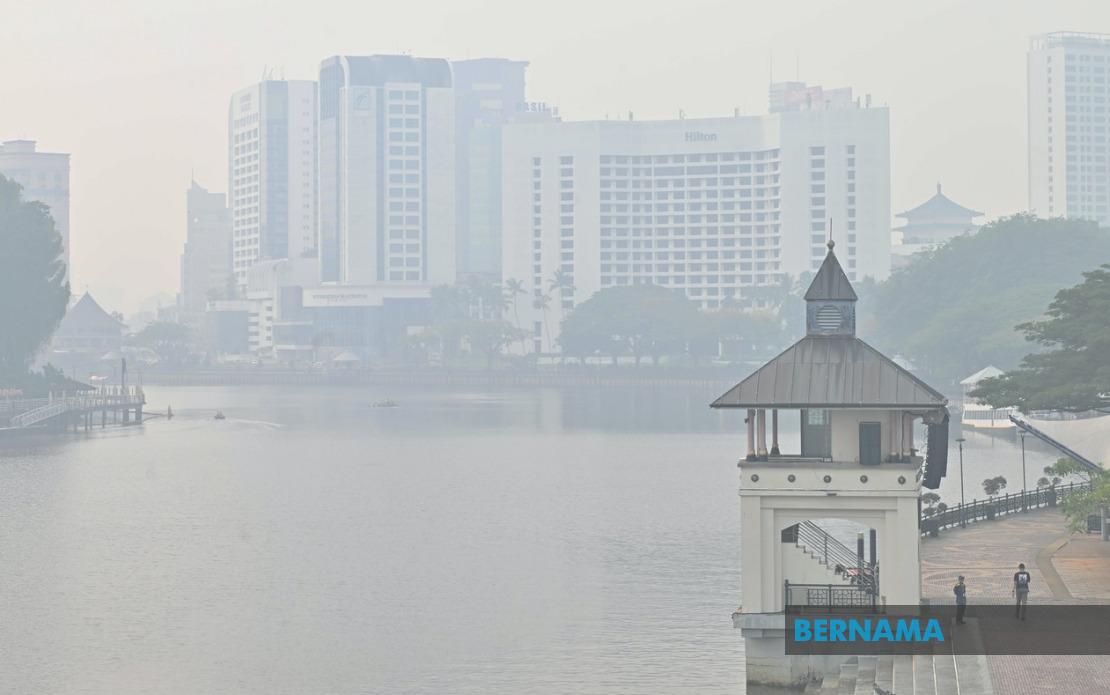
Regional cooperation on combating transboundary haze has reached a critical juncture, with social activist Tan Sri Lee Lam Thye calling for ASEAN governments to fundamentally transform how they address the recurring environmental crisis that costs the region billions annually in health and economic damage. The appeal comes amid warnings that strengthening El Niño conditions could intensify the risk of widespread forest fires across Southeast Asia's southern states during the upcoming dry season. Lee's intervention signals growing frustration among civil society with the effectiveness of existing frameworks, particularly the ASEAN Agreement on Transboundary Haze Pollution that has governed regional responses for more than two decades without substantially resolving the problem.
The haze agreement, adopted in Kuala Lumpur on June 10, 2002 and operationalized the following year, represents the region's primary legal instrument for managing cross-border air pollution. Yet despite over twenty years of implementation, Southeast Asian nations continue confronting seasonal degradation of air quality, recurring hotspots in peatlands and forests, and persistent smoke that drifts across multiple borders. The mechanism has been criticized as lacking meaningful enforcement teeth, operating largely as a framework for dialogue rather than binding obligations backed by penalties for non-compliance. Lee's diagnosis reflects a broader assessment within environmental and public health communities that incremental adjustments can no longer suffice given the scale and frequency of haze episodes now affecting hundreds of millions of people annually.
At the core of Lee's proposal lies a fundamental reframing of how ASEAN treats the haze phenomenon. Rather than viewing it as a natural, seasonal inconvenience tied to weather patterns, he advocates characterizing it as a governance, environmental, and public health crisis requiring structural institutional responses. This distinction matters considerably because it shifts accountability from treating haze as an act of nature to identifying it as a consequence of policy failures, inadequate enforcement, and insufficient regional coordination. The framing also challenges the tendency of governments to invoke climate factors such as El Niño as primary explanations, when human activities including illegal land clearing and open burning remain controllable variables that continue exacerbating dry season conditions into regional emergencies.
The activist's prescription encompasses several interconnected elements designed to move ASEAN from reactive crisis management toward proactive prevention. Foremost among these is conducting a comprehensive high-level review of the existing haze agreement, establishing measurable targets for fire prevention and hotspot reduction, and implementing enforceable penalties for entities responsible for open burning and illegal land conversion. Such mechanisms would represent a departure from the current approach, which relies heavily on voluntary compliance and information-sharing arrangements that have proven insufficient to deter the activities generating transboundary pollution. Creating accountability frameworks with investigation and enforcement procedures would establish concrete consequences for companies and individuals whose operations generate cross-border haze damage.
Lee's proposal also emphasizes establishing permanent institutional infrastructure for haze response that transcends the seasonal rhythms currently characterizing ASEAN's preparations. Real-time satellite monitoring systems, rapid information-sharing protocols for hotspot detection, and jointly coordinated firefighting capabilities would constitute the backbone of this enhanced apparatus. Such infrastructure requires ASEAN member states to move beyond ad hoc coordination during crisis periods toward maintaining year-round operational capacity. The mechanism would include clearly delineated responsibilities during severe haze episodes, ensuring that member states maintain coordinated posture rather than pursuing unilateral responses that might undermine regional cohesion.
Prevention-focused initiatives take particular importance in Lee's framework, recognizing that containing fires before they generate transboundary smoke represents a more effective strategy than managing regional air quality after pollution has already materialized. Joint early-warning systems established before the onset of each dry season would enable member states to mobilize resources proactively rather than responding to developing crises. Enhanced cooperation on peatland and forest management constitutes another prevention dimension, as degraded peatlands remain particularly susceptible to fire and generate disproportionate smoke when combustion occurs. Strengthened regional coordination on land and forest stewardship would reduce the pool of potential fire sources, diminishing the likelihood that dry seasonal conditions generate widespread transboundary episodes.
Transparency represents an additional cornerstone of the proposed approach, with Lee emphasizing that member states should commit to sharing information on hotspot locations, suspected fire sources, and enforcement actions taken against responsible parties. Current practices often involve reluctance to publicize data that might reflect poorly on national environmental governance or suggest that jurisdictions lack capacity for fire control. Establishing binding transparency commitments would create accountability mechanisms where governments must publicly report on monitoring results and enforcement efforts, enabling civil society and international observers to assess implementation fidelity. Such transparency also facilitates coordinated responses, as neighboring countries can align their preparations when they possess real-time awareness of fire development in adjacent territories.
The political challenge of advancing this agenda within ASEAN's consensus-based decision-making framework should not be underestimated. Member states have historically resisted international mechanisms perceived as infringing upon national sovereignty over land-use decisions and environmental management, even when those decisions generate transnational consequences. Lee's emphasis that addressing haze represents a matter of regional responsibility rather than interference in individual countries' affairs attempts to reframe the issue as collective self-interest rather than external imposition. Framing stronger enforcement mechanisms as protecting the health of all Southeast Asians, including residents of countries hosting fire sources, shifts the dialogue from blame allocation toward shared vulnerability and mutual benefit from prevention.
Malaysia occupies a particular position in this discussion, frequently bearing the heaviest air quality impacts when fires originating in neighboring territories generate transboundary smoke. Lee's call for affected countries to raise the issue at the highest levels of ASEAN implies that Malaysia and similarly impacted nations should assume leadership roles in advocating for agreement strengthening and enforcement mechanisms. Malaysian policymakers must balance diplomacy with constituent expectations regarding air quality protection, as recurring haze episodes generate substantial public health consequences and economic losses that trigger domestic pressure for assertive regional advocacy. The timing of Lee's intervention, preceding what meteorologists warn could be a particularly challenging dry season, reflects awareness that the upcoming months may provide another critical moment for mobilizing political support for institutional reform.
Implementing Lee's proposals would require ASEAN to undertake institutional innovation and political commitments of scope greater than previous haze governance arrangements. Binding enforcement mechanisms with clearly specified consequences for non-compliance represent a more intrusive form of regional governance than the agreement's current structure permits. Member states must reconcile desires for national autonomy over forest and land management with recognition that fire management decisions in one jurisdiction directly affect air quality and public health across the region. Establishing joint firefighting capabilities implies resource-sharing arrangements and coordination procedures that presently exist only in embryonic form within ASEAN structures.
The broader context includes recognition among Southeast Asian governments and civil society that climate change will likely intensify the frequency and severity of seasonal dry periods, potentially increasing fire risks across the region. Strengthening haze governance frameworks now establishes institutional capacity that will prove increasingly valuable as climate shifts increase the likelihood of severe drought conditions and heightened fire vulnerability. Conversely, failure to enhance current mechanisms risks allowing haze episodes to worsen precisely when regional cooperation mechanisms possess only existing capacity, without adaptive infrastructure developed in advance of heightened climate pressures. Lee's call for urgent review reflects this temporal pressure, as delays in institutional reform narrow the window for implementation before the next significant dry season crisis materializes.
The social activist's intervention ultimately represents an important reminder that ASEAN's transboundary haze challenge persists not as an inevitable consequence of regional geography or climate, but as a governance failure reflecting inadequate coordination mechanisms and insufficient enforcement capacity. While natural climate phenomena like El Niño influence fire susceptibility, human decisions regarding land management, fire prevention infrastructure, and cross-border accountability ultimately determine whether dry conditions translate into regional crises. Tan Sri Lee Lam Thye's specific proposals for agreement review, measurable targets, enforcement mechanisms, permanent response infrastructure, and enhanced transparency provide a roadmap for transforming ASEAN's approach from reactive crisis management toward proactive institutional capacity for prevention and coordinated response.

