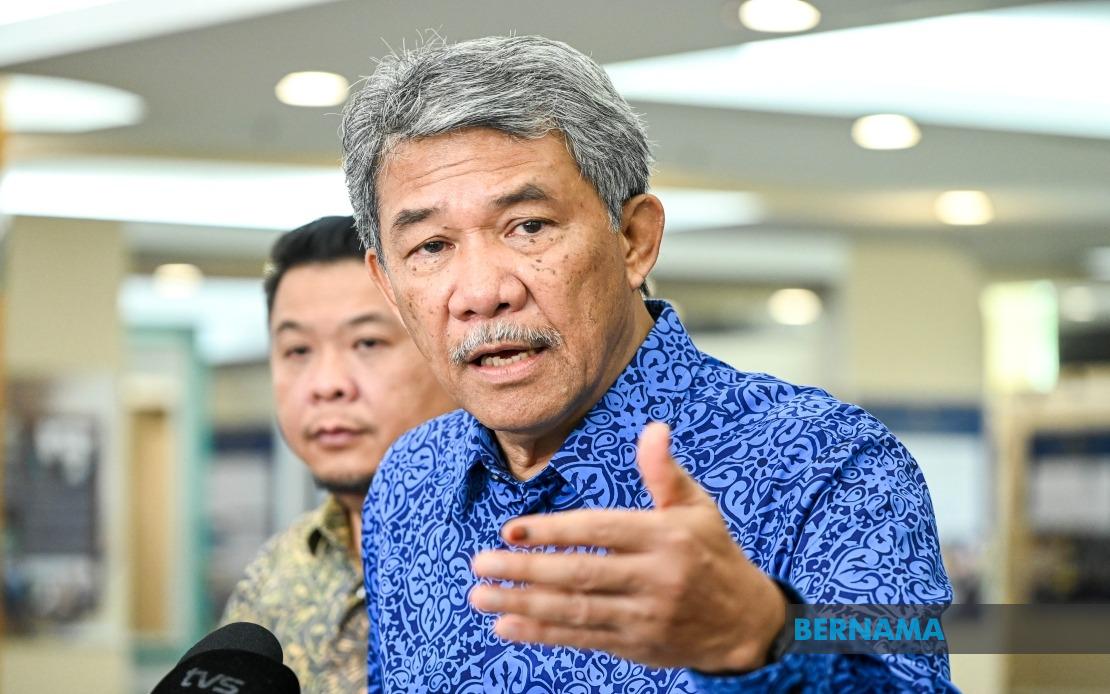
Datuk Seri Mohamad Hasan, Malaysia's Foreign Minister, has emphasized that ASEAN must prioritise the expansion of internal trade networks if the regional bloc is to achieve its ambitious goal of becoming the world's fourth-largest economy by 2030. Speaking after the 59th ASEAN Day celebration in Putrajaya on Monday, Mohamad underscored that the current level of intra-ASEAN commerce—falling short of 25 per cent—represents a significant untapped opportunity for member nations to strengthen their collective economic standing on the global stage.
The distinction Mohamad drew between ASEAN's traditional political focus and its emerging economic agenda reflects a pivotal shift in the organisation's strategic priorities. Rather than concentrating exclusively on diplomatic and security matters that have historically defined the bloc's agenda, ASEAN member states are now increasingly oriented towards coordinated economic development. This reorientation represents recognition that regional integration through trade creates sustainable foundations for prosperity and mutual growth across Southeast Asia's diverse economies.
The relatively modest share of trade occurring within ASEAN borders compared to international commerce highlights the region's current economic fragmentation. With member states conducting the majority of their external trade with partners outside the bloc—including China, India, Japan, and Western markets—ASEAN leaves considerable potential unrealised. Deepening intra-regional supply chains and commercial relationships could generate employment, accelerate technological transfer, and build resilience against external economic shocks that have periodically disrupted Southeast Asian markets.
Mohamad pointed to existing institutional mechanisms designed to facilitate increased intra-ASEAN commerce, most notably the free movement of goods framework that permits reduced barriers to trade among member states. This infrastructure, while established, appears underutilised relative to its potential. The persistence of tariff barriers, non-tariff obstacles, regulatory fragmentation, and inadequate logistics networks suggests that formal trade agreements require deeper implementation and complementary investments in regional connectivity to realise their intended benefits.
The role of ASEAN chairmanship in advancing this economic agenda emerged as a central theme in Mohamad's remarks. Malaysia's tenure as chair in the previous year yielded various initiatives and resolutions documented in the Kuala Lumpur Declaration, establishing cornerstones for ongoing regional economic cooperation. The Philippines, assuming the chairmanship for the current year, has inherited this economic framework and continues advancing proposals originally articulated during Malaysia's leadership period, demonstrating sustained institutional commitment to the trade expansion agenda.
Malaysia's designation as the Permanent Shepherd or Permanent Auditor of the ASEAN Community 2045 vision invests the country with particular responsibility for monitoring and advancing the region's long-term development trajectory. This custodial role positions Malaysia to exert continued influence over how the bloc approaches the foundational challenge of strengthening internal commerce. The framing of intra-ASEAN trade as the essential foundation for broader economic integration suggests that without meaningful progress in this domain, other dimensions of the 2045 Vision may prove difficult to realise.
The strategic implications for individual ASEAN members, particularly Malaysia, merit consideration. As a regionally influential middle power with established manufacturing capabilities and regional trading networks, Malaysia stands to benefit significantly from expanded intra-ASEAN commerce. Enhanced trade relationships with neighbouring economies would diversify Malaysia's commercial partnerships, reduce over-reliance on extra-regional markets, and potentially attract foreign investors seeking supply chain hubs that serve Southeast Asian consumer bases.
Geopolitically, the emphasis on internal trade carries weight against the backdrop of broader Asian economic dynamics. As major powers including China and India expand their regional influence through investment and commerce, ASEAN's internal cohesion through economic integration represents a mechanism for preserving the bloc's collective agency and negotiating power. A more economically integrated ASEAN would present a more formidable presence in regional and global trade negotiations, potentially securing more favourable terms with external partners.
The challenge of reaching the 25 per cent threshold and beyond requires addressing structural impediments that have historically constrained Southeast Asian trade. Infrastructure deficiencies, including inadequate port facilities, transportation links, and digital connectivity, impose additional costs on regional commerce. Additionally, variation in regulatory standards, labour practices, and environmental requirements across member states complicates the establishment of seamless supply chains. Overcoming these obstacles demands coordinated investment and policy harmonisation extending beyond trade agreements into broader development cooperation.
Modern geopolitical realignments surrounding technology, semiconductors, and renewable energy present both opportunities and challenges for ASEAN trade expansion. Member states competing for high-value manufacturing investments from global corporations must balance cooperation with competition. The potential for ASEAN to develop regional value chains in emerging sectors could substantially reshape trade patterns, but only if member governments coordinate industrial policies and avoid duplicative investments that fragment rather than integrate regional economies.
The timeline toward 2030 establishes an implicit urgency for action on trade expansion, suggesting that incremental approaches may prove inadequate for achieving the fourth-largest economy objective. Realising this ambition requires not merely maintaining existing frameworks but actively dismantling barriers, investing in enabling infrastructure, and building trust among member states to deepen commercial interdependence. The success of such endeavours ultimately depends on political will from capitals across the region, translating ministerial rhetoric into concrete policy implementation.
For Southeast Asian businesses and investors, the foreign minister's message signals governmental commitment to creating a more integrated regional market. Companies positioned to leverage expanded intra-ASEAN opportunities through manufacturing relocation, supply chain integration, or market expansion may find increasing policy support. However, the gap between aspirational statements and operational reality remains substantial, requiring sustained attention and resource allocation to transform the trade expansion vision into tangible economic outcomes benefiting ASEAN's 650 million inhabitants.

