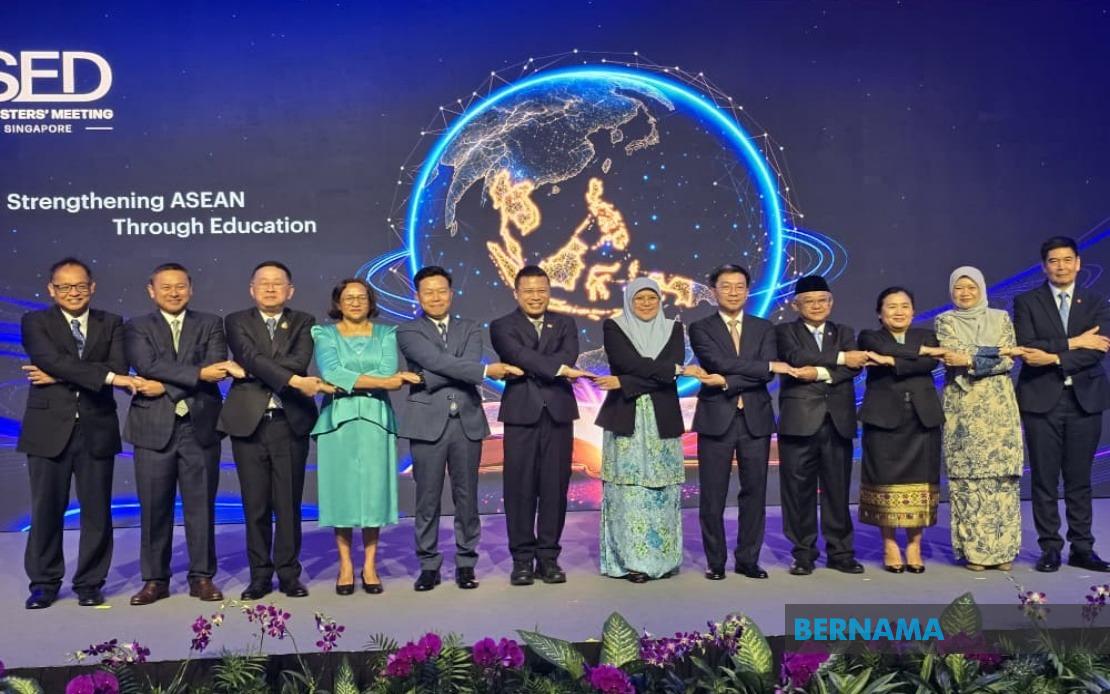
ASEAN education ministers have formally launched a comprehensive five-year education strategy that will guide the region's collective approach to learning and development from 2026 through 2030. Unveiled at the 14th ASEAN Education Ministers Meeting in Singapore on Wednesday, the initiative establishes a roadmap designed to enhance the quality, equity and responsiveness of education systems throughout the ten-member association. The framework sets ambitious targets for developing well-rounded individuals capable of thriving in an increasingly complex global environment whilst simultaneously building a highly skilled workforce that can compete on the international stage.
Singapore's Education Minister Desmond Lee articulated the core philosophy underpinning the five-year plan: recognition that ASEAN's education systems must evolve in tandem with rapid technological change and emerging global challenges. He emphasised that the strategy is fundamentally about ensuring all students across the region gain equitable access to quality learning opportunities, whilst simultaneously strengthening their psychological and emotional wellbeing. These dual imperatives—expanding access whilst improving outcomes—reflect a growing consensus among ASEAN leaders that education must serve both equity and excellence. The framework also seeks to cultivate what officials describe as an ASEAN identity rooted in shared regional values and mutual cooperation, an objective particularly significant given the diverse national education systems and varying economic capacities across member states.
The five-year plan identifies three principal pillars that will shape policy and resource allocation across ASEAN. First, artificial intelligence integration in educational settings represents a transformative priority, acknowledging both the opportunities and risks that AI presents to teaching and learning. Second, the plan emphasises Science, Technology, Engineering and Mathematics education as essential pathways toward economic competitiveness and innovation capacity. Third, holistic development acknowledging that educational outcomes extend beyond academic achievement to encompass character formation, civic values, physical health, and creative expression. This tripartite approach reflects contemporary educational thinking whilst remaining attentive to ASEAN's particular developmental contexts and aspirations.
Minister Lee specifically highlighted how these three dimensions will work synergistically to prepare ASEAN's future generations. By embedding AI literacy across curricula, students will develop competencies essential for emerging employment sectors while building critical awareness of technology's societal implications. The STEM emphasis addresses documented regional skills shortages in technical fields that constrain economic diversification and innovation. Crucially, the holistic development focus prevents educational reform from becoming narrowly instrumental, insisting instead that schools remain spaces where young people develop ethical judgment, emotional resilience, and civic consciousness. This integrated vision contrasts sharply with more fragmented approaches that compartmentalise technical skills from character formation.
Singapore's role as chair of the ASEAN Education Sector for 2026-2027 carries particular significance, as the city-state is tasked with coordinating implementation efforts and mediating between member states with vastly different educational capacities and priorities. The government has committed substantial institutional resources to this agenda, notably through establishing a regional research network centred at Singapore's Centre for Character and Citizenship Education. This network will facilitate the cross-national exchange of pedagogical approaches, curriculum designs, and implementation methodologies related to values education—a particularly important function given that ASEAN members approach civic and moral education through culturally specific frameworks reflective of their distinct national contexts and philosophies.
The platform will enable ASEAN educators and policymakers to examine how different member states operationalise values education within their national curricula, creating opportunities for mutual learning whilst respecting national sovereignty over educational content. This collaborative mechanism addresses a fundamental challenge in regional integration: how to advance shared aspirations without imposing uniform solutions that may not reflect local circumstances, cultural values, or developmental priorities. Malaysian Education Minister Fadhlina Sidek's attendance at the meeting signals Malaysia's engagement with this regional agenda, suggesting that Kuala Lumpur recognises the potential benefits of benchmarking against peer countries and participating in coordinated capability-building initiatives.
The five-year plan acknowledges that ASEAN's education systems operate within a context of considerable diversity. Member states range from upper-middle-income economies with well-established tertiary education sectors to lower-income nations where basic access remains inconsistent, particularly in rural areas. Some countries have already begun integrating AI into schools, whilst others face infrastructure constraints that limit technology adoption. This heterogeneity means the work plan must function as a flexible framework rather than a rigid blueprint, permitting contextual adaptation whilst maintaining coherence around shared objectives. The emphasis on equitable access proves particularly crucial for Southeast Asia, where persistent disparities in educational opportunity correlate strongly with poverty, geographic isolation, gender, and ethnic minority status.
The timing of this initiative reflects heightened awareness among ASEAN governments that education policy represents a long-term investment in regional stability and prosperity. As artificial intelligence reshapes labour markets globally, Southeast Asian policymakers recognise the urgent necessity of preparing students for jobs that may not yet exist while simultaneously managing the displacement risks that technological change creates. The STEM focus directly addresses anxieties about regional competitiveness in high-value sectors, particularly as neighbouring East Asian economies maintain formidable advantages in research and innovation capacity. By coordinating ASEAN-wide STEM initiatives, member states hope to achieve economies of scale in teacher training, curriculum development, and resource sharing that would prove unattainable through purely national efforts.
The holistic development pillar reflects a philosophical conviction increasingly prevalent across Asia that education must cultivate not merely cognitive capabilities but also social-emotional competencies, ethical reasoning, and cultural awareness. This perspective gains urgency amidst rapid social change, urbanisation, and digitalisation that challenge traditional mechanisms for transmitting values to younger generations. Schools are positioned as crucial institutions for fostering the interpersonal skills, resilience, and civic commitment that diverse, dynamic societies require. For Malaysia specifically, this emphasis on values education and ASEAN identity building carries particular resonance in a country committed to advancing multicultural harmony and national cohesion.
The five-year plan's explicit emphasis on strengthening regional cooperation through education reflects a sophisticated understanding of how educational systems can advance both human development and political integration. By creating spaces for professional exchange among educators and policymakers, establishing shared research networks, and coordinating around common priorities, ASEAN is building institutional architecture that transcends traditional diplomatic channels. These educational networks generate mutual understanding, establish professional relationships, and create constituencies within each member state invested in regional cooperation. Over the five-year implementation period, these connections may prove as valuable as specific policy outcomes in reinforcing ASEAN cohesion and shared identity.
Moving forward, the success of this five-year plan will depend substantially on the quality of implementation support provided to member states with varying institutional capacities. Technical assistance, financial resources, and knowledge transfer mechanisms will prove essential, particularly for lower-income ASEAN nations. Singapore's proposed leadership through its Centre for Character and Citizenship Education represents one mechanism for providing such support, though observers suggest additional coordination structures may be required to ensure equitable benefit distribution across the association. The plan's ambitious scope—encompassing AI integration, STEM expansion, and values education simultaneously—demands sustained political commitment and strategic resource allocation at both national and regional levels. For Malaysia and other ASEAN members, this framework offers both opportunity and challenge: opportunity to learn from peers whilst benefiting from coordinated regional initiatives, and the challenge of translating shared aspirations into concrete improvements in teaching quality, student outcomes, and educational equity across their respective nations.

