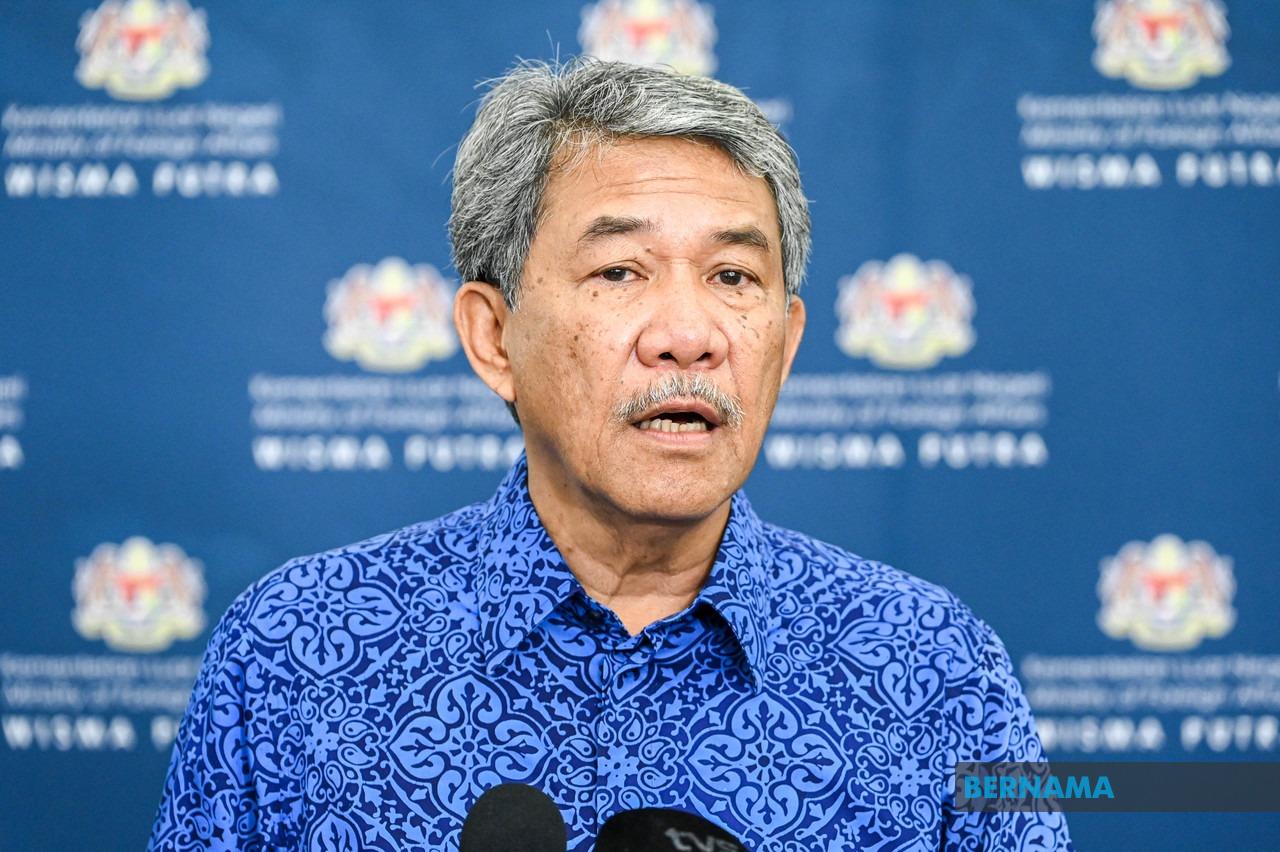
Malaysia's Foreign Minister Datuk Seri Mohamad Hasan has underscored the critical importance of ASEAN's central role in Southeast Asia at a time when the established international system is crumbling under the weight of major power rivalries and economic competition. Speaking at the 59th ASEAN Day celebration in Putrajaya, Mohamad framed the bloc's guiding principles as more vital than ever in an era of unprecedented geopolitical fragmentation and multilateral decay. He characterised the world as increasingly unpredictable and complex, with traditional institutions struggling to maintain relevance amid shifting alliances and strategic competition between major powers.
Central to Mohamad's message was the notion that ASEAN's centrality is not an inherent privilege but rather a hard-won achievement that demands constant vigilance and unity to preserve. The regional grouping, he suggested, must recognise that complacency in defending this position could prove costly as external powers jockey for influence across Southeast Asia. This framing reflects growing awareness within Malaysian policymaking circles that ASEAN's relevance depends entirely on its ability to maintain coherence and strategic autonomy. Without solidarity among member states, the bloc risks becoming a passive arena for great power competition rather than an active architect of regional outcomes.
The Foreign Minister stressed that in a world characterised by fraying multilateralism and intensifying geopolitical competition, ASEAN's commitment to dialogue, diplomacy, and consensus-building represents one of the few stabilising forces available to smaller nations. He called upon member states to view their individual prosperity as inseparable from regional stability, implying that parochial national interests must be subordinated to collective security and economic objectives. This appeal addresses persistent concerns that some ASEAN members have prioritised bilateral relationships with major powers at the expense of bloc cohesion, a tension that has occasionally surfaced in forums like the ASEAN Regional Forum and East Asia Summit.
Modernisation of ASEAN's economic architecture featured prominently in Mohamad's address, particularly his emphasis on the digital economy as a driver for the next phase of regional growth. The advancement of the ASEAN Digital Economy Framework Agreement represents a strategic effort to position the bloc competitively in the global digital marketplace while ensuring member states can capture value from the digital transformation. This framework also signals ASEAN's intention to establish its own standards and norms in digital governance rather than passively adopting rules set by developed economies or large technology firms. For Malaysia, a nation increasingly dependent on digital services and high-tech manufacturing, this initiative carries particular relevance.
The Foreign Minister also highlighted efforts to modernise existing trade agreements with major Asian powers including China, India, and the Republic of Korea. These negotiations reflect ASEAN's strategy of deepening economic ties with multiple partners to reduce dependence on any single power and maximise bargaining leverage. The approach exemplifies what Malaysian officials describe as "engaging as equals," a principle that requires ASEAN to actively shape the terms of its engagement with larger economies rather than accepting predetermined conditions. This stance has become increasingly important as both China and India compete for regional influence through trade, investment, and infrastructure projects.
Sustainability emerged as another key pillar of Mohamad's vision for ASEAN's future development. He argued that business-as-usual economics must give way to models that embed environmental and social considerations at the core of policy-making. The acceleration of the ASEAN Power Grid exemplifies this approach, combining renewable energy development with enhanced energy security and cross-border investment opportunities. For Southeast Asian nations facing mounting climate impacts—from rising sea levels threatening coastal cities to intensifying monsoons and droughts—integrating sustainability into economic planning represents both moral necessity and pragmatic adaptation.
The celebration itself carried symbolic weight as ASEAN marked its founding on August 8, 1967, when Indonesia, Malaysia, the Philippines, Singapore, and Thailand signed the Bangkok Declaration, establishing a framework for regional cooperation that has endured through decades of Cold War tensions, financial crises, and shifting geopolitical alignments. The organisation's subsequent expansion to eleven members—including the recent admission of Timor-Leste in October of the previous year—illustrates the bloc's capacity to absorb new participants while maintaining institutional continuity. However, this enlargement has also introduced additional complexity to consensus-building processes, a challenge that Mohamad's emphasis on unity tacitly acknowledges.
The theme chosen for this year's celebration, "Navigating Our Future Together," and the corresponding theme for the Philippines-led ASEAN 2026 chairmanship, encapsulates the bloc's determination to chart an independent course through turbulent international waters. This framing rejects the notion that ASEAN must choose sides in great power competition or accept subordinate roles in others' strategic visions. Instead, it positions ASEAN as an active agent capable of shaping regional and global outcomes through sustained dialogue, institutional innovation, and principled engagement with diverse partners. The emphasis on "together" underscores that no individual member state can navigate these challenges in isolation.
For Malaysian readers and policymakers, Mohamad's remarks carry specific implications regarding Malaysia's own strategic positioning within ASEAN and the broader region. As a founding member and a nation geographically positioned between major power spheres of influence, Malaysia has a vested interest in ASEAN's cohesion and centrality. The country benefits from a regional architecture that constrains unilateral action by larger powers and provides mechanisms for smaller nations to amplify their voices. Conversely, ASEAN fragmentation would expose Malaysia to direct bilateral pressures from major powers, reducing its strategic options and negotiating leverage.
The Foreign Minister's assertion that ASEAN "must punch above its weight" by broadening global partnerships reflects the bloc's understanding that in a multipolar world, diversity of engagement opportunities enhances security and prosperity. This strategy contrasts with zero-sum approaches that view partnerships as exclusive commitments requiring alignment with one power against others. ASEAN's non-aligned tradition, reinforced through various frameworks from the Treaty of Amity and Cooperation to the ASEAN Regional Forum, provides institutional mechanisms for managing relationships with major powers while preserving autonomy.
Yet realising this vision faces formidable obstacles. Internal divisions among member states—rooted in different strategic preferences, economic interests, and governance models—continue to complicate consensus-building on sensitive issues. Differing positions on Myanmar, tensions in the South China Sea, and varying approaches to engagement with China have occasionally paralysed collective ASEAN responses, undermining the bloc's effectiveness as a regional voice. Mohamad's warning that internal divisions cannot be allowed to weaken collective influence thus constitutes both diagnosis and urgent plea for member states to subordinate parochial concerns to bloc interests.
The integration of digital economy frameworks and green energy initiatives into ASEAN's strategic agenda signals recognition that the bloc's long-term prosperity depends on positioning itself advantageously in emerging sectors and global value chains. Rather than competing with each other for limited manufacturing and commodity exports, member states can collectively establish standards, facilitate cross-border digital services, and coordinate renewable energy development. This approach transforms ASEAN from a collection of individual economies into an integrated ecosystem capable of attracting investment and talent.
Ultimately, Mohamad's address at the ASEAN Day celebration articulates a vision of the bloc as indispensable to regional peace and prosperity in an increasingly fractious world. Whether ASEAN can sustain this centrality and translate ambitions into concrete achievements will depend on member states' willingness to prioritise collective interests, strengthen institutional mechanisms, and maintain the diplomatic discipline that has characterised the bloc's most successful periods. For Malaysia and its fellow members, the stakes could scarcely be higher.

