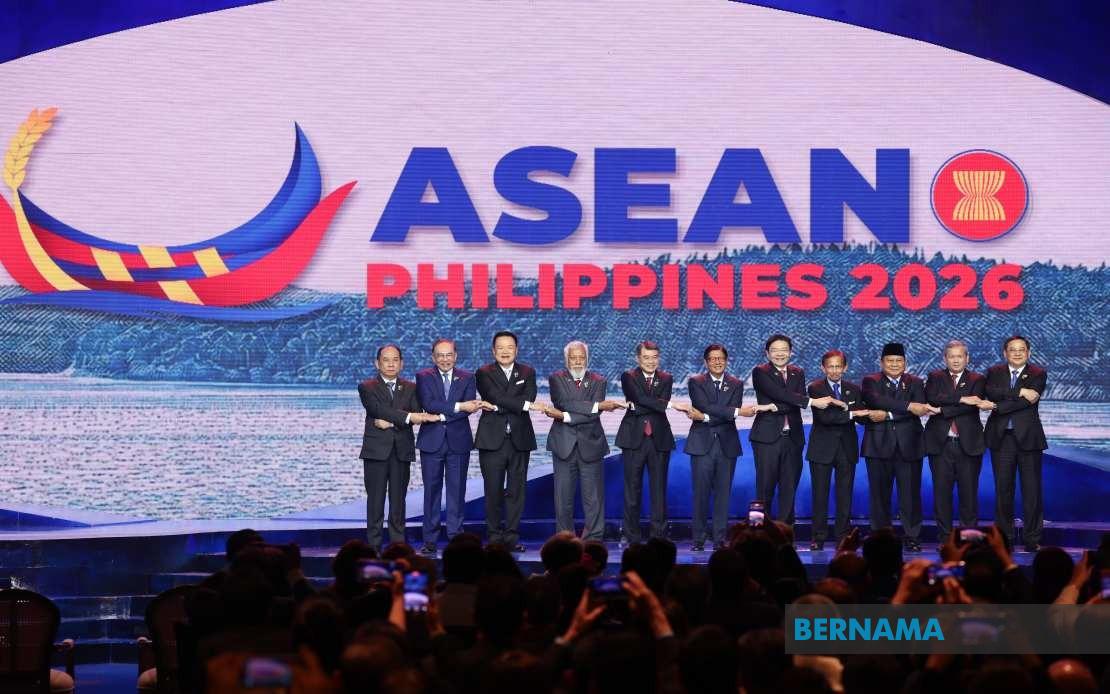
The Association of Southeast Asian Nations marked its 59th anniversary on August 8, arriving at a defining moment in its history as competing powers reshape the regional order and old certainties crumble. Established in 1967 by five founding members, the organisation has grown to encompass eleven nations spanning Southeast Asia, and now faces the complex task of remaining relevant and influential in an environment of intense great power rivalry and mounting internal pressures.
For decades, ASEAN's survival was itself an achievement. The bloc demonstrated that former adversaries could work together, that consensus-driven decision-making could function across vastly different political systems, and that a smaller grouping could carve out meaningful diplomatic space. Yet today, when analysts assess the organisation's prospects, they no longer focus primarily on its ability to exist or be taken seriously. Instead, the conversation has shifted fundamentally to whether ASEAN can deliver tangible benefits to its citizens and maintain its strategic autonomy as external actors jockey for influence.
The geopolitical landscape surrounding Southeast Asia has grown decidedly more volatile. Tensions between the United States and China continue to intensify, with the South China Sea emerging as a flashpoint where competing territorial claims collide with strategic imperatives of global powers. Beyond the region, the conflict between the United States and Iran, along with broader turmoil in West Asia, has sent tremors through global supply chains and energy markets that directly affect ASEAN economies dependent on stable trade flows and affordable energy supplies. These external shocks have made internal solidarity within ASEAN not merely desirable but strategically essential.
Professionals studying regional affairs emphasise that ASEAN's future trajectory depends heavily on its capacity for self-reinforcement. Prof Dr Phar Kim Beng of the International Islamic University Malaysia's Institute of International and ASEAN Studies, who previously worked within ASEAN's institutional apparatus, articulated this challenge clearly. External partners may acknowledge ASEAN's importance and profess respect for its role, yet such affirmation rings hollow unless ASEAN member states themselves commit unequivocally to acting as a unified bloc. The eleven nations must cease allowing bilateral relationships with powerful states to supersede collective ASEAN positions, a tendency that has periodically undermined the organisation's effectiveness.
Beyond political will, ASEAN confronts practical obstacles to deeper integration that demand urgent attention. Labour mobility remains constrained by inconsistent regulatory frameworks and nationalist protectionism, preventing the bloc from fully harnessing its demographic advantage. Digital connectivity across the region remains uneven, fragmenting the economic potential of a combined market exceeding 700 million consumers. Government-to-government cooperation functions unevenly, with some bilateral relationships thriving while others languish. These deficiencies are not trivial bureaucratic matters; they represent lost opportunities to translate ASEAN's theoretical economic potential into concrete improvements in living standards and regional prosperity.
The vision guiding ASEAN's path forward, known as Vision 2045, envisages a single, thriving, and resilient ASEAN community. Realising this aspiration requires that member states move decisively on fronts where progress has stalled. The bloc must establish itself as a genuine single economic community characterised by seamless movement of goods, services, investment, and labour. It must build digital infrastructure that connects the region's businesses and enables residents to participate in the digital economy on equal footing. These are not marginal improvements but foundational transformations that would position ASEAN to compete effectively in the twenty-first century.
Dr Rahul Mishra, an analyst specialising in Indo-Pacific affairs at India's Jawaharlal Nehru University, highlights an often-overlooked dimension of ASEAN's challenge: the widening gap between diplomatic rhetoric and concrete implementation. ASEAN has successfully expanded its network of external partnerships, recently elevating Turkey to full dialogue partner status and welcoming Sweden, Poland, Romania, and Lithuania as signatories to the Treaty of Amity and Cooperation in Southeast Asia. These diplomatic victories testify to ASEAN's attractiveness as a partner. Yet such expansion in forums and dialogue mechanisms risks becoming merely decorative unless accompanied by substantive cooperation yielding measurable results for ASEAN members and their people.
The most pressing regional challenges demand exactly this combination of diplomatic influence and functional capability. Myanmar's ongoing political instability poses a direct threat to ASEAN's cohesion and international standing, yet the bloc has struggled to respond with coordinated, decisive action. Cybercrime operations originating from within Southeast Asia have ballooned into a transnational menace that undermines regional security and prosperity, yet ASEAN's response has been fragmented and insufficiently time-bound. Unless ASEAN addresses these challenges forthrightly and collectively, sceptics will rightly question whether the organisation can meaningfully influence regional security dynamics or protect its members' interests.
The dispute over overlapping claims in the South China Sea exemplifies how external pressures test ASEAN's internal cohesion. When member states with direct territorial stakes pursue separate negotiations with China while others remain neutral or abstain, ASEAN's collective leverage dissipates. The competition between Washington and Beijing for regional influence further divides member states along strategic lines. Under these circumstances, maintaining ASEAN centrality requires extraordinary discipline and clarity of purpose among nations with differing vulnerabilities and priorities.
This year's commemoration of ASEAN's founding day carries particular significance because it coincides with the bloc's preparation for 2026, when the Philippines will hold the rotating ASEAN chairmanship and advance the theme "Navigating Our Future Together." This framing suggests recognition that ASEAN's members face common predicaments that individual responses cannot adequately address. The regionalisation of labour, capital, and technological innovation means that isolated national strategies prove insufficient. Conversely, coordinated regional action can amplify the leverage each member state possesses when dealing with external powers.
The expansion of ASEAN's membership over the decades from the original five founding members to eleven states reflects the organisation's magnetic appeal and fundamental soundness as an institutional framework. The recent admission of Timor-Leste completed a process of incorporating essentially all meaningful political actors across Southeast Asia under a common institutional umbrella. Yet membership expansion also complicates consensus-building, as member states display increasing diversity of economic development, political systems, strategic alignments, and regional priorities. Managing this diversity while preserving unified action represents perhaps ASEAN's most demanding governance challenge.
Looking forward, ASEAN faces a critical choice between attempting to deepen integration despite acknowledged difficulties or accepting a more limited role as a forum for dialogue rather than a vehicle for coordinated action. The stakes extend well beyond institutional prestige. A vibrant, integrated ASEAN would generate prosperity for its citizens, provide a counterweight to domination by any single power, and create space for smaller states to exercise meaningful influence over their own destinies. A fragmented ASEAN would leave its members vulnerable to external pressure, unable to negotiate effectively from a position of collective strength, and increasingly relegated to secondary importance in regional security dynamics.
The fifty-ninth anniversary thus represents not a moment of celebration frozen in time but a threshold moment demanding consequential decisions about ASEAN's future trajectory. Member states must decide whether the organisation will evolve beyond its traditional role as a forum for dialogue and consensus-building into a vehicle capable of delivering concrete results. This transformation requires not grand gestures but disciplined commitment to unglamorous work: harmonising standards, building infrastructure, establishing institutions, and insisting that diplomatic agreements translate into observable improvements in how ASEAN citizens can work, travel, trade, and live across borders. The external environment will not grow more forgiving; the window for ASEAN to strengthen itself from within remains open but finite.

