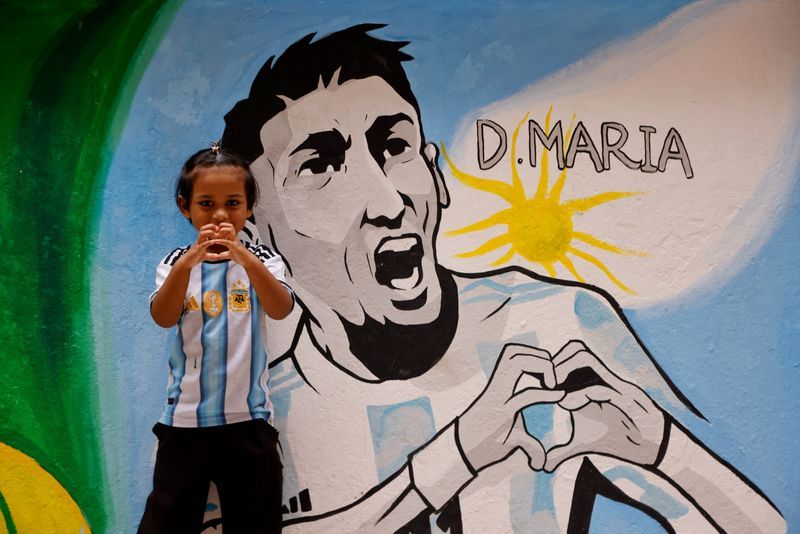
Argentina and Switzerland are set to renew their World Cup rivalry on Saturday in Kansas City, Missouri, carrying the weight of history from their dramatic 2014 encounter in Brazil. That round-of-16 clash saw Angel Di Maria's extra-time goal finally pierce Swiss defences and propel Lionel Messi's side through, a moment that still resonates for both nations as they prepare for another high-stakes knockout encounter. The intervening 12 years have reshaped both programmes significantly, yet the fundamental narrative remains compelling: one side seeking to consolidate dominance, the other hungry to prove their mettle on football's grandest stage.
The contrasting trajectories of these two sides over the past dozen years paint a striking picture of how far Argentina have travelled. In 2014, Messi was operating at the peak of his powers, yet Argentina remained haunted by a World Cup title drought stretching back nearly 30 years. Switzerland, by contrast, had become tournament regulars but remained perpetually frustrated by their inability to advance beyond the round of 16, with their last quarter-final appearance dating back to 1954. The Argentinian narrative was one of burden and redemption; the Swiss story was one of consistent underachievement despite organisational excellence.
Argentina's ascendancy since that encounter has been remarkable. They claimed the World Cup trophy at Qatar 2022, adding it to their runner-up finish in 2014, fundamentally altering their status as defending champions arriving in this tournament. Yet the passage of time has also caught up with their talismanic leader. Messi, now 39, operates no longer at the athletic heights that made him a terror to opponents, his movements less electric, his recovery pace diminished. Paradoxically, the tournament still orbits around him, a testament to both his enduring influence and Argentina's reliance upon his creative genius.
Despite the wear of age, Messi orchestrated an extraordinary turnaround against Egypt in the last 16, inspiring his team to a stunning 3-2 comeback after trailing 2-0 with just 11 minutes remaining. That dramatic recovery demonstrated the psychological resilience embedded within this Argentina squad, their refusal to surrender even when the contest appeared beyond reach. Messi's own words after that match captured the essence of this team's mentality: "We suffered a lot again, but this is the World Cup. Every game is going like this. This group never gives up and keeps trying until the end." Such resilience, born from tournament experience and championship pedigree, represents a formidable intangible asset.
Switzerland's own journey has followed a contrasting arc. Under coach Murat Yakin, they have achieved something that eluded their predecessors for seven decades—a quarter-final berth. Their path proved no less dramatic than Argentina's, securing that precious advancement through a penalty shootout victory over Colombia after a goalless draw. This achievement carries profound significance for Swiss football, representing both vindication of their methodical approach and proof that consistency eventually bears fruit. For Yakin and his squad, the opportunity to face the world champions represents not merely another match, but validation that Switzerland belong among the tournament's elite.
The personal dimension adds fascinating texture to this renewal. Only three players link the 2014 encounter to this fixture: Messi himself, Swiss captain Granit Xhaka, and defender Ricardo Rodriguez. Both Xhaka, aged 33, and Rodriguez, also 33, carry vivid memories of that defeat 12 years ago. Their continued presence provides continuity and perspective. Xhaka articulated the strange honour of confronting Messi again after all these years: "It is a privilege to be in this type of era with him. We played against him when we lost in 2014 in Brazil. We know the quality, what he has, but all the team as well." Rodriguez expressed similar respect tempered with competitive resolve, acknowledging Argentina's strength while refusing to concede psychological defeat before kick-off.
Swiss football has evolved considerably since their previous meeting with Argentina. They no longer depend primarily upon rigid defensive organisation and disciplined shape. The team has developed more attacking ambitions and creative capacity, though that development has been temporarily hampered by injuries. Midfielder Johan Manzambi's absence through knee injury cost them against Colombia, his playmaking abilities proving sorely missed. Yakin will be hopeful of his return, as Switzerland's capacity to transition from defence to attack and generate opportunities against a formidable opponent depends partly upon such creative outlets.
Yakin has identified tactical opportunities in Argentina's recent showings. He observed that the defending champions' struggles against Cape Verde and Egypt suggest vulnerabilities that Swiss preparation can target: "We're up against the defending champions, which is a unique opportunity. At the same time, we've realised that Argentina are not invincible. It should be an interesting match from a tactical point of view." This assessment reflects neither arrogance nor delusion, but rather a coach identifying genuine areas where disciplined, intelligent football might yield positive results.
Argentina coach Lionel Scaloni, preparing his defence of the trophy, views Switzerland with the respect due to a formidable opponent. He expects to field largely the same XI that defeated Egypt, continuing the momentum of that comeback. Scaloni characterised Switzerland as possessing "an incredible World Cup tradition" and "outstanding players," signalling that Argentina will approach this fixture with appropriate seriousness rather than complacency. The defending champions understand that tournament football punishes overconfidence and rewards collective focus.
The psychological landscape surrounding this fixture differs markedly from 2014. Then, Argentina were desperate outsiders chasing a long-deferred dream; now they arrive as champions with something to protect. Switzerland were resigned underdogs; now they are genuine overachievers who have surpassed historical targets. These shifted expectations alter the pressure dynamics profoundly, potentially working in Switzerland's favour as they carry lighter burden of expectation. Argentina, conversely, must navigate the dual demands of defending their status while managing the decline of their greatest ever player.
For Malaysian and Southeast Asian observers, this fixture offers compelling drama beyond the sporting theatre. It represents a microcosm of how tournament football rewards persistence, adaptability, and organisational excellence. Switzerland's journey to the quarter-finals demonstrates that smaller footballing nations, through consistency and strategic development, can compete with traditional powerhouses. Argentina's continued reliance upon individual brilliance, even as that brilliance fades, raises questions about programme sustainability and generational transition—issues equally relevant across Asian football as established stars approach retirement.
The tactical battle looming on Saturday carries genuine intrigue. Switzerland must be compact, disciplined, and clinical in transition, seeking to exploit the spaces that opened against Egypt while defending resolutely against Argentina's possession dominance. Argentina must maintain control through midfield while finding ways to unlock a disciplined Swiss defence that has improved markedly since 2014. Both sides possess sufficient quality and experience to believe in victory, yet both also harbour appropriate respect for their opponent's capabilities. The result remains genuinely open, a fitting reminder that tournament football retains the capacity to surprise and that narratives written 12 years ago need not dictate those written today.

