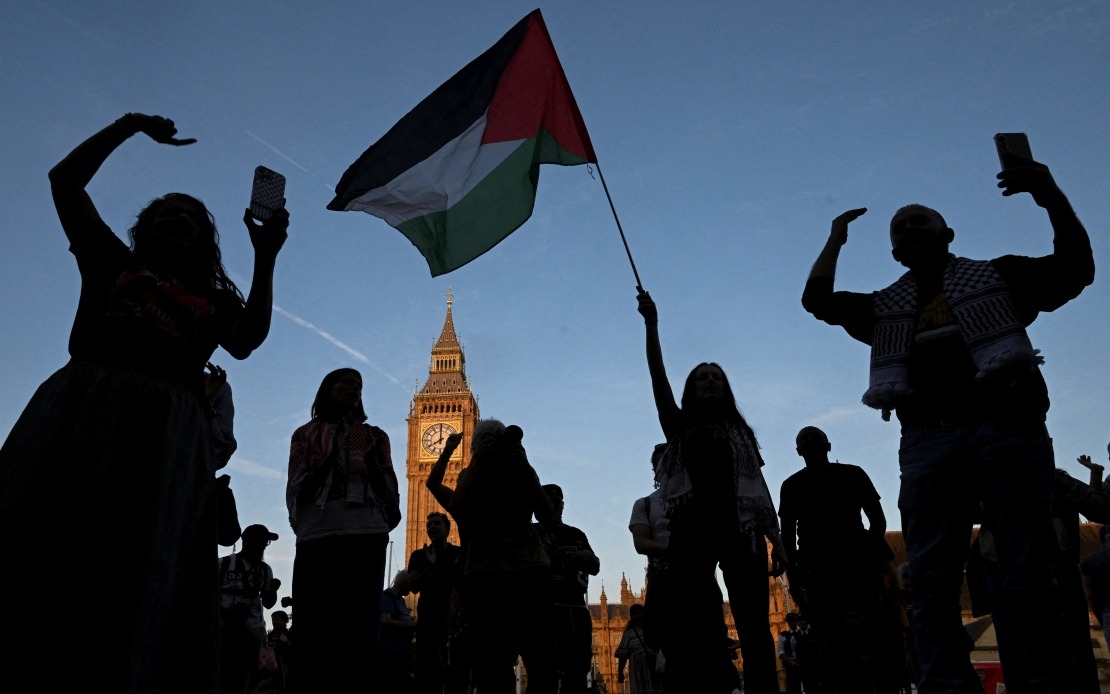
The newly appointed Secretary-General of the Arab League, Nabil Fahmy, has reaffirmed the organisation's commitment to making the Palestinian question a cornerstone of its institutional agenda, signalling continuity in the bloc's Middle East policy even as the region faces mounting security pressures. Speaking during his inaugural press conference at the Arab League's Cairo headquarters, Fahmy outlined an ambitious roadmap that extends beyond Palestinian affairs to encompass broader challenges to Arab sovereignty and territorial integrity.
Fahmy's declaration carries particular weight given the Arab League's historical role as a forum for collective Arab action on the Palestinian-Israeli conflict. His emphasis on defending "the legitimate rights of the Palestinian people" and working towards "ending the occupation" reflects the League's foundational commitment since its establishment in 1945. For Malaysia and other developing nations in Southeast Asia that maintain solidarity with Palestinian causes, this reaffirmation signals that the Arab world continues to view this issue through a lens of fundamental rights and international law rather than shifting geopolitical calculations.
The new Secretary-General's language regarding events in Gaza and the West Bank proved notably forceful. By characterising Israeli military operations as "an ongoing crime of genocide," Fahmy aligned himself with legal terminology that activists and some international observers have employed, though this remains contested in mainstream international forums. His pledge to support "the legal prosecution of perpetrators" and invocation of the principle that genocide carries no statute of limitations suggests the Arab League may intensify diplomatic efforts to pursue accountability mechanisms, potentially through international courts and tribunals.
Beyond the Israeli-Palestinian nexus, Fahmy broadened the scope of Arab concerns to encompass what he termed Israeli violations extending into Lebanon. References to "continued attacks and violations in Beirut and southern Lebanon" highlight the spillover nature of Middle Eastern instability, where Israeli military operations affect multiple countries simultaneously. This cross-border dimension underscores why regional powers, including Malaysia's ASEAN neighbours, view Middle Eastern conflicts as potential sources of broader destabilisation affecting international shipping lanes, energy supplies, and refugee flows.
Fahmy's invocation of Syria's occupied Golan Heights as an unresolved territorial question reflects the League's persistent engagement with historical grievances that predate even the contemporary Palestinian-Israeli conflict. The Syrian Golan, seized by Israel during the 1967 Six-Day War and unilaterally annexed in 1981, remains one of several territorial disputes that the Arab League treats as core sovereignty violations. By linking Jerusalem's status, Palestinian territorial rights, and the Golan Heights within a single framework of Arab territorial integrity, Fahmy articulated a comprehensive vision of regional justice that demands simultaneous resolution across multiple fronts.
Critically, Fahmy emphasised that addressing these challenges requires autonomous Arab decision-making unconstrained by external pressure. His insistence that solutions must "stem from a purely Arab will" and that "only what is agreed upon by Arabs is capable of achieving sustainability" reflects frustration with international mediation efforts that Arab states view as imposing external frameworks. This sentiment resonates across the developing world, where nations like Malaysia have historically advocated for resolving regional conflicts through mechanisms respecting the principle of national sovereignty and rejecting imposed settlements.
The Secretary-General's characterisation of the Arab region as standing "before a critical phase" requiring "more vigilant and proactive Arab action" suggests recognition that conventional diplomatic approaches have yielded limited progress. The Arab League has faced mounting criticism for its perceived weakness in addressing regional conflicts, particularly as some member states have pursued bilateral arrangements with Israel and reduced their public criticism of Israeli policies. Fahmy's forceful rhetoric may represent an attempt to reinvigorate the organisation's relevance and reassert its historical mission as guardian of Arab collective interests.
For Southeast Asian observers, Fahmy's speech illuminates the persistent salience of the Palestinian question within Arab political consciousness, despite regional states' varying strategic priorities and economic interests. The Arab League's continued emphasis on this issue suggests that any comprehensive Middle Eastern peace architecture must address Palestinian aspirations for statehood and self-determination, as these remain non-negotiable elements of Arab consensus. This reality shapes international diplomacy and influences voting patterns in multilateral forums including the United Nations.
Fahmy's inaugural address also implicitly acknowledges the Arab League's structural challenges, including divisions between member states over Syria, Iraq, and Yemen, as well as the emergence of normalisations between some Arab nations and Israel. By recentring the Palestinian cause, the new Secretary-General seeks to identify common ground that unites Arab states across competing geopolitical alignments. Whether this rhetorical emphasis translates into coordinated institutional action remains to be seen, particularly given the divergent strategic interests of wealthy Gulf states, North African nations, and Levantine countries facing direct security threats.
The implications for regional stability extend beyond the Arab world. Fahmy's pledge of legal accountability for what he characterises as genocide could influence international justice proceedings and shape how global powers engage with Middle Eastern questions. Malaysia and other non-aligned nations that have historically supported international law as a framework for resolving disputes may find the Arab League's emphasis on accountability mechanisms aligned with their own positions on universal justice principles. Conversely, the hardening of rhetorical positions around the Palestinian question may complicate efforts to achieve negotiated settlements that require mutual concessions and compromise from all parties.

