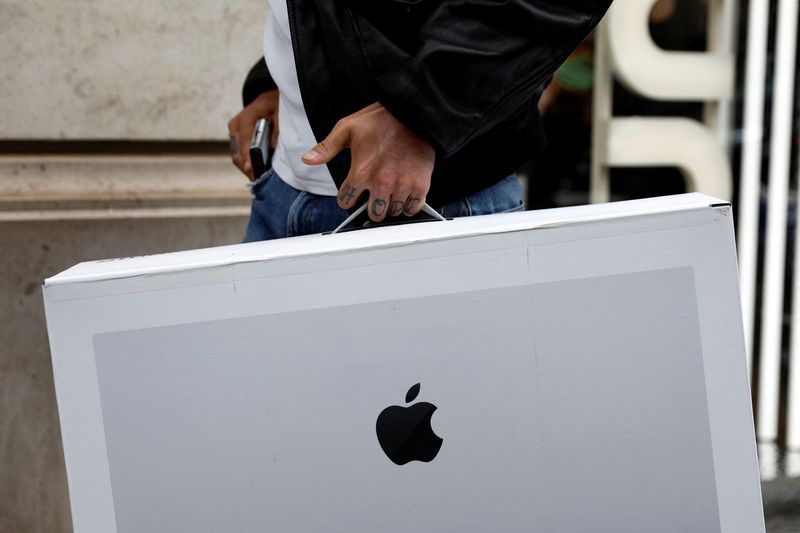
Apple has reclaimed its position as the world's most valuable company, displacing graphics chipmaker Nvidia from the top spot after nearly a year of dominance. The Cupertino technology giant achieved a market valuation of $4.88 trillion as of Friday, while Nvidia's valuation slipped to approximately $4.86 trillion following a 3.5% share price decline. The reordering of Silicon Valley's hierarchy signals a meaningful pivot in how investors view the artificial intelligence landscape and which companies stand to benefit most from the technology boom that has gripped global markets since late 2022.
The repositioning reflects a fundamental reassessment of artificial intelligence's commercial trajectory and where genuine profit opportunities lie. For much of the past year, Nvidia dominated investor sentiment as the indispensable beneficiary of AI infrastructure buildout, with its chips powering nearly every major generative AI project globally. Yet institutional investors have increasingly broadened their gaze, recognising that owning the picks and shovels of the AI gold rush may not be the only path to outsized returns. Apple's resurgence to the top position represents the first time the company has held the crown since April 2023, underscoring how dramatically market dynamics have shifted in recent months.
Analysts attribute the transition partly to a reassessment of Apple's artificial intelligence positioning. Toni Meadows, head of investment at BRI Wealth Management, observed that sentiment around the company has undergone a notable transformation. Previously dismissed as an artificial intelligence laggard because of its reluctance to pursue expensive large language model development, Apple now attracts investor confidence for precisely the opposite reason—its capital-efficient approach to monetising AI through services, ecosystem integration, and iterative hardware improvements appears more sustainable than high-intensity infrastructure spending. This philosophical difference in artificial intelligence strategy reflects two competing visions of how the technology will ultimately generate wealth and influence corporate earnings durability.
Apple's strategic positioning centres on leveraging vast repositories of personal user data embedded across its device ecosystem. The company possesses unparalleled access to granular information about billions of iPhone users' behaviour, preferences, and digital activities—a potential goldmine for training more contextually aware and genuinely useful artificial intelligence services. Siri, Apple's voice assistant, remains conspicuously less capable than competing products from Amazon, Google, and newer startup challengers. By unlocking this data trove responsibly while maintaining privacy commitments, Apple could theoretically create artificial intelligence applications that anticipate user needs with unprecedented accuracy. The technical and regulatory challenges are formidable, however, requiring the company to navigate strict privacy principles that have become central to its brand identity.
The company's recent software overhaul represents management's effort to close an embarrassing gap in artificial intelligence capabilities. Last month Apple unveiled a substantially redesigned Siri system following years of stagnation, attempting to demonstrate that the company remains serious about competing in the artificial intelligence era. These moves carry particular significance as Chief Executive Tim Cook prepares to transition leadership to hardware specialist John Ternus in September. Cook's final months at the helm will partly be judged by whether he successfully positioned Apple as a credible artificial intelligence competitor rather than merely an elegant hardware manufacturer that happened to lag in software innovation.
The leadership succession itself adds complexity to assessing Apple's artificial intelligence trajectory. Ternus brings expertise in physical product design and hardware integration rather than software or services development. Whether his appointment signals confidence that Apple's artificial intelligence challenge will be solved through superior hardware implementation or represents simply a return to product-focused governance remains unclear. The market's embrace of Apple over Nvidia suggests investors believe the company's ecosystem advantages and financial discipline will prove decisive, yet this confidence could evaporate quickly if Apple fails to deliver meaningful artificial intelligence features that consumers perceive as genuinely useful rather than marketing exercise.
Nvidia's continued dominance of artificial intelligence chip infrastructure means the company remains far from endangered despite surrendering the valuation crown. The chipmaker's graphics processors drive the vast majority of artificial intelligence model training and deployment globally, from enterprise data centres to cloud providers' infrastructure. This fundamental positioning as essential infrastructure continues generating extraordinary demand that shows no immediate signs of abating. Nvidia could reclaim the top valuation position if investor sentiment shifts again, particularly if capital expenditure cycles for artificial intelligence accelerate faster than current consensus expectations. The chipmaker's quarterly earnings and guidance will remain crucial barometers of artificial intelligence infrastructure spending momentum.
Apple's current valuation advantage appears fragile given the company faces its own business challenges that could undermine the bullish case. The company has implemented meaningful price increases across its product line to offset rising manufacturing costs—a strategy that risks alienating price-conscious consumers precisely as artificial intelligence features that might justify premium pricing remain forthcoming. Weakness in iPhone demand among key international markets, particularly China, creates additional headwinds that could pressure revenue growth. Benjamin Hall, vice president of alpha research at Segal Marco Advisors, observed that distinguishing between the companies based on artificial intelligence exposure appears premature, noting that Nvidia will likely remain significant regardless of how artificial intelligence adoption unfolds.
The competition between Apple and Nvidia reflects broader volatility roiling semiconductor equities more widely. Beyond these two giants, memory chipmakers including Micron Technology have attracted investor attention as infrastructure builders recognising that artificial intelligence systems require vast quantities of high-performance memory architecture. Micron surpassed $1 trillion market valuation in May as investors recognised that memory chips represent essential artificial intelligence infrastructure components. South Korea's SK Hynix similarly attracted attention following its recent Nasdaq listing, adding another competitor vying for investor capital. These developments suggest artificial intelligence-related investment returns may become increasingly distributed across the semiconductor industry rather than concentrated among a handful of mega-cap leaders.
The semiconductor sector experienced significant turbulence during July as investors reappraised the sustainability of artificial intelligence capital spending cycles. The Philadelphia SE Semiconductor index declined nearly 19% from its recent highs as questions emerged regarding whether artificial intelligence adoption would match the extraordinary expectations embedded in current valuations. Despite this sharp correction, semiconductor equities have outperformed broader market indices substantially this year, demonstrating that profit opportunities within the artificial intelligence ecosystem remain compelling even after recent weakness. The question confronting Malaysian and regional investors involves determining which companies and which specific artificial intelligence themes offer the most attractive risk-adjusted returns as the technology matures and applications extend beyond enterprise infrastructure into consumer devices and services.
For Malaysian investors and technology enthusiasts, Apple and Nvidia's market position shifts carry implications beyond share price movements. Both companies conduct significant manufacturing operations throughout Southeast Asia, with Apple relying extensively on Malaysia-based contract manufacturers for component assembly and Nvidia depending on regional semiconductor fabrication capacity. The direction of artificial intelligence infrastructure investment will shape employment opportunities and technical skill demands across Malaysia's technology sector. Consumer adoption of Apple's artificial intelligence features will influence whether the company sustains premium device pricing that supports Malaysia's higher-end retail and services sectors. Monitoring these two companies' competitive dynamics provides a useful proxy for understanding which artificial intelligence strategies will ultimately prove most valuable globally.

