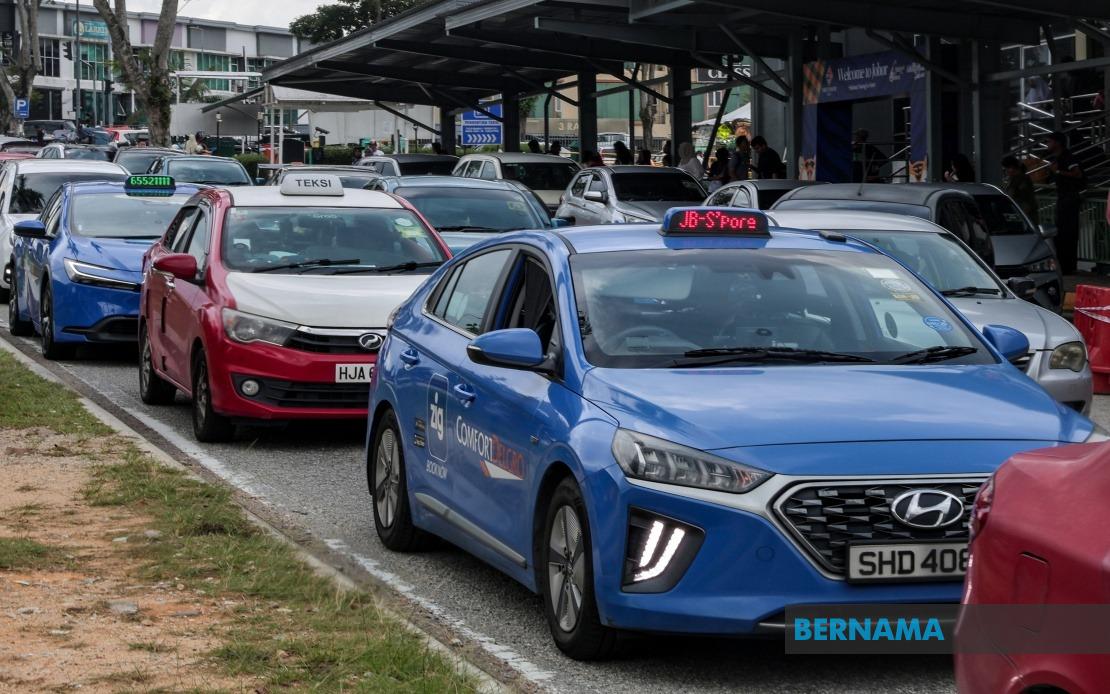
The Land Public Transport Agency (APAD) has announced a significant flexibility within the National MADANI Taxi Renewal Programme (Teksi MADANI), permitting taxi drivers to license or replace their vehicles with models other than the Proton S70. This provision addresses practical challenges faced by applicants in the sector and represents a measured departure from the initial framework outlined by the Transport Ministry on April 23, which stipulated that all new applications and replacements would be limited exclusively to the Proton S70 taxi package offered through the programme.
The modification caters specifically to two categories of applicants: those who already possess existing vehicles and wish to continue operating them, and drivers who have encountered obstacles in securing hire-purchase financing approval within the Teksi MADANI scheme. By allowing this discretion, APAD aims to ensure that financial constraints do not become an insurmountable barrier to programme participation, recognising that not all applicants possess the capacity or creditworthiness to access approved financing channels. This practical adjustment reflects the agency's understanding that a one-size-fits-all approach may exclude deserving taxi operators from benefiting from the broader reform initiative.
The flexibility represents a nuanced implementation of policy that balances the government's modernisation ambitions with ground-level realities facing the taxi industry. While the Teksi MADANI programme has been designed around the Proton S70—selected for its modern aesthetics, elimination of rooftop identification signs, and distinctive vehicle registration series beginning with "GET"—the recognition that alternative options must remain available demonstrates adaptive governance. Existing taxis not replaced under the programme continue to have the right to operate until they reach the specified vehicle age limit, preventing abrupt disruption to drivers' livelihoods whilst the sector transitions toward greater standardisation.
Prime Minister Datuk Seri Anwar Ibrahim officially launched Teksi MADANI on July 3, positioning the initiative as transformative for Malaysia's taxi industry by transferring vehicle ownership from traditional leasing arrangements to individual driver proprietorship. This ownership model fundamentally restructures the relationship between drivers and operators, granting taxi drivers genuine asset ownership and the corresponding financial stake in their vehicles. For decades, Malaysia's taxi drivers have operated under leasing systems that limited wealth accumulation and provided minimal security; Teksi MADANI seeks to reverse this pattern by enabling drivers to become legitimate legal owners of their transport assets.
The programme's financial support has expanded considerably. Beyond the original framework, the government has allocated an additional RM10 million specifically for the Old Vehicle Replacement Matching Grant Programme targeting taxi drivers. This supplementary funding follows the RM10 million allocation initially provided under Budget 2026 and signals sustained governmental commitment to facilitating industry transition. The matching grant approach—typically requiring driver contribution to unlock government support—encourages stakeholder investment whilst ensuring public resources are deployed efficiently. For taxi drivers operating on modest margins, such co-funding mechanisms can mean the difference between modernising their fleet or remaining locked in aging, uncompetitive vehicles.
The Proton S70, selected as the official taxi model, represents Malaysia's automotive industry playing a central role in national transport policy. By designating a domestically manufactured vehicle as the standard, the government supports local manufacturing whilst ensuring technical consistency across the fleet. The modern sedan design, departing from the previous iconic taxi model's rooftop signage, reflects contemporary urban aesthetics and aligns with regional trends toward more integrated vehicle branding. The "GET" registration series creates visual standardisation that builds professional identity within the sector, distinguishing Teksi MADANI participants from conventional taxis and enabling better regulation and consumer identification.
For Malaysian taxi drivers, the implications are substantial but complex. Those with access to financing and capacity to adopt the Proton S70 receive a modern vehicle with government backing, improved operational efficiency, and enhanced professional standing. Simultaneously, the flexibility to choose alternatives ensures that drivers unable to secure approved financing retain pathways for participation rather than complete exclusion from the programme's incentive structure. This tiered approach acknowledges the heterogeneous nature of the taxi driver population—ranging from highly organised corporate operators to individual proprietors with limited capital access.
The Southeast Asian context adds dimension to this initiative. Regional taxi markets increasingly face competition from ride-hailing platforms and experience technological disruption; Malaysia's structured modernisation approach contrasts with less interventionist approaches elsewhere. By establishing ownership frameworks, standardising vehicle specifications, and providing financial support, Malaysia demonstrates proactive industrial policy that prioritises existing taxi workers' interests whilst driving modernisation. Other regional countries managing similar transport sector transitions may observe whether this model effectively preserves livelihoods whilst achieving technology upgrades and fleet standardisation.
Implementation challenges remain significant. The financing approval process appears to be a constraining factor for some applicants, suggesting that credit assessment criteria may need review to ensure they do not systematically exclude otherwise viable drivers. The matching grant system requires clear communication to ensure drivers understand eligibility criteria and application procedures. Distribution of the additional RM10 million funding must be transparent and equitable, avoiding circumstances where well-connected or urban-based drivers access resources more readily than rural counterparts facing genuine modernisation challenges.
The allowance for non-Proton S70 vehicles also raises regulatory questions requiring clarification. Standards for vehicle condition, safety specifications, emissions compliance, and insurance coverage must apply uniformly regardless of model, ensuring that flexibility in manufacturer choice does not compromise public safety or environmental objectives. APAD must establish clear baseline requirements whilst avoiding excessive prescription that negates the intended flexibility. Ongoing monitoring will be necessary to assess whether the alternative vehicle pathway attracts substantial uptake or remains marginal, with implications for future policy adjustments.
Longer-term success of Teksi MADANI depends on drivers perceiving genuine economic benefit from programme participation. Beyond vehicle ownership transfer, considerations include fuel efficiency gains, maintenance cost structures, insurance premiums, passenger confidence in modern vehicles, and potential earning capacity improvements. Early adopters and programme beneficiaries will influence peer perceptions and drive adoption rates. The government's flexibility regarding vehicle choice signals responsiveness to implementation realities, though sustained engagement with taxi driver associations and grassroots feedback mechanisms will be essential to address emerging challenges and refine policy details.

