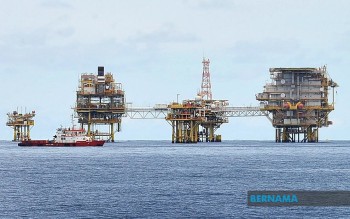
Asia Pacific offshore investment has weathered recent geopolitical turbulence in West Asia without significant damage, according to analysis from Hong Leong Investment Bank, with Southeast Asia positioned to emerge as a particular beneficiary of renewed capital deployment in energy infrastructure. The region is forecast to channel more than US$100 billion into new greenfield offshore projects, representing a robust 12 per cent increase that underscores growing confidence in long-term energy security and supply resilience across the sector.
The stabilisation of spending patterns comes amid tentative signs that heightened tensions in the Persian Gulf may be moderating. A fragile United States-Iran ceasefire agreement, formalised through a 14-point memorandum of understanding, suggests that the acute geopolitical crisis that had threatened global energy supplies may be moving towards resolution. While analysts caution that such agreements remain delicate and subject to reversal, the diplomatic framework itself represents a turning point in regional tensions that had previously threatened to disrupt critical shipping routes and production facilities.
Evidence of normalising conditions is visible in maritime traffic patterns along the Strait of Hormuz, a chokepoint through which roughly one-third of global seaborne petroleum flows. Vessel movements along this critical waterway have begun recovering following the MOU signing, though the picture remains somewhat obscured. Satellite monitoring suggests a heightened number of ships are transiting with automatic identification system transponders disabled, potentially indicating that actual traffic volumes may be higher than official data suggests. This opacity itself reflects lingering caution in the market, even as fundamentals stabilise.
Beyond geopolitical factors, the investment thesis for regional offshore development rests on two complementary pillars that analysts believe will sustain capital deployment over the medium term. The first centres on whether global energy security concerns prompt sustained elevation of inventory reserves, creating durable demand for pipeline infrastructure and storage terminal capacity. This dynamic would particularly benefit companies specialising in logistics and midstream operations, who have struggled during periods of energy oversupply and price compression.
The second investment catalyst involves Malaysia's national oil company. Hong Leong Investment Bank identifies a potential Petronas capital expenditure upcycle emerging around 2027 as a significant catalyst for the regional oil and gas services and equipment sector. Such a cycle would generate substantial demand for providers of upstream development capabilities, hook-up and commissioning services, maintenance operations, marine support, fabrication work, and pipeline-related projects. For Malaysian and regional industry players positioned in these segments, this represents a material opportunity to expand operations and market share.
Price assumptions underpinning the investment outlook have shifted modestly downward, reflecting both the easing of immediate supply disruption risks and evolving demand dynamics. Hong Leong revised its 2026 Brent crude forecast to US$80 per barrel from an earlier expectation of US$90, while maintaining its projection of US$75 per barrel for the following year. These levels, though lower than recently observed peaks, remain substantially elevated relative to historical norms prior to the West Asian conflict.
The price floor is partly explained by persistent inventory pressures in developed economies. Data from the United States Energy Information Administration suggests that OECD commercial crude inventories are contracting sharply, with days of supply expected to decline to 50 days by late 2026, well below pre-war levels that exceeded 60 days. This inventory deficit, though narrowing, maintains upward pressure on prices by reinforcing perceptions of tight supply markets. Energy security considerations are also likely to encourage governments and strategic reserve operators to accumulate additional stocks, further supporting demand.
Given this inventory dynamic, analysts anticipate that Brent crude will remain supported around the US$80 per barrel level until global oil flows fully normalise and reserve rebuilding extends beyond the 60-day threshold. Should inventory accumulation remain incomplete into early 2027, prices could remain underpinned at levels exceeding US$75 per barrel, reflecting the enhanced geopolitical risk premium that energy security concerns have introduced into market pricing.
Upstream production dynamics also contribute to price support. Shut-in volumes across the Strait of Hormuz region expanded to 45 per cent of normal capacity in May 2026, compared to 35 per cent in March, indicating that recovery in production remains incomplete. Any extended timeline for bringing offline capacity back to service would sustain upward pressure on prices and reinforce the case for continued investment in incremental production capacity and infrastructure enhancement.
Current market pricing reflects a more moderate outlook than recent highs. At recent trading, Brent crude was positioned around US$69 per barrel with West Texas Intermediate at approximately US$72 per barrel, each advancing roughly one percentage point. These levels represent a retreat from the peaks triggered by conflict escalation but remain within the range that analysts consider necessary to support sustained investment in new offshore developments and provide adequate returns to upstream operators.
Economists at investment research firm IPPFA Sdn Bhd emphasise that stabilisation of oil prices in the US$70 to US$75 per barrel band would create a more favourable operating environment for energy-dependent industries across the region. By reducing energy-related input costs and enhancing cost predictability, such pricing would enable businesses to plan expansion and capital investment with greater confidence. The broader macroeconomic implications are equally significant, as lower energy prices would dampen cost-push inflationary pressures that have troubled central banks across Asia and globally.
The cascading effects of sustained moderate energy prices extend beyond the petroleum sector and energy-intensive industries. By easing global inflationary dynamics, lower oil prices provide monetary authorities with greater flexibility to maintain supportive policy settings that encourage business investment and strengthen consumer purchasing power. For Southeast Asian economies with significant energy imports and consumption-driven growth models, this creates a virtuous dynamic where energy price stability supports broader economic expansion. The region's positioning as a potential beneficiary of fresh capital deployment in offshore infrastructure thus connects directly to improved macroeconomic conditions that could reinforce growth momentum across manufacturing, trade, and services sectors.

