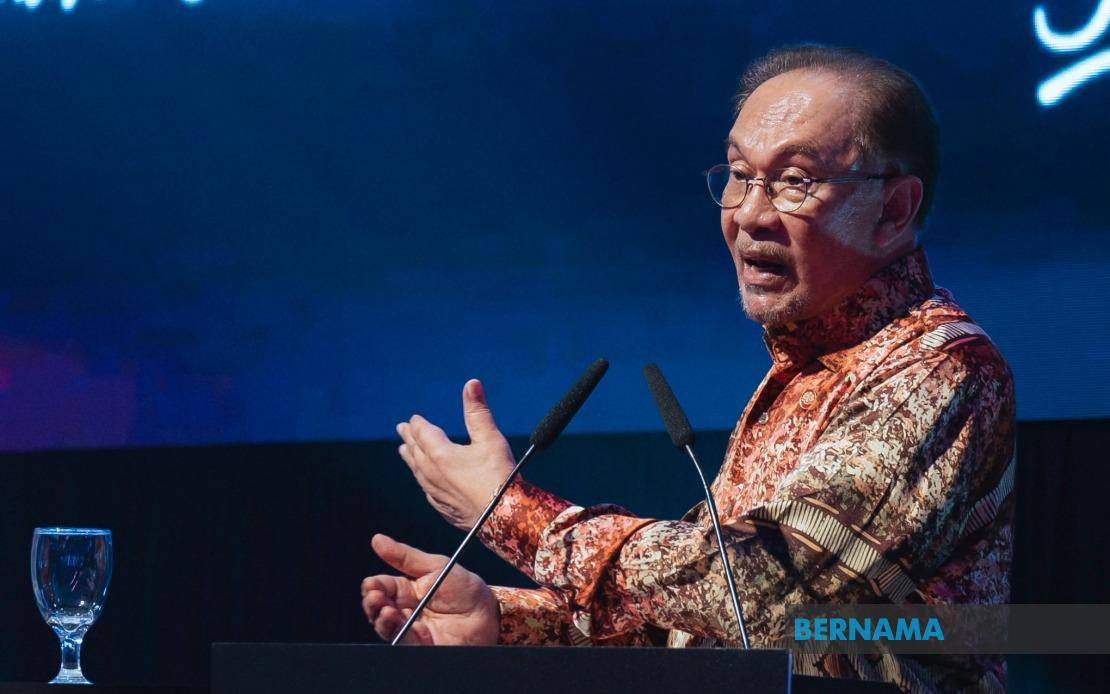
Prime Minister Datuk Seri Anwar Ibrahim's recent comments regarding Taiwan have sparked considerable debate, with some viewing them as controversial because he acknowledged China's stated position on employing force if peaceful reunification proves unattainable. Yet this characterisation misses the crucial distinction his remarks were designed to communicate: acknowledgment of another nation's stance is fundamentally different from endorsement of military conflict. The substance of Anwar's argument rests on three interconnected pillars—sovereignty protection, territorial integrity, and the mechanics of deterrence—all of which reflect mainstream international relations doctrine rather than an exceptional or hawkish position.
To grasp the Prime Minister's reasoning, one must understand the deterrence concept underlying his statement. Anwar drew an analogy with Malaysia itself, positing that no functional government could reasonably accept the dismemberment of its federation without mounting a defence. This principle operates independently of preferred outcomes. A state's preference for peaceful resolution does not logically extend to renouncing all capacity for self-defence. Rather, the capacity to respond to existential threats serves as a stabiliser, not a destabiliser. When a nation credibly demonstrates it will not passively accept territorial dissolution, potential challengers face disincentives that discourage aggression in the first instance. This is the paradox of effective deterrence: the threat of force, when credible, often means force need never be deployed.
The relationship between deterrence and actual military action requires careful parsing. Anwar's framing deliberately positioned negotiation, legal frameworks, and political settlement as the primary avenues for resolving disputes. Force remains a reserve option, invoked only when these preferred mechanisms fail entirely. The possession of military capacity should not be confused with its employment. A government that announces in advance that it will accept territorial breakup without resistance effectively removes deterrence from the equation, potentially inviting precisely the challenge it seeks to avoid. Conversely, maintaining the credible possibility of armed defence—without necessarily intending to use it—creates the conditions under which peaceful negotiation becomes more viable because the costs of non-compliance become prohibitively high.
Within Malaysia's established diplomatic framework, Anwar's position achieves internal consistency through careful alignment with the nation's One China policy. Malaysia formally recognises the People's Republic of China and does not treat Taiwan as an independent sovereign entity in official relations, yet simultaneously sustains meaningful economic engagement and people-to-people connections across the Taiwan Strait. Anwar's argument operates within this very framework: if Malaysia genuinely accepts the One China principle, it cannot simultaneously delegitimise Beijing's security concerns regarding Taiwan as somehow illegitimate or subject to different standards. The Malaysian analogy becomes illuminating precisely because it invites consideration of how Kuala Lumpur would respond to secessionist movements within its own federation.
Taiwan's perspective on these matters differs fundamentally, and that distinction warrants acknowledgment. Taipei maintains that Taiwan constitutes a functioning democratic sovereign state, entitled to self-determination and not rightfully subject to coercion from Beijing. From Taipei's vantage point, any international reference to force in relation to Taiwan risks lending credibility to coercive approaches that undermine its democratic legitimacy and the principle of self-determination. This represents a genuine and principled disagreement rooted in competing visions of Taiwan's political status and international standing. However, disagreement with Anwar's framing does not render his deterrence logic incoherent or uniquely aggressive; rather, it reflects fundamental disagreement about Taiwan's status within the international system.
Anwar's analytical approach reflects classical realist thinking in international relations, wherein states cannot pre-commit to accepting territorial dissolution and must therefore maintain defensive capacity. This is not Malaysian invention; it represents how most nation-states conceptualise their security imperatives. The distinction between deterrence posture and war advocacy becomes critical precisely because casual conflation of these concepts obscures actual policy positions. A leader articulating deterrence logic is not necessarily advocating for military confrontation; he is instead describing the conditions under which military confrontation becomes less rather than more likely. When potential adversaries understand that targets possess both capacity and will to defend themselves, rational calculations shift toward negotiation and away from coercion.
Regional implications of cross-strait tensions assume considerable weight for Malaysia and its Southeast Asian neighbours. A military conflict in the Taiwan Strait would inflict catastrophic economic damage across the entire region, disrupting supply chains, displacing trade flows, and creating security uncertainties that would reverberate for years. Malaysia's geographic position and its dependence on maritime trade routes make such a scenario particularly threatening. The nation possesses compelling interests in preventing escalation and maintaining stability throughout Southeast Asia. Anwar's remarks should therefore be understood not as reckless advocacy for conflict but as articulation of why deterrence—properly maintained—serves regional peace more effectively than appeasement or unilateral renunciation of defensive capacity.
Malaysia's balanced diplomatic approach requires upholding its One China commitment while simultaneously declining to support coercive measures against Taiwan and continuing to champion peaceful dispute settlement through dialogue and legal mechanisms. This equilibrium, though challenging to maintain, reflects the genuine constraints facing a middle-power nation embedded within a region of great-power competition. Anwar's deterrence framing sits comfortably within this balanced posture; it neither abandons Malaysian commitment to One China nor endorses military aggression against Taiwan. Instead, it acknowledges that peaceful solutions depend partly on maintaining credible defensive capacity that discourages challenges to the status quo.
The fundamental proposition underlying Anwar's position remains straightforward yet often overlooked in heated debates: states maintain military capacity not primarily to use it but to ensure they need not face existential threats unprepared or coerced into unfavourable settlements. This logic extends across international relations, informing how nations from Australia to Vietnam to the Philippines construct their own defence postures. The Prime Minister's remarks fit squarely within this mainstream reasoning rather than representing some exotic or dangerous deviation. Careful readers will distinguish between understanding a nation's deterrence logic and endorsing warfare; Anwar articulated the former without advocating the latter.
Moving forward, Malaysia must remain vigilant about its own messaging while continuing principled advocacy for restraint throughout the region. The nation's credibility as a voice for peace depends partly on demonstrating that it can discuss deterrence concepts without malign intent, that it can acknowledge Beijing's security concerns without dismissing Taiwan's democratic achievements, and that it can engage all parties with respect while promoting negotiated resolution. Anwar's Taiwan remarks, properly contextualised, contribute to this balanced approach rather than undermining it. For Malaysian readers and regional observers, the key takeaway involves recognising that deterrence doctrine and war advocacy represent distinct categories, and that acknowledging how major powers think about deterrence need not imply approval of military adventurism. Understanding the logic does not require endorsement; recognition of others' strategic thinking represents a prerequisite for effective diplomacy rather than a surrender to their preferences.

