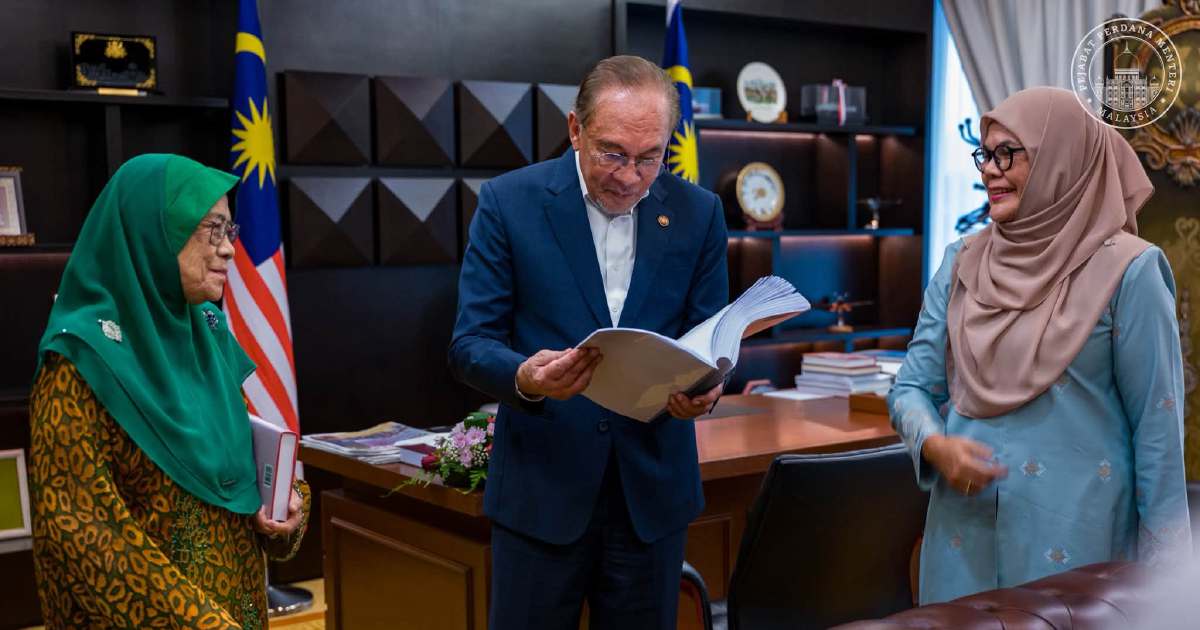
Prime Minister Datuk Seri Anwar Ibrahim has unveiled a substantial written work intended to crystallise his political thought and serve as an enduring reference point for successive generations of Malaysians grappling with questions of national identity and institutional development. The book, Gagasan Anwar Ibrahim Dalam Peradaban Budaya Bangsa, represents an ambitious attempt to codify a lifetime of intellectual engagement with Malaysia's most pressing governance challenges and cultural questions.
The publication reflects a broader trend among senior Asian leaders to establish their legacies through comprehensive written accounts of their political philosophies. By committing his ideas to print, Anwar seeks to create a stable archive of his thinking on pivotal matters affecting the nation. This approach extends beyond mere autobiography, functioning instead as a systematic exposition of how he envisages Malaysia should develop its institutional framework and cultural foundations.
For Malaysian readers and policymakers, the work carries particular significance given the nation's ongoing constitutional debates and questions about federal-state relations, religious affairs, and multi-ethnic integration. These perennial issues have occupied much of Anwar's political career, from his tenure in economic policy through his various roles in opposition and government. A documented framework of his approaches to these challenges could prove instructive for younger politicians and administrators navigating similar terrain.
The timing of such a publication is noteworthy in the Malaysian context, where institutional memory often proves fragile and political transitions can result in discontinuity of policy direction. By establishing this written reference, Anwar attempts to ensure that key insights derived from his experience persist beyond his tenure as Prime Minister. This mechanism for knowledge transfer addresses a structural weakness in many Southeast Asian political systems, where intellectual frameworks for governance are frequently lost when individual leaders depart from office.
Nation-building remains a central preoccupation in Malaysia nearly seven decades after independence. The country continues to negotiate the complex relationship between its constitutional monarchy, federal system, Islamic foundations, and multi-religious, multi-ethnic population. Anwar's documented reflections on these issues could influence how subsequent government officials and opinion leaders approach these enduring tensions. The book thus functions as a potential template for understanding one influential policymaker's solutions to problems that transcend electoral cycles.
The emphasis on character development within the book's scope indicates Anwar's conviction that institutional reform alone cannot sustain national progress. This philosophical stance aligns with broader Southeast Asian intellectual traditions emphasizing moral education and leadership character as prerequisites for effective governance. By making this perspective explicit in published form, he contributes to ongoing regional debates about whether technical competence or personal virtue should take precedence in evaluating political leadership.
Malaysian universities, think tanks, and policy research institutions may find particular value in accessing Anwar's systematic articulation of his positions on economic policy, religious accommodation, and federal governance. These organisations frequently serve as incubators for the next generation of policymakers and their scholars would benefit from studying how contemporary leaders approach fundamental questions of national development. The book potentially becomes a core text in courses examining modern Malaysian political thought.
The accessibility and reception of this work among younger Malaysians will largely determine its practical impact on future generations. If the content proves sufficiently engaging and substantive to warrant serious study beyond specialist circles, it could genuinely shape how emerging leaders conceptualise problems and potential solutions. However, if it remains confined to academic and governmental reading lists, its influence on broader public discourse about the nation's direction may prove limited.
Regionally, the publication also carries implications for how Malaysia positions itself within Southeast Asia's broader intellectual and political landscape. As countries across the region grapple with comparable challenges regarding democratic governance, religious diversity, and economic development, documented frameworks from major Malaysian political figures contribute to the ASEAN region's collective knowledge base. Ideas articulated in this book may resonate beyond Malaysia's borders, particularly in Indonesia, Thailand, and the Philippines, where similar tensions between secular governance and religious identity remain contested.
The success of such an undertaking depends significantly on the work's analytical depth and clarity of presentation. Readers will assess whether the compilation genuinely advances understanding of Malaysian challenges or merely rehearses familiar positions without novel insights. The book's capacity to generate serious intellectual engagement will ultimately determine whether it achieves its intended purpose as a reference point for future decision-makers or remains a ceremonial artifact of contemporary political life.
For the international community observing Malaysia's development trajectory, this publication provides a window into how the nation's current leadership conceptualises its future. Western and Asian observers interested in understanding Malaysia's approach to balancing modernisation with tradition, economic growth with social stability, and religious commitment with secular governance may find valuable indicators within these pages. The book thus operates simultaneously as a domestic policy document and an international statement about Malaysia's identity and aspirations.

