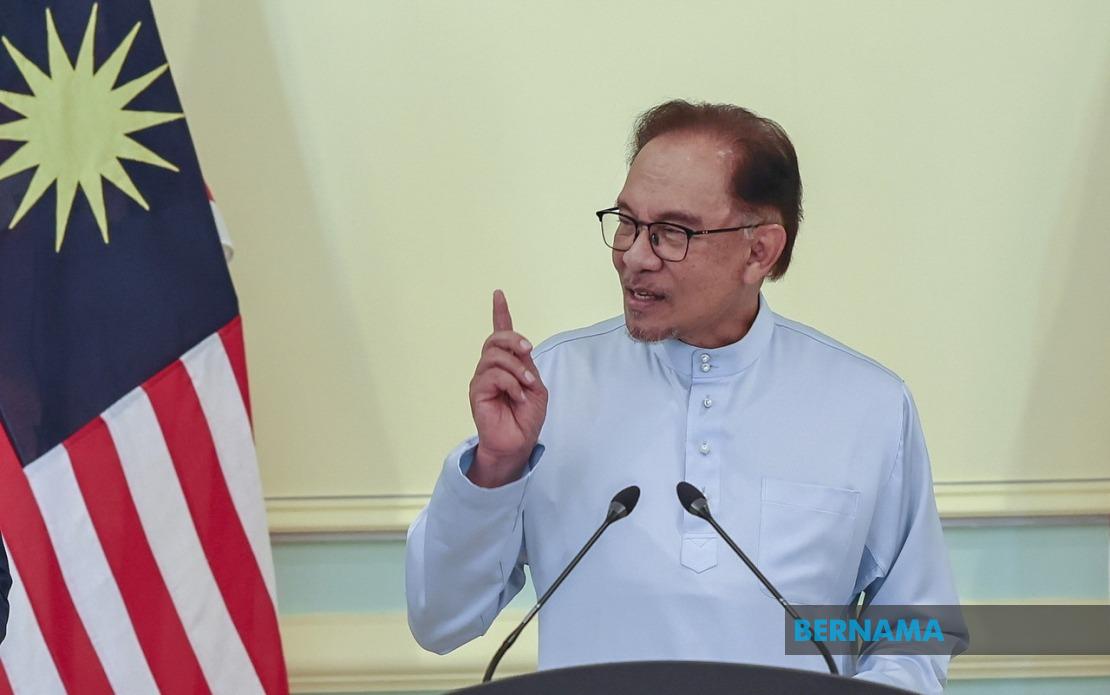
Prime Minister Datuk Seri Anwar Ibrahim's diplomatic strategy in responding to the Gaza humanitarian catastrophe warrants recognition for its integration of moral conviction with legal accountability and sustained humanitarian commitment, according to Universiti Pertahanan Nasional Malaysia's Honorary Professor Dr Mizan Aslam. The approach moves beyond symbolic gestures, instead combining arguments anchored in international law, strategic diplomatic pressure, and concrete humanitarian assistance to address what has evolved from a regional dispute into a crisis testing the foundations of the global legal order.
The humanitarian toll documented across the Gaza territory presents a sobering backdrop to Malaysia's advocacy efforts. After more than 1,000 days of conflict, casualty figures reveal the scale of devastation: 73,066 people have been killed, with 173,514 injured and 5,400 facing permanent disabilities or amputations. Among the deceased, 21,730 were children, whilst 45,113 child injuries and 59,054 orphaned children underscore the intergenerational impact of the violence. These statistics, highlighted by Dr Mizan, illustrate how the crisis transcends conventional armed conflict metrics to encompass the systematic destruction of civilian life support systems.
The destruction of civilian infrastructure compounds the humanitarian emergency. More than 90 per cent of Gaza's built environment has been destroyed, with 81 per cent of structures sustaining damage or complete demolition. Residential homes have been affected across 92 per cent of the territory, whilst water and sanitation systems—critical for preventing disease and maintaining public health—have sustained damage in 90 per cent of cases. These figures translate into 91 per cent of households now confronting severe water scarcity, creating conditions where disease outbreak becomes an imminent public health emergency alongside the immediate threat of violence.
Malaysia's diplomatic positioning reflects recognition that the Gaza situation represents a broader failure of international institutions and the inability of major powers to enforce protective standards for civilians. Dr Mizan emphasised that Malaysia's support for South Africa's case against Israel at the International Court of Justice over alleged Genocide Convention violations demonstrates commitment to legal accountability mechanisms beyond political rhetoric. This strategic alignment with international legal processes signals that Malaysia views the crisis as requiring institutional responses capable of establishing culpability for alleged crimes against humanity.
Prime Minister Anwar has leveraged Malaysia's position as a middle-power nation by amplifying the Gaza issue through multilateral channels, including the Arab-Islamic Extraordinary Summit. These platforms have been utilised to advocate for strengthened international action, enhanced support for the United Nations Relief and Works Agency for Palestine Refugees in the Near East (UNRWA), and escalated pressure on nations continuing weapons transfers that sustain the conflict. Dr Mizan noted that middle-power countries like Malaysia can magnify their influence by channelling national positions through collective international voices and established diplomatic forums.
Malaysia's material commitment to humanitarian response has been anchored by an initial RM100 million allocation dedicated to Gaza assistance, deployed at a moment when 1.97 million residents face acute food insecurity. Among this population, 641,000 individuals are experiencing famine or catastrophic hunger levels—conditions indicating imminent risk of mortality from malnutrition. These figures contextualize Malaysia's financial contribution within the broader humanitarian emergency where food access has become a survival issue rather than a question of convenience.
The health crisis intensifying within Gaza compounds humanitarian concerns and validates Malaysia's emphasis on medical access and healthcare system restoration. Disease and malnutrition have claimed documented lives, with 466 deaths attributed to malnutrition, 17,800 malnourished children under five identified in 2025, and 68,996 cases of severe malnutrition in the same age group recorded as of May 2026. Healthcare infrastructure itself has become targeted, with 40 hospitals and 158 primary healthcare centres damaged, 825 total attacks on medical facilities documented, 1,723 healthcare workers killed, and 362 additional medical personnel detained. These figures reveal how healthcare systems designed to address humanitarian need have themselves become venues of destruction.
Anwar's diplomatic framework extends beyond ceasefire advocacy to encompass broader political settlement frameworks. Malaysia's position emphasises the necessity of establishing a sovereign and viable Palestinian state as the foundation for sustainable resolution, distinguishing the approach from narrower conflict-termination objectives. This positioning reflects the concept of active non-alignment—a foreign policy orientation enabling Malaysia to adopt stances determined by principles, values, and national interests rather than great-power alignment. Within this framework, protecting civilians, ensuring humanitarian access, promoting accountability, and recognising Palestinian self-determination rights represent foundational commitments.
The practical implications of Malaysia's stance operate across multiple institutional and diplomatic levels simultaneously. Through international courts, global conferences, bilateral and multilateral diplomatic channels, and sustained public advocacy, Malaysia maintains the Gaza situation within international consciousness and institutional focus. Dr Mizan characterised this multifaceted approach as translating solidarity from rhetorical support into action underpinned by mechanisms of accountability and legal scrutiny. Whilst Malaysia lacks unilateral capacity to resolve the crisis independently, its sustained advocacy ensures the situation remains subject to international legal examination and collective moral consideration.
Anwar's diplomacy reflects a calibrated approach recognising both Malaysia's genuine humanitarian imperatives and the constraints on middle-power influence in geopolitical disputes involving major strategic actors. The strategy combines immediate humanitarian response—the RM100 million allocation, UNRWA support, and advocacy for medical access—with medium-term legal accountability mechanisms through ICJ engagement and long-term political vision emphasising Palestinian statehood. This layered approach distinguishes principled advocacy from performative condemnation, creating multiple pressure points and institutional mechanisms through which Malaysia contributes to evolving the crisis from an intractable conflict toward internationally-monitored legal and political processes.

