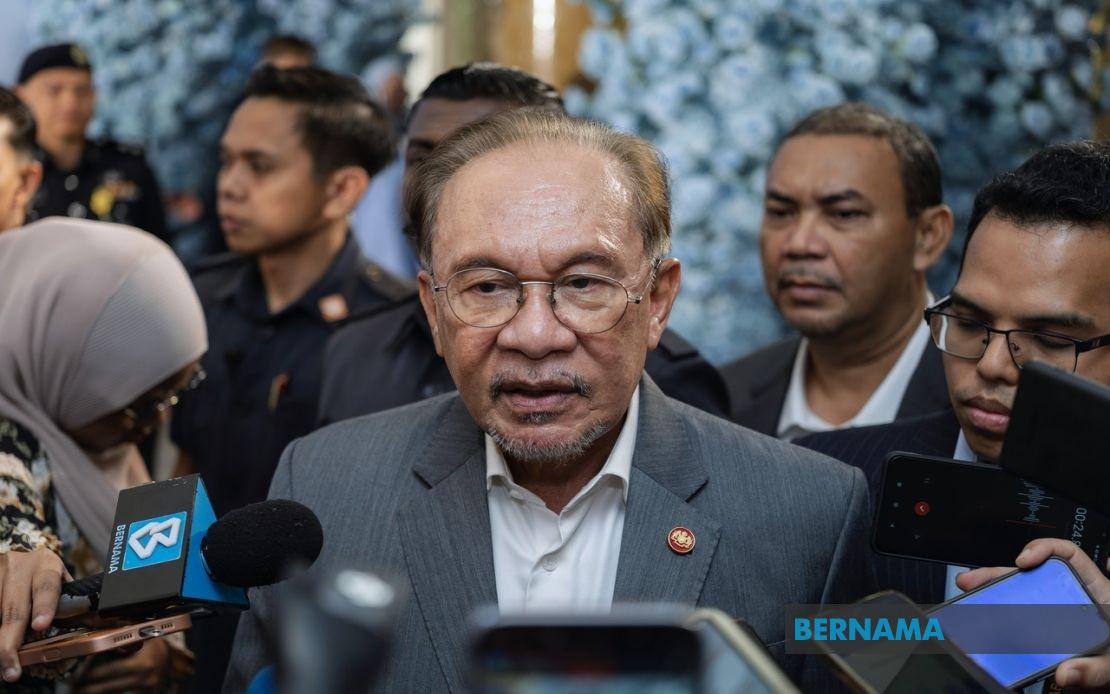
Prime Minister Datuk Seri Anwar Ibrahim revealed on Monday that he has not yet received a comprehensive briefing regarding the circumstances that prompted four Melaka DAP state assemblymen to abruptly exit the state government. Speaking in Kuala Lumpur, Anwar, who doubles as chairman of the Pakatan Harapan coalition, indicated that the top echelon of the alliance would soon undertake necessary follow-up measures to address the unexpected political development in Melaka.
The four assemblymen involved—Allex Seah Shoo Chin from Kesidang, Low Chee Leong from Kota Laksamana, Leng Chau Yen from Banda Hilir, and Kerk Chee Yee from Ayer Keroh—announced their immediate resignation from the state executive council the previous day. Their departure marks a significant rupture in the governing coalition's unity within Melaka, one of Malaysia's crucial swing states that has been pivotal to both federal and state political calculations.
The trigger for the assemblymen's decision stemmed from the Melaka State Legislative Assembly's passage of constitutional amendments that would permit the appointment of nominated state assemblymen, rather than relying solely on elected representatives. This legislative manoeuvre fundamentally alters the composition and accountability structure of the state legislature, raising questions about democratic principles and the balance of power within the assembly. The nominated assembly system could potentially shift the political equilibrium if the appointing authority chooses candidates sympathetic to opposing factions.
This development carries particular significance given Malaysia's recent political volatility and the precarious nature of coalition arrangements across multiple states. Melaka has demonstrated its capacity to be a political weather vane, with its composition directly influencing broader national political dynamics. The DAP's withdrawal from the state government, while ostensibly driven by constitutional concerns, also reflects broader tensions within Pakatan Harapan's internal cohesion and the ongoing negotiations between component parties regarding power-sharing arrangements.
Despite the assemblymen's swift withdrawal, Anwar himself had publicly urged the Melaka DAP to reconsider their decision just hours earlier. The Prime Minister's appeal centred on the importance of maintaining focus on developmental priorities and advancing public welfare, framing the dispute as a distraction from governance fundamentals. His intervention suggested an attempt at damage control, though the assemblymen proceeded regardless, signalling deep-seated disagreement about the constitutional amendments' implications.
The constitutional amendments allowing for nominated assemblymen represent a departure from conventional democratic practice and raise concerns about executive overreach and reduced parliamentary accountability. Such mechanisms, historically associated with less democratic systems, potentially concentrate power among appointing authorities and weaken the direct link between elected representation and governance. For a nation where electoral integrity and parliamentary democracy form crucial institutional pillars, any expansion of nominated positions warrants scrutiny from civil society and political observers.
The DAP's decision to withdraw from Melaka's state government also underscores emerging fissures within Pakatan Harapan itself. The coalition, which came to federal power on a reform platform emphasizing democratic governance and institutional checks, now faces criticism that its own component parties are willing to abandon power-sharing arrangements over constitutional matters. This apparent contradiction between the coalition's stated principles and on-ground political tactics could undermine its broader legitimacy and reform credentials with the Malaysian electorate.
For Melaka specifically, the assemblymen's departure creates administrative complications and potential legislative gridlock. Without the DAP's elected representatives, the state government's composition shifts, potentially affecting budget approvals, policy implementation, and legislative momentum. The subsequent political maneuvering to fill the vacuum left by their withdrawal could consume considerable state-level attention and resources that might otherwise be directed toward economic development and public service delivery.
The timing of this crisis also coincides with broader discussions about Pakatan Harapan's strategic direction and internal discipline. Component parties within the coalition maintain distinct organizational interests and ideological positions, which periodically generate friction at state level. The Melaka situation illustrates how localized grievances can escalate into coalition-level disputes when constitutional principles become contested, particularly when proposed amendments appear to advantage certain factions over others.
Anwar's acknowledgement that he had not yet received formal briefings suggests a degree of distance between his office and emerging field-level political developments, raising questions about information flow and decision-making coordination within the federal government and coalition structures. The Prime Minister's commitment to follow-up action indicates an understanding that this matter requires urgent, high-level intervention to prevent further deterioration of coalition unity or political instability in the state.
For Southeast Asian observers, Malaysia's coalition dynamics and constitutional disputes merit attention because they reflect the region's broader challenges in maintaining democratic stability while negotiating complex multi-party arrangements. The Melaka case demonstrates how constitutional amendments intended to serve particular political purposes can trigger unexpected backlash and undermine coalition cohesion, potentially setting precedents for future power-sharing disputes.
As Pakatan Harapan leadership contemplates its response, the fundamental question remains whether the constitutional amendments serve genuine governance interests or represent expedient manoeuvring by particular factions. The coalition's ability to manage this conflict transparently and resolve underlying concerns about democratic principles will significantly influence both Melaka's political trajectory and broader perceptions of Pakatan Harapan's commitment to the reform agenda that brought it to power.

