%22%2F%3E%3C%2Fpattern%3E%3C%2Fdefs%3E%3Crect%20width%3D%22100%25%22%20height%3D%22100%25%22%20fill%3D%22url(%23ph585mog)%22%2F%3E%3Crect%20width%3D%22100%25%22%20height%3D%22100%25%22%20fill%3D%22url(%23ph585mop)%22%2F%3E%3Ctext%20x%3D%2250%25%22%20y%3D%2250%25%22%20text-anchor%3D%22middle%22%20dominant-baseline%3D%22central%22%20fill%3D%22rgba(255%2C255%2C255%2C0.95)%22%20font-family%3D%22Georgia%2C%20'Times%20New%20Roman'%2C%20serif%22%20font-weight%3D%22700%22%20font-size%3D%22272%22%20letter-spacing%3D%22-0.02em%22%3EAnwar%3C%2Ftext%3E%3C%2Fsvg%3E)
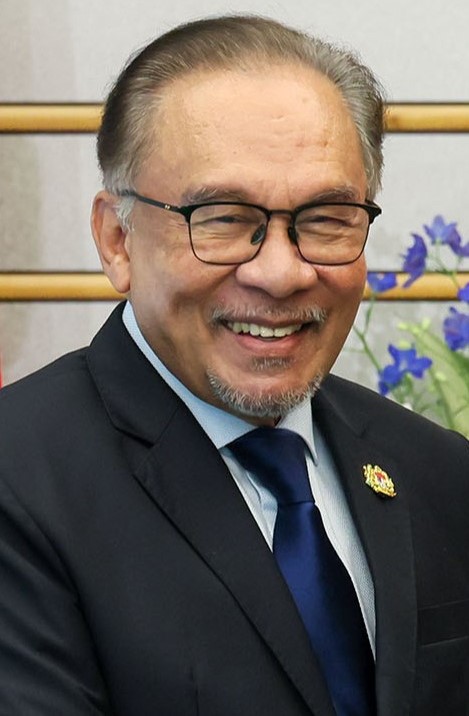
Prime Minister Datuk Seri Anwar Ibrahim welcomed Bangladesh Prime Minister Tarique Rahman with an official state luncheon at the Seri Perdana Complex in Putrajaya on June 22, underscoring Malaysia's commitment to deepening relations with its South Asian neighbour. The carefully choreographed reception, complete with performances by Istana Budaya dancers and welcoming chants from schoolchildren, reflected the diplomatic significance both nations place on their developing partnership.
The menu itself told a story of regional friendship, with durian—Malaysia's celebrated 'king of fruits'—alongside specially imported jackfruit from Bangladesh served as dessert. This thoughtful culinary gesture symbolised the blending of both nations' agricultural heritage and the cultural exchange that underpins modern bilateral diplomacy in Southeast Asia.
Tarique arrived in Malaysia yesterday at Anwar's invitation for what officials described as a historic visit. The timing carries particular weight: this marks the Bangladesh Prime Minister's inaugural bilateral official journey abroad since assuming office in February 2026, a choice that signals Bangladesh's prioritisation of Malaysia as a key diplomatic partner in the region. The selection of Malaysia as the destination for such a momentous first visit reflects the strategic importance both nations accord to their relationship.
The official welcome ceremony at Perdana Putra Complex preceded the luncheon, with a bilateral meeting between the two leaders held in private. Alongside Tarique's spouse Dr Zubaida Rahman, the Prime Minister's wife Datuk Seri Dr Wan Azizah Wan Ismail joined the function, lending it the character of a high-level diplomatic event that extended beyond purely governmental interactions. The presence of multiple cabinet ministers—including Foreign Minister Datuk Seri Mohamad Hasan, Home Affairs Minister Datuk Seri Saifuddin Nasution Ismail, and Investment, Trade and Industry Minister Datuk Seri Johari Abdul Ghani—underscored the breadth of portfolio areas anticipated for enhanced cooperation.
Economic ties between Malaysia and Bangladesh have grown substantially, providing concrete foundation for the diplomatic warmth on display. In 2025, bilateral trade reached RM12.18 billion (US$2.84 billion), positioning Bangladesh as Malaysia's second-largest trading partner within South Asia after India and the 28th largest globally. This ranking demonstrates the relationship's maturation beyond ceremonial exchanges into genuine commercial substance.
Malaysia's export performance to Bangladesh particularly stands out. Malaysian exporters shipped goods valued at RM10.08 billion (US$2.35 billion) to Bangladesh in 2025, with petroleum products forming the backbone of this trade flow. This concentration in energy exports reflects Bangladesh's growing industrial development and infrastructure expansion, which continues to demand substantial petroleum inputs. The asymmetry between Malaysian exports and imports—RM10.08 billion outbound versus RM2.10 billion inbound—indicates Bangladesh primarily serves as a market for Malaysian commodities rather than a reciprocal supplier.
Bangladeshi imports to Malaysia, while significantly smaller in value at RM2.10 billion (US$500 million), nonetheless reveal distinct complementarities in the trading relationship. Bangladesh's principal exports to Malaysia comprise textiles, apparel, and footwear—labour-intensive manufactured goods that leverage the country's abundant workforce. These products fill niches in Malaysia's retail and industrial supply chains, though the vastly smaller import volume compared to exports suggests significant untapped potential for expanding Bangladesh's access to Malaysian markets.
Regional geopolitical context adds layers of importance to this visit. The South Asian region, traditionally dominated by India's economic and political gravitational pull, increasingly attracts attention from Southeast Asian nations seeking to diversify partnerships and reduce over-reliance on any single regional hegemon. Malaysia's cultivation of ties with Bangladesh reflects this strategic recalibration, offering Bangladesh an alternative partner for technology transfer, investment, and market access while simultaneously enhancing Malaysia's footprint in South Asia.
Official statements from Wisma Putra emphasised that the visit would strengthen bilateral ties and deepen cooperation in areas of mutual interest, though specifics regarding sectoral priorities remain undisclosed. Given the portfolios of attending ministers, probable areas of expansion include trade facilitation, investment promotion, educational partnerships, and possibly defence cooperation. The inclusion of the Minister in the Prime Minister's Department (Religious Affairs), Dr Zulkifli Hasan, suggests religious and cultural dialogue may feature prominently, reflecting both nations' Muslim-majority populations and shared interest in interfaith understanding.
From a Malaysian perspective, strengthening Bangladesh ties carries implications for ASEAN's engagement with South Asia. As ASEAN continues calibrating its relationships with larger Asian powers and regional groupings, individual member states like Malaysia develop bilateral depth to complement multilateral frameworks. Bangladesh, despite its South Asian location, maintains observer status or limited engagement with ASEAN mechanisms, making direct bilateral relationships crucial for bridging South and Southeast Asian cooperation.
Looking forward, the economic relationship appears positioned for growth. Bangladesh's manufacturing sector continues expanding rapidly, potentially creating opportunities for Malaysian companies in sectors ranging from industrial equipment to technology services. Conversely, Bangladesh's textile and light manufacturing capabilities could attract Malaysian investors seeking cost-effective production bases for regional export. The relatively modest trade figures compared to Malaysia's relationships with other Asian neighbours suggest considerable untapped potential that subsequent high-level visits and institutional exchanges may unlock.
The ceremonial dimensions of this luncheon—the student welcomes, cultural performances, and carefully curated menu—reflect diplomatic traditions that remain essential to international relations. Yet underlying these performances lay substantive bilateral interests: securing market access, attracting investment, and establishing the personal relationships between leaders that often prove crucial for resolving bilateral frictions and seizing new opportunities. Tarique Rahman's choice to undertake his first official foreign visit to Malaysia, rather than to India or China despite their geographical and economic proximity, signals Bangladesh's deliberate effort to cultivate diverse partnerships and establish Malaysia as an important anchor in its foreign policy architecture.