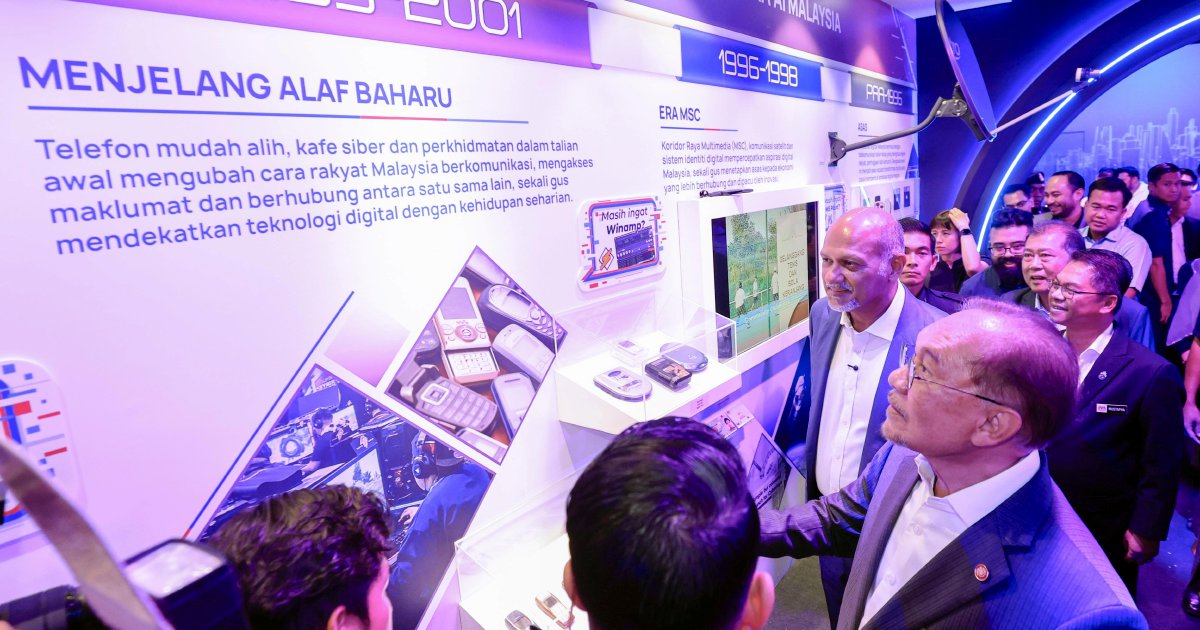
Prime Minister Datuk Seri Anwar Ibrahim has sounded an important alarm about the potential dangers lurking within Malaysia's drive to establish itself as a significant player in the global artificial intelligence landscape. Speaking in Cyberjaya, the nation's dedicated information and communications technology hub, Anwar highlighted a critical challenge that policymakers must confront as the country accelerates its technological transformation: the risk that rapid AI adoption could inadvertently exacerbate existing socioeconomic disparities rather than remedy them.
The warning reflects a growing concern across developing economies that technological advancement, while essential for competitiveness and progress, can create new forms of inequality if not managed carefully. Malaysia's situation is particularly instructive for the region, as the country positions itself at the forefront of Southeast Asian digital innovation while still grappling with uneven development patterns across urban and rural areas, as well as between different income brackets of the population.
Anwar's emphasis on inclusive growth during Malaysia's AI transition speaks to a fundamental challenge in the digital age: the gap between technological haves and have-nots often mirrors and reinforces existing economic inequalities. Citizens and communities with access to advanced infrastructure, quality education, and digital literacy programmes are positioned to harness AI's transformative benefits, whether through improved employment prospects, enhanced service delivery, or entrepreneurial opportunities. Conversely, those lacking these foundations risk being left further behind as AI reshapes labour markets, business practices, and service provision across society.
The Malaysian context renders this concern especially pertinent. While the nation's private sector and urban centres have demonstrated considerable sophistication in adopting emerging technologies, significant portions of the population—particularly in less developed regions and among lower-income households—remain inadequately connected to reliable broadband infrastructure and digital education systems. This infrastructure gap becomes more acute when considering AI's demands for high-speed internet connectivity and computational resources that remain expensive and geographically unequally distributed.
Implementing inclusive AI development requires deliberate policy interventions across multiple domains. Educational institutions must equip students across all regions and socioeconomic backgrounds with foundational digital literacy and skills relevant to an AI-driven economy. This extends beyond urban schools to encompass rural areas where resources are often constrained, requiring substantial government investment and potentially private sector partnerships to bridge capacity gaps. Technical training programmes and upskilling initiatives targeting workers potentially displaced by automation must receive adequate funding and geographic reach.
Infrastructure expansion represents another crucial component of an equitable AI transition. Broadband connectivity remains a prerequisite for accessing cloud-based AI services and leveraging digital platforms. The government's previous initiatives to expand rural internet access require continuation and acceleration, with particular focus on ensuring affordability for lower-income households. Without this foundational infrastructure layer, even the most robust AI policies cannot reach significant portions of Malaysia's population.
Anwar's caution also implies recognition that Malaysia's AI strategy cannot simply mirror successful models from developed nations, which already possess mature digital infrastructure, highly educated populations, and sophisticated regulatory frameworks. Malaysia must craft an adaptation that acknowledges its specific development challenges while leveraging its particular strengths, including a young, increasingly digitally-native population and growing concentrations of technology talent in major urban centres.
The regional implications of Malaysia's approach extend beyond national borders. As the nation positions itself as Southeast Asia's technology leader, its decisions regarding inclusive AI development carry lessons for neighbouring countries pursuing similar trajectories. Should Malaysia successfully demonstrate that rapid technological advancement need not widen inequality, it could establish a model worthy of emulation throughout the region. Conversely, if AI-driven development in Malaysia predominantly benefits already-privileged segments while marginalizing others, it risks reinforcing scepticism about technology's redistributive potential across Southeast Asia.
Private sector participation becomes essential in this equation. Technology companies, investment firms, and business leaders must align their commercial interests with broader developmental objectives. This might involve committing resources to digital literacy programmes, ensuring fair pricing for essential services, or establishing innovation hubs in underserved regions. While such initiatives require demonstrating viable business models, the long-term stability and growth potential of Malaysia's AI sector ultimately depend on creating a domestically robust market with widespread consumer participation and talent availability.
Anwar's warning also acknowledges the transition challenges inherent in AI adoption. Certain job categories will decline as automation displaces workers, particularly in routine, manual, and lower-skilled sectors where significant Malaysian employment currently concentrates. Managing this transition equitably requires substantial social support systems, including income assistance, retraining opportunities, and career counselling, available to all affected workers regardless of geographic location or initial socioeconomic status. Without such support, AI-driven productivity gains may concentrate wealth further while unemployment and underemployment rise among vulnerable populations.
The governance framework surrounding AI deployment deserves equal attention. Regulatory approaches must ensure that algorithmic decision-making systems do not inadvertently perpetuate or amplify existing biases against marginalized communities. This requires ongoing monitoring, transparent accountability mechanisms, and meaningful input from affected populations in policy development processes. Government agencies should model responsible AI use, demonstrating how the technology can improve public service delivery while protecting vulnerable citizens from discriminatory outcomes.
Moving forward, Malaysia's success in navigating the AI transformation will likely determine its trajectory as a regional technology leader and its broader development outcomes. Anwar's emphasis on inclusive growth suggests recognition that sustainable AI advancement requires building a society where technological benefits diffuse widely rather than concentrating narrowly. Achieving this outcome demands integrated policy approaches addressing infrastructure, education, labour market transitions, regulatory frameworks, and social support systems—a comprehensive agenda requiring commitment from government, private sector, civil society, and educational institutions across Malaysia.

