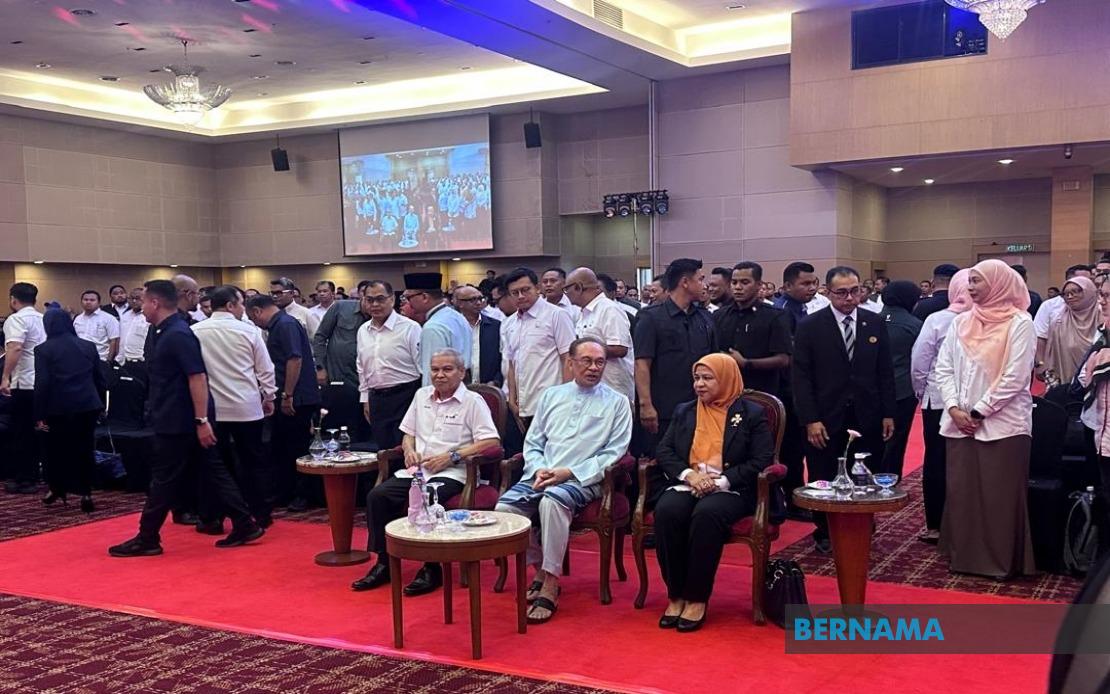
Prime Minister Datuk Seri Anwar Ibrahim has signalled he will refrain from commenting publicly on the Federal Land Development Authority's operations until investigators complete their work, pledging transparency once findings are ready for disclosure. Speaking after chairing a management session at Tenera Hotel in Bangi on Wednesday, Anwar indicated the Special Task Force examining FELDA had commenced its review and would present conclusions within the coming months. His measured approach reflects the sensitivity surrounding the organisation, which manages vast tracts of agricultural land and affects the livelihoods of thousands of smallholder settlers across Malaysia.
The prime minister outlined the investigation's broad remit, emphasising that while historical governance shortcomings would be identified, the focus would centre on current operational frameworks and future strategic direction. This signals an administration intent on diagnosing structural weaknesses without dwelling excessively on past administrations' decisions, a positioning that attempts to balance accountability with forward momentum. The task force's mandate encompasses management practices, institutional improvements, and identification of systemic vulnerabilities that may have accumulated over FELDA's decades of operation.
Anwar's statement comes amid broader scrutiny of Malaysia's statutory bodies and government-linked entities. The establishment of the special task force reflects wider concerns about governance standards and financial stewardship across major public institutions. FELDA, which oversees agricultural development schemes and settlement programmes, holds considerable economic and political significance, particularly in rural constituencies where settler communities depend on the authority's administration of land rights, crop support, and cooperative marketing arrangements.
The prime minister indicated that release of the findings would follow the transparency model established by the Royal Commission of Inquiry into the Tabung Haji Board, encouraging public engagement with the published report. This reference to the Tabung Haji RCI suggests the government intends to present FELDA findings comprehensively rather than selectively, setting expectations that the document will be substantive and accessible. The Tabung Haji inquiry, which examined governance failures in the pilgrimage fund, generated significant public discussion and media analysis when released, establishing precedent for how sensitive institutional reviews should be handled.
Present at the Bangi gathering were FELDA chairman Tan Sri Ahmad Badri Mohd Zahir and director-general Datuk Dr Suzana Idayu Wati Osman, underscoring the premier's engagement with current management structures. The timing of this friendly session—positioning leadership alongside the investigation process—suggests efforts to maintain institutional continuity and stakeholder confidence during the review period. Such careful management of messaging reflects recognition that FELDA impacts not only settlers but also government revenue streams, rural development priorities, and agricultural policy direction.
The investigation's scope extends beyond financial propriety to encompass management philosophy and operational effectiveness. By framing the inquiry around "improving management" and identifying "current management and way forward," Anwar emphasised that reform rather than recrimination drives the exercise. This constructive framing may help preserve morale among FELDA staff while allowing investigators to examine substantive governance questions without appearing politically motivated.
For Malaysian observers and regional analysts, the FELDA review represents a test case of how the current administration addresses institutional reform. Agricultural development authorities across Southeast Asia face similar challenges of scaling traditional land distribution models to contemporary economic conditions, managing competing stakeholder interests, and maintaining financial sustainability. Malaysia's approach to examining FELDA could influence how neighbouring countries approach governance reviews of comparable entities.
The completion timeline, expected within several months from the investigation's launch, positions FELDA alongside other governance reviews under way across Malaysian public administration. Such concurrent examinations of multiple institutions suggest a systematic approach to institutional audit, though staggered announcements and varying disclosure timelines may complicate public understanding of governance standards across the broader government sector.
Settler communities and rural representatives will scrutinise the eventual report closely, as FELDA policies directly affect agricultural credit, land tenure security, and income prospects. Any recommendations regarding administrative restructuring, management personnel changes, or operational reorientation could reshape development opportunities for settlement populations and influence land utilisation patterns across FELDA-administered territories. The investigation thus carries material implications beyond institutional housekeeping, touching on rural economic welfare and agricultural sustainability.

