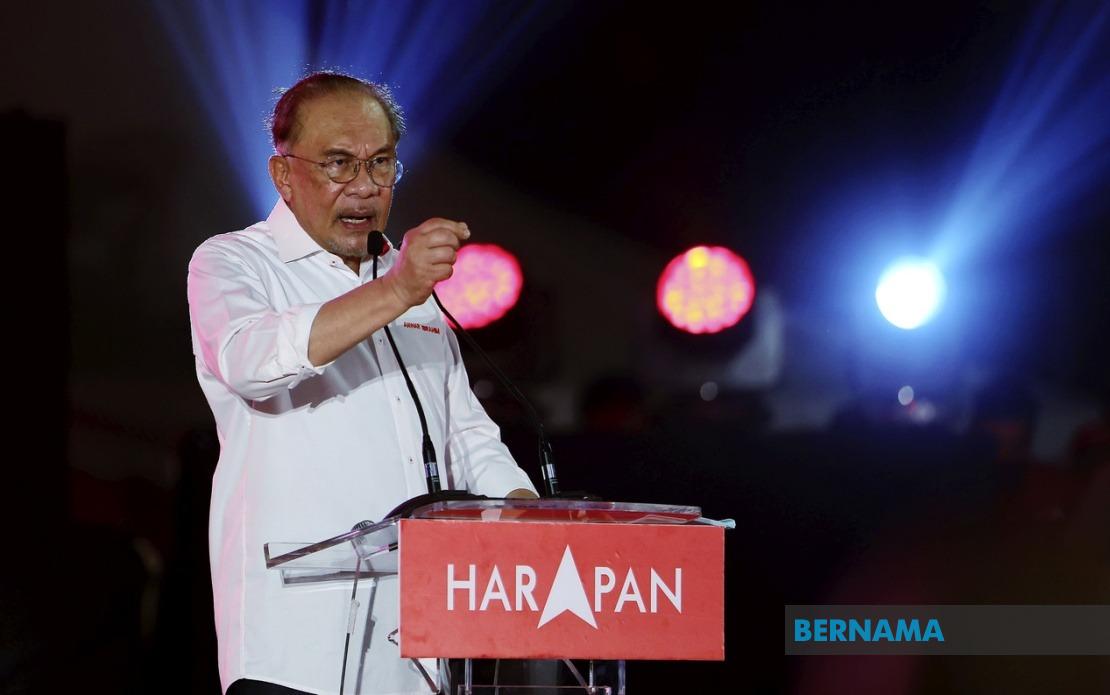
Prime Minister Datuk Seri Anwar Ibrahim has sounded a warning to all participants in the upcoming 16th Negeri Sembilan State Election, urging them to steer clear of contentious discourse surrounding the institution of royalty and constitutional frameworks. Speaking at the Pakatan Harapan candidate announcement ceremony in Kuala Pilah on July 14, the coalition chairman stressed the importance of maintaining the sanctity of institutions that underpin national stability, even as political parties pursue their competitive interests.
Anwar's cautionary remarks come at a critical juncture for the coalition, as it seeks to retain control of the state government while navigating the complex landscape of Malaysian politics. His intervention signals heightened concern within PH leadership about the potential for campaign rhetoric to cross into territory that touches on sensitive constitutional and institutional matters. The Prime Minister acknowledged that political competition remains inherent to democratic systems, yet he drew a firm line between legitimate electoral contestation and irresponsible discourse that could fragment community cohesion.
The thrust of Anwar's message centred on the distinction between principled political disagreement and destructive tactics. He articulated that while parties may hold divergent viewpoints and contest vigorously for voter support, such battles must be conducted without resorting to defamation or language that risks fracturing social harmony. This framing reflects an understanding that certain institutional pillars—including constitutional provisions and the monarchy—carry symbolic weight that transcends ordinary political debate in the Malaysian context.
Pakatan Harapan's campaign strategy for Negeri Sembilan reflects the coalition's broader agenda of positioning itself as a stabilising force committed to institutional integrity and transparent governance. By frontloading these principles in his public remarks, Anwar sought to establish moral and ethical parameters for the election campaign, distinguishing PH's approach from potential competitors who might seek electoral advantage through provocative messaging. The announcement of 36 candidates—a blend of new entrants and seasoned politicians from PKR, DAP, and Amanah—represents the coalition's attempt to balance continuity with renewal.
Significantly, Anwar renewed his confidence in Menteri Besar Datuk Seri Aminuddin Harun, characterising him as a pragmatic administrator whose collaborative approach serves the state's interests. This endorsement carries weight in Negeri Sembilan's political ecosystem, where personal credibility and perceived competence substantially influence voter behaviour. The re-nomination of Aminuddin for the Linggi state seat, alongside DAP secretary-general Anthony Loke's candidacy in Chennah, signals PH's commitment to experienced leadership in strategically important constituencies.
For Negeri Sembilan voters, Anwar's emphasis on clean administration and development trajectories addresses tangible governance concerns. The Prime Minister's assertion that the state must not fall behind in the context of federal developmental initiatives resonates with electorates across Malaysia that increasingly prioritise infrastructure, economic opportunity, and public service delivery. By linking state-level electoral outcomes to national progress, Anwar effectively frames the contest as one with consequences extending beyond Negeri Sembilan's borders.
The presence of senior coalition figures at the announcement—including DAP secretary-general Anthony Loke, Amanah president Datuk Seri Mohamad Sabu, and PH communications and election directors—underscored the significance PH attaches to this election. Their collective attendance demonstrated unified coalition messaging and signalled to party members and grassroots supporters that the contest merits strategic investment of leadership attention. This coordination among component parties reflects efforts to maintain coalition cohesion, a perennial challenge within multi-party frameworks.
Anwar's cautionary language regarding royal institutions and constitutional matters reflects lived experience within Malaysian political culture, where breaches of these boundaries have previously triggered public controversy and state intervention. By pre-emptively establishing campaign guardrails, the Prime Minister sought to prevent scenarios where candidates or supporters might inadvertently or deliberately venture into legally and socially problematic territory. This preventive approach protects both the coalition's electoral interests and the broader institutional stability that PH claims to champion.
The election carries implications for Malaysia's federal governance architecture, as state governments substantially influence policy implementation on matters including education, local development, and law enforcement. A continued PH hold on Negeri Sembilan would reinforce the coalition's parliamentary dominance and provide a platform for demonstrating state-level competence. Conversely, any shift in state control would signal voter sentiment regarding coalition performance and potentially reshape national political momentum ahead of future federal contests.
Anwar's emphasis on integrity and development-focused leadership speaks to demographic shifts across Malaysian electorates, where younger voters and urban populations increasingly prioritise transparent governance and tangible economic outcomes over traditional partisan identifications. By foregrounding these concerns, PH positions itself as responsive to evolving voter preferences while maintaining institutional respect—a balance that remains central to its political viability across Malaysia's diverse constituencies and demographic cohorts.

