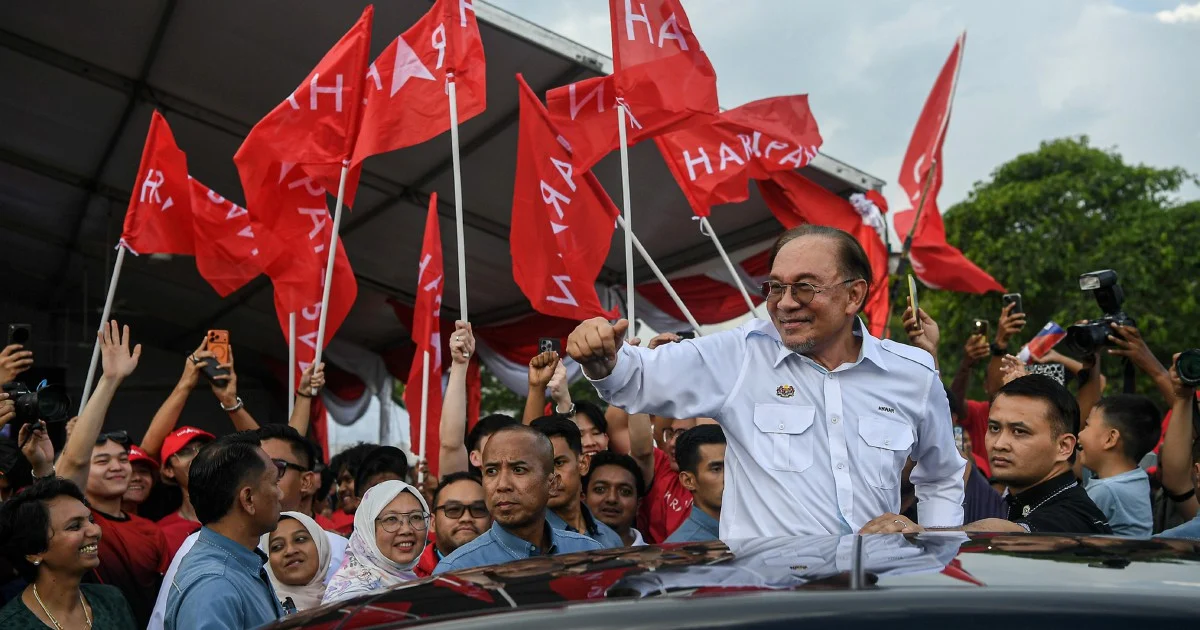
Pakatan Harapan's leadership threw down a direct challenge to its political opponents during remarks in Segamat, with chairman Datuk Seri Anwar Ibrahim censuring those who reject collaborative arrangements with the Democratic Action Party. His intervention reflects ongoing tensions within Malaysia's fractious political landscape, where coalition partnerships remain volatile and ideologically fraught even as electoral competition intensifies ahead of future contests.
Anwar's criticism targeted a pattern of conduct he characterised as fundamentally at odds with democratic norms. Politicians who refuse to occupy the same stage or forum as DAP representatives, he contended, are effectively dismissing the electoral judgement made by millions of Malaysians who voted for coalitions incorporating the party. This stance carries particular weight given DAP's consistent electoral performance across several states and parliamentary constituencies, demonstrating sustained voter confidence despite opposition harassment and rhetorical attacks.
The rebuke carries implications for Malaysia's political stability and institutional maturity. When elected representatives refuse basic professional engagement with duly elected colleagues from rival parties, it signals a departure from Westminster conventions that have historically anchored democratic function in the country. The practice also creates practical obstacles to governance, complicating parliamentary business and preventing cross-party cooperation on matters of national interest that transcend partisan allegiance.
For Malaysian voters, particularly those in urban centres where DAP maintains strongholds, such boycott tactics represent a form of political disrespect. These voters explicitly chose coalitions incorporating the party, implicitly endorsing its participation in government structures. Systematic ostracism of DAP delegitimises those electoral choices and suggests that certain political actors prioritise symbolic gestures over substantive engagement with the democratic outcome.
DAP's position within Malaysian politics has long proved contentious, despite its electoral legitimacy. The party has faced persistent allegations of undermining Islam's constitutional position and harbouring separatist leanings, charges it firmly rejects. Yet these narratives have shaped the strategic calculus of rival politicians, who sometimes calculate that public distance from DAP may enhance their credentials among religiously conservative voter blocs. Anwar's intervention suggests Pakatan Harapan is willing to challenge this calculation directly.
The timing of Anwar's remarks in Segamat, a town in Johor state, carries regional significance. Johor remains a crucial battleground where Malay-Muslim political preferences pivot between competing coalitions and individual personalities. Any softening of anti-DAP rhetoric could reshape electoral dynamics in the state, potentially offering Pakatan Harapan pathways to recovery after the party's 2022 federal election disappointment when coalition performance fell short of expectations.
Backdrop to these tensions is the broader challenge facing Malaysia's multiethnic democracy: how to maintain stable coalition governments while managing deep religious and communal sensitivities. DAP's secular liberal orientation has long sparked anxiety among Malay Muslim voters who fear Chinese-dominated parties might constrain Islam's role in state affairs. Addressing these anxieties requires patient political leadership willing to explain why multiethnic coalitions serve Malaysia's interests, rather than permitting fears to harden into absolute tribal divisions.
Anwar's position as PH chairman grants his statement significant authority within the coalition framework. His willingness to defend DAP partnership publicly suggests calculation that electoral mathematics now favour inclusivity over exclusion. The coalition's 2022 election performance revealed that distancing from any constituent member risks losing coherence and reducing turnout among supporters who voted for the coalition as an integrated entity. Defending DAP thus becomes a strategic necessity, not merely a principled stance.
The refusal to share platforms with DAP also reflects deeper ideological fractures within Malaysian politics. Politicians opposed to coalition partnerships with the party often champion Malay-Muslim nationalist agendas that view non-Muslim participation in governance as inherently threatening to Islam's constitutional position. These narratives gain particular traction when religiously sensitive issues dominate political discourse, as has occurred repeatedly during recent years following court decisions and religious authority pronouncements.
For Southeast Asia's broader regional stability, Malaysian political maturity matters considerably. The region's democracies depend upon norms of professional engagement among rival politicians, even when ideological differences prove substantial. If Malaysia's politicians increasingly resort to categorical rejection of certain parties rather than substantive policy competition, it suggests democratic institutions are weakening rather than strengthening across the region.
Anwar's intervention likely signals that Pakatan Harapan views the 2023-2025 political cycle as decisive for repositioning its coalition ahead of the next general election. By defending DAP publicly and criticising boycott tactics, coalition leadership may be attempting to establish new baseline expectations for political competition. Success would require sustained messaging and willingness to challenge conservative voter anxieties through reasoned argument rather than conceding to them through silence and tactical distance.
The practical consequences of persistent DAP ostracism extend into parliamentary functioning and administrative governance. When opposition politicians refuse engagement with DAP-affiliated ministers and MPs, it creates dysfunction that ultimately harms public service delivery and legislative effectiveness. Whether Anwar's intervention can shift political culture toward greater professionalism and pluralism remains uncertain, but his willingness to stake leadership credibility on the issue suggests the coalition considers the stakes substantial.

