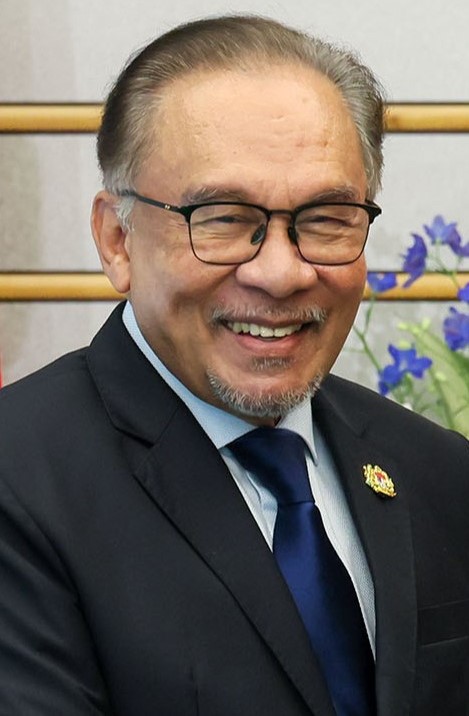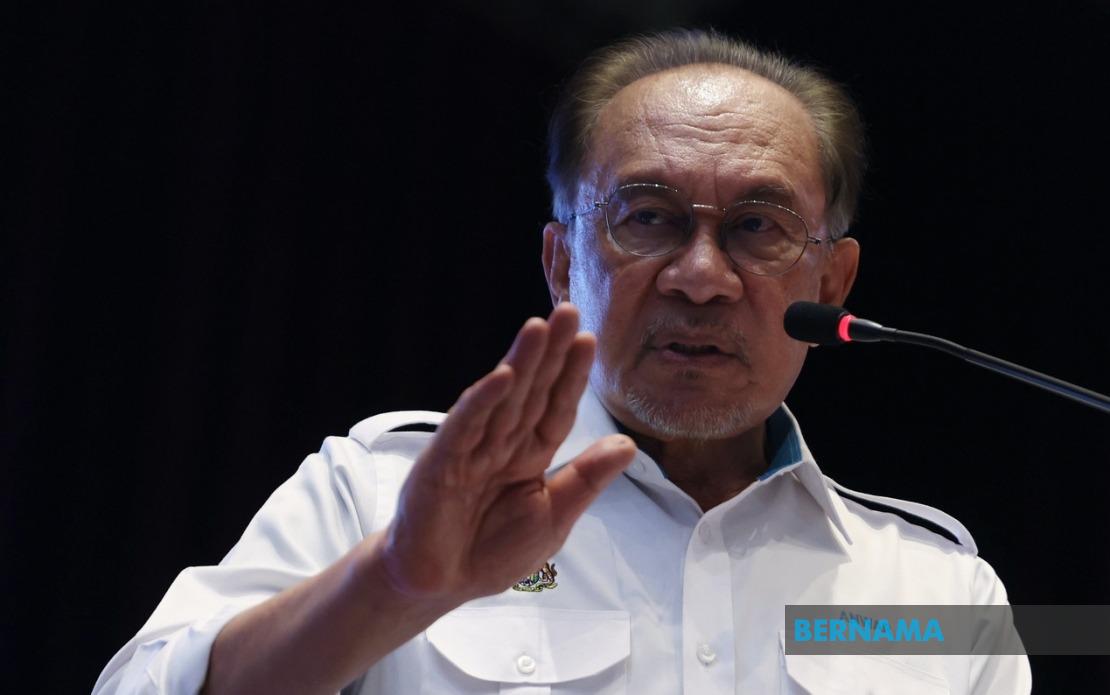
Prime Minister Datuk Seri Anwar Ibrahim has issued a pointed reminder to Malaysia's political establishment that the nation's revered royal institutions must remain insulated from partisan electoral disputes and ideological conflicts. Speaking in Alor Gajah on June 24, Anwar stressed that political differences should be resolved through mature discourse without dragging the constitutionally significant office of the Malay Rulers into the fray, a principle he emphasised holds particular weight as the country approaches elections.
The timing of Anwar's statement reflects growing concern within government circles about the potential politicisation of royal symbols and institutions during campaign seasons. His remarks came in response to comments made by Amanah president Datuk Seri Mohamad Sabu during Pakatan Harapan's candidate announcement in Johor earlier in the week, which various quarters interpreted as containing indirect references to the monarchy. The incident underscores how easily rhetoric can become entangled with symbols of national sovereignty, a sensitive matter in Malaysia's constitutional framework where the Yang di-Pertuan Agong and state rulers hold ceremonial and custodial roles.
Anwar's intervention represents a broader effort to establish clearer boundaries around acceptable political discourse. By publicly stating that politicians should "engage in politics" without involving "the sacred institution of the Malay Rulers," the Prime Minister sought to reinforce a principle that transcends party affiliation—namely, that certain national institutions occupy a space above routine political contestation. This approach aligns with Malaysia's constitutional tradition, where the monarchy functions as a stabilising force meant to be beyond the immediate partisan arena.
The statement carries particular significance for Malaysia's multiethnic democracy, where the institution of the Malay Rulers intersects with matters of identity, faith, and constitutional governance. For Malay-Muslim voters who form a significant electoral constituency, the monarchy represents not merely ceremonial authority but cultural and religious symbolism. When political parties invoke or appear to critique the institution, they risk inflaming sensitivities that extend beyond ordinary policy disagreements into questions of national identity and constitutional order.
Anwar's position also reflects the practical challenge facing any governing administration seeking to maintain institutional neutrality. Election campaigns naturally intensify political rhetoric and broaden the scope of public discourse. Yet allowing this intensification to encompass traditionally protected institutions risks undermining their symbolic authority and the consensus that has historically kept them separate from partisan warfare. By staking out this position early, Anwar attempted to establish a norm that could guide behaviour across competing political camps.
The attendance of senior figures at the Alor Gajah event—including Melaka Chief Minister Datuk Seri Ab Rauf Yusoh, Deputy Higher Education Minister Adam Adli Abd Halim, and various senior civil servants—suggested this was not merely an off-the-cuff remark but a deliberate messaging exercise involving multiple tiers of government. The inclusion of the Chief Secretary to the Government, Tan Sri Shamsul Azri Abu Bakar, alongside the Prime Minister signalled that institutional compliance with this principle was expected across the bureaucracy as well.
For Malaysian political observers, Anwar's caution reflects lessons learned from previous electoral cycles when sharp critiques of governance occasionally became entangled with attacks on the institution itself rather than specific policies or personalities. The distinction between legitimate criticism of government decisions and attacks on constitutional institutions remains crucial to Malaysia's political stability. By reaffirming this distinction publicly, Anwar sought to prevent the boundary from becoming blurred as campaign intensity increased.
The context of government-organised engagement with civil servants at CREaTE also merits consideration. Rather than issuing a stern rebuke in isolation, Anwar chose to embed his message within a broader civil service engagement programme. This approach suggested he viewed the principle as foundational to how government institutions should operate and communicate, not merely as a constraint on opposition behaviour but as a standard applicable to all actors within the state apparatus.
From a regional perspective, Malaysia's careful management of the political space surrounding its monarchy offers a contrasting model to other Southeast Asian democracies where such boundaries have proven more contentious or fluid. Thailand's complex relationship between electoral politics and the institution of the monarchy illustrates how destructive it can become when these boundaries erode. Anwar's intervention suggested an understanding that Malaysia's stability partly depends on maintaining this institutional separation deliberately and consistently.
The implicit tension within Anwar's statement also deserves attention. While he called for all parties to refrain from involving the monarchy in politics, the very fact that such a reminder was necessary indicates that contemporary Malaysian politics has begun testing these boundaries. Political movements, whether seeking to defend or reform the existing order, sometimes find the language and symbolism of the monarchy rhetorically useful, creating pressure on these traditional separations.
Moving forward, Anwar's statement established a baseline expectation for behaviour among competing parties. Whether all political actors will respect this boundary remains uncertain, particularly if electoral competition intensifies or if specific policy decisions become intertwined with discussions of constitutional roles. Nevertheless, his intervention represented an effort to reassert institutional norms that many Malaysians regard as essential to the country's constitutional equilibrium and democratic functioning.
The broader implication extends beyond immediate electoral politics to questions about how Malaysia's institutions will evolve as the country navigates demographic change, technological transformation, and evolving expectations around accountability and representation. By insisting on institutional separation during this election cycle, Anwar positioned the protection of these boundaries as a matter requiring sustained attention from all quarters of the political system.