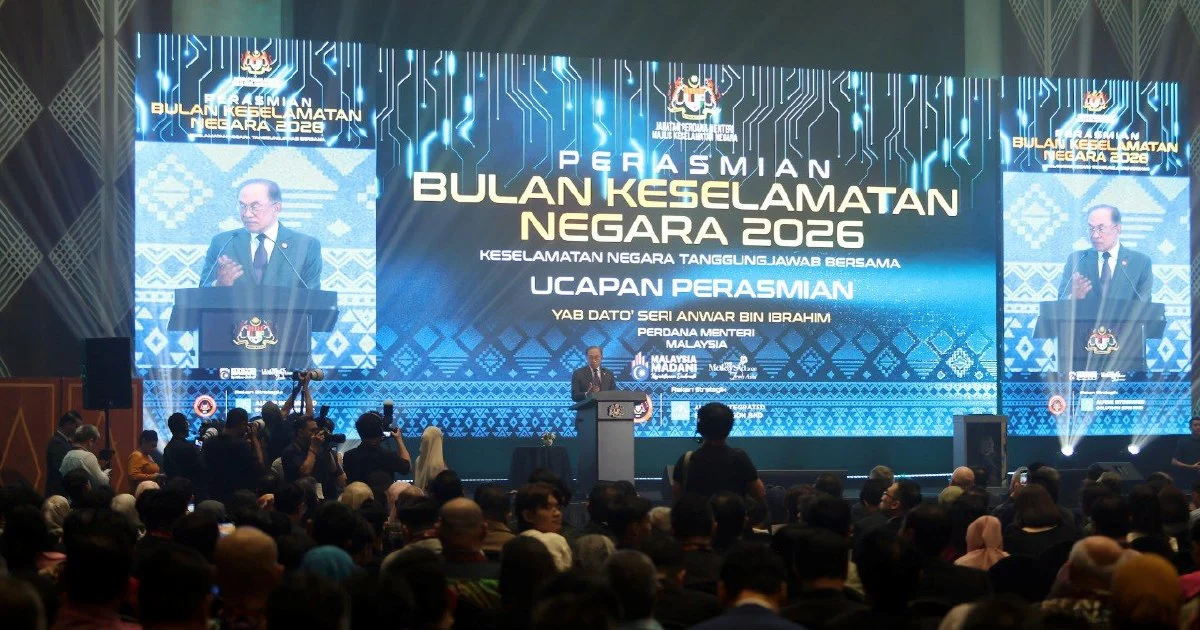
Prime Minister Datuk Seri Anwar Ibrahim has sounded an alarm about the persistence of racial and regional divisions in Malaysian political discourse, warning that such divisive rhetoric threatens to constrain the nation's progress as Johor approaches a critical electoral moment. Speaking from Putrajaya, Malaysia's administrative capital, Anwar emphasised the dangers of retreating into familiar but exhausted narratives that have historically polarised Malaysian society along ethnic lines. His comments arrive at a particularly sensitive juncture, with the Johor state elections looming and the political landscape showing signs of intensified competition between rival coalitions seeking to mobilise support through appeals to communal interests.
The Prime Minister's intervention reflects deepening concerns within the federal government about campaign tactics that may emerge during the Johor election campaign. Rather than encouraging voters to assess candidates and parties based on economic management, service delivery, and policy platforms, Anwar warned against a reversion to older patterns of invoking racial sensitivities and regional grievances to secure electoral advantage. This critique carries particular weight coming from a Prime Minister who has historically positioned himself as a champion of multiracial politics and inclusive governance, though his administration has faced its own criticisms regarding racial and religious policies.
Johor's electoral significance extends well beyond the state itself. As Malaysia's second-largest state by population and a major economic contributor to the nation, Johor's political complexion influences the broader balance of power at the federal level. Control of the state government provides a substantial platform for any ruling coalition, while an opposition victory would signal shifting voter preferences that could reverberate across peninsular Malaysia. The state's diverse demography—with substantial Malay, Chinese, and Indian communities—makes it a microcosm of Malaysia's multisectarian challenge and a testing ground for inclusive versus communal political messaging.
Anwar's comments implicitly acknowledge that despite nearly two years of his Pakatan Harapan-led coalition in federal government, centrifugal forces continue to operate within Malaysian politics. Certain political actors, whether within his own coalition or in opposition ranks, appear willing to invoke communal concerns to gain electoral traction. The reference to avoiding entrapment in old narratives suggests frustration with a political culture that, despite modernisation of the economy and society, remains susceptible to ethno-religious mobilisation. This tension between Malaysia's aspirations as a progressive, developed economy and its deeper communal divisions remains largely unresolved.
The timing of Anwar's intervention is strategically significant. By publicly raising concerns about racial polemics in advance of the Johor campaign, the Prime Minister creates a benchmark against which subsequent political speech can be measured. Opposition parties, and potentially coalition partners, will face scrutiny should they resort to overtly communal messaging. This represents a soft form of moral suasion, whereby the federal leadership attempts to elevate the tone of state-level debate without resorting to formal regulatory mechanisms or accusations of specific wrongdoing.
For Malaysian voters, particularly in Johor, the Prime Minister's statement underscores an implicit choice between competing visions of politics. One vision emphasises governance competence, economic opportunity, and inclusive development that benefits all communities. The alternative relies on mobilising voters along ethnic and religious lines, typically warning of threats to communal interests. Anwar has positioned himself with the former camp, though Malaysian voters have demonstrated that such appeals do not automatically translate into electoral dominance. Previous state and federal elections have shown that communal concerns often prove decisive in voting patterns, despite official calls for issue-based politics.
The challenge facing Johor voters and Malaysian policymakers more broadly is that addressing communal concerns and pursuing inclusive nation-building need not be mutually exclusive. Effective governance requires acknowledging legitimate group interests while ensuring that policy benefits are equitably distributed. Anwar's cautionary note appears to conflate the invocation of racial and regional interests with divisiveness itself, a distinction that merits examination. Voters may legitimately consider how policies affect their communities without thereby embracing a divisive approach.
Regionally, Malaysia's internal political dynamics carry implications for Southeast Asia's broader stability and development trajectory. As the region's most demographically diverse major economy, and one with experience managing (however imperfectly) plural societies, Malaysia's political evolution influences how Southeast Asian nations approach questions of communal coexistence and inclusive governance. Should Malaysian democracy deteriorate into increasingly communal contest, regional reverberations might extend to questions about democratic legitimacy and minority protection across the region.
The Johor election will ultimately reveal whether Anwar's appeal resonates with voters or whether communal concerns override calls for issue-focused debate. His intervention, however, establishes that the federal government recognises the risk and is attempting to influence the campaign's moral and strategic direction. The effectiveness of such appeals depends partly on whether his own administration demonstrates that inclusive governance produces tangible benefits for all communities, a proposition that remains contested and incomplete.

