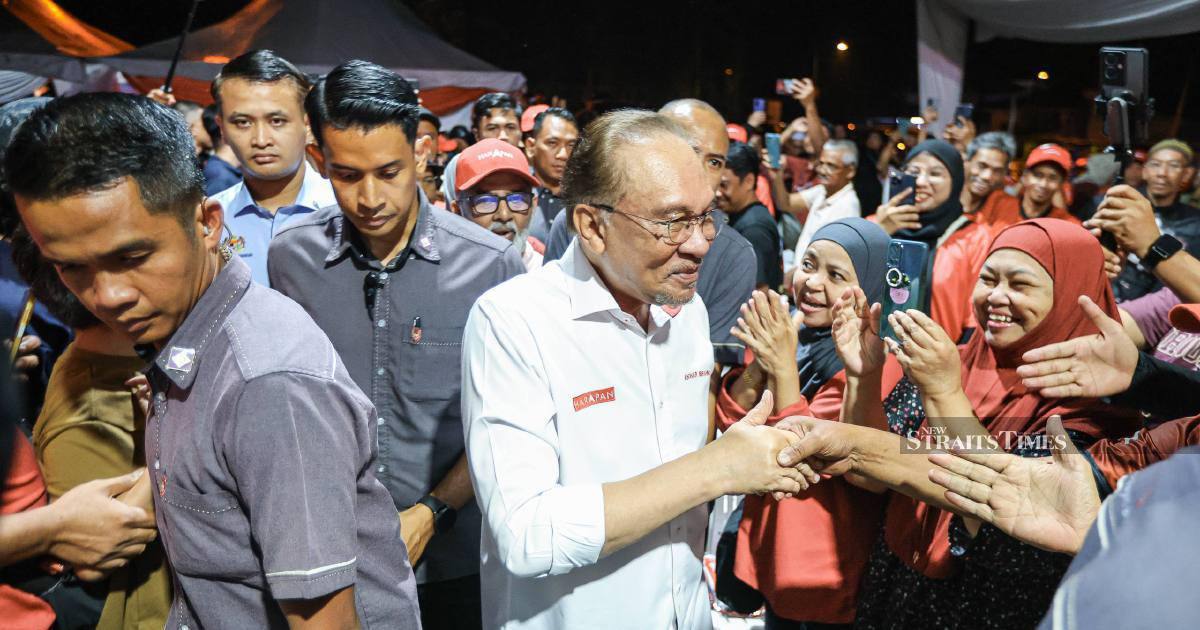
Pakatan Harapan chairman Datuk Seri Anwar Ibrahim has launched a direct appeal to Johor voters living outside their home state to make the journey back and cast their ballots in the upcoming state election scheduled for next Saturday. The Prime Minister's call represents a significant mobilisation effort ahead of what promises to be a closely watched electoral contest in the strategically important southern state.
The diaspora of Johor voters extends across major Malaysian urban centres and across the causeway into neighbouring Singapore, reflecting broader patterns of migration driven by employment opportunities and economic considerations. Many Johoreans have established themselves in Kuala Lumpur's commercial districts, drawn by opportunities in banking, technology, and professional services, while others have moved across the border to Singapore where employment prospects and competitive salaries continue to attract talent from across the region. This geographic dispersal of the electorate poses a genuine challenge to political mobilisation efforts, as reaching scattered voters requires coordinated messaging and encouraging voters to incur travel costs and time away from work.
Anwar Ibrahim's intervention underscores the importance that the coalition places on securing strong turnout and support from across all Johor constituencies. The Prime Minister's personal appeal carries weight within Pakatan Harapan's organisational structure and signals that party leadership considers the Johor result sufficiently significant to warrant direct engagement from the apex of government. Such appeals are typically deployed when electoral margins are expected to be narrow or when particular voter segments are perceived as persuadable through leadership messaging rather than grassroots canvassing alone.
The timing of this mobilisation effort coincides with broader patterns observed in Malaysian electoral cycles, where mid-term state elections frequently serve as barometers of public sentiment toward incumbent administrations. Johor, as the country's second-largest state by population and a significant economic contributor, carries particular symbolic weight in national political calculations. Results here can influence perceptions of momentum entering subsequent elections and reshape internal dynamics within both governing coalitions and opposition alliances.
For voters based in Singapore, the call presents practical logistical considerations. The distance between Singapore's city centre and central Johor Bahru requires several hours of travel, and returning for voting necessitates either taking leave from employment or planning travel around work schedules. Nevertheless, Singapore-based Malaysian voters represent a bloc that has historically demonstrated strong electoral participation when mobilised effectively, suggesting that targeted efforts to facilitate their return could yield measurable results in terms of ballots cast.
The emphasis on fulfilling civic responsibility reflects a broader framing of electoral participation as a duty rather than merely a right or preference. This rhetorical approach typically resonates most strongly with voters who maintain emotional attachments to their home states and communities, even after relocating for economic or personal reasons. Anwar's invocation of responsibility taps into these affective dimensions of voting behaviour, particularly among younger voters who may have migrated recently and retain stronger connections to family networks and community relationships in their home states.
Johor's political terrain has shifted considerably in recent electoral cycles, with electoral competition increasingly fragmented among multiple parties and coalitions. The state has witnessed significant organisational activity from both Pakatan Harapan and opposition alliances, with local issues around development, infrastructure, and resource distribution shaping voter preferences alongside national political considerations. Diaspora voters, who may maintain strong opinions about local development trajectories and long-term economic management, could prove decisive in marginal constituencies where mobilisation efforts determine final margins.
Transportation and accommodation networks facilitating voter return have become increasingly sophisticated, with coordinated efforts from political parties and community organisations helping to reduce logistical barriers. Some groups have organised chartered transportation from major urban centres, reducing individual costs and simplifying travel arrangements. Such infrastructure, while labour-intensive to establish, has become standard practice in contemporary Malaysian electoral campaigns and reflects recognition among political operatives that removing practical obstacles directly increases turnout among dispersed voter populations.
The appeal to Johoreans also reflects demographic realities of economic migration within Malaysia and the region. Young professionals establishing careers in Kuala Lumpur or Singapore represent a category of voters frequently targeted by political parties, as they are concentrated geographically in economically dynamic urban centres and often possess higher levels of formal education and engagement with public affairs. Their return to Johor for voting purposes represents a rare opportunity for direct political participation in their home state constituencies, and party operatives recognise that strategic appeals can mobilise meaningful numbers from these scattered populations.
Beyond immediate electoral calculations, Anwar Ibrahim's call speaks to broader challenges facing representative democracy in increasingly mobile societies. As economic integration within Southeast Asia accelerates and more professionals cross borders for employment, electoral systems premised on geographically stable populations face mounting pressures. The reliance on appeals for voluntary return reflects the limited capacity of existing electoral machinery to accommodate voters in genuinely mobile international labour forces, a constraint likely to become more pronounced as regional integration deepens and transnational employment becomes increasingly common.

