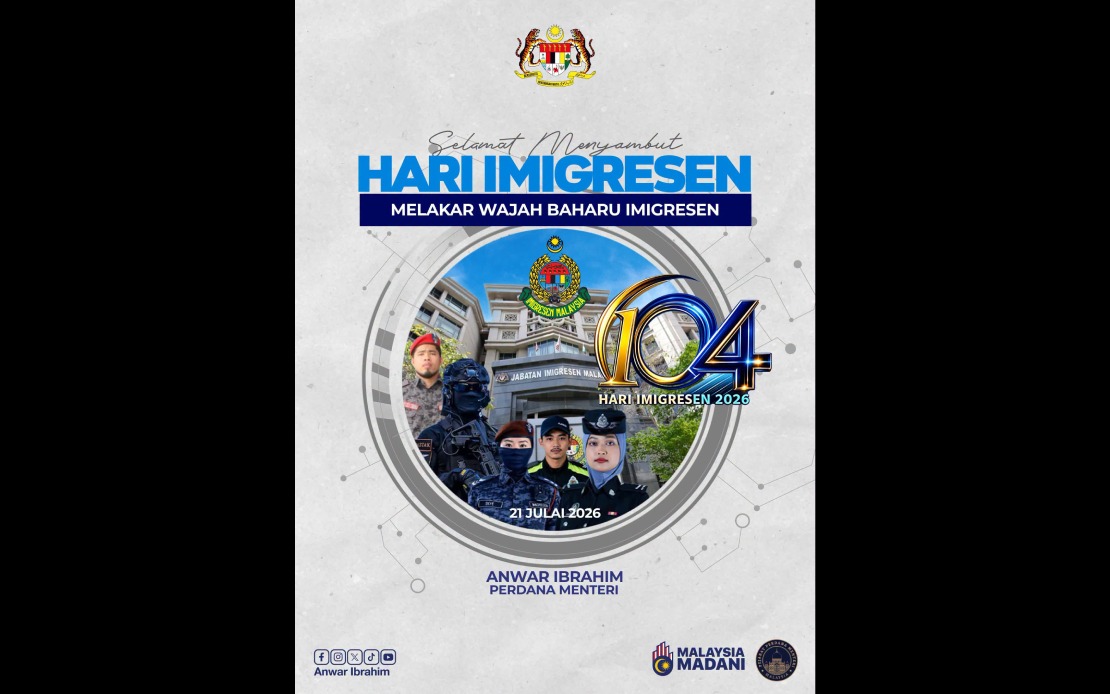
Prime Minister Datuk Seri Anwar Ibrahim has issued a direct appeal to all Immigration Department personnel to execute their duties with uncompromising integrity while firmly rejecting corrupt practices and irregularities. The call came during the commemoration of Immigration Day, underscoring the government's commitment to strengthening institutional accountability within one of Malaysia's critical frontline agencies.
Anwar's message, delivered through a Facebook statement on July 21, represents a broader push by the administration to reinforce ethical standards across public sector organizations. The Immigration Department, which handles millions of travel documents, visa applications, and border control operations annually, remains particularly vulnerable to corrupt practices. By directly addressing departmental staff, the Prime Minister sought to emphasize that maintaining public trust depends fundamentally on the personal and collective conduct of individual officers.
Beyond the issue of integrity, Anwar stressed the importance of balancing strict adherence to regulations with compassion in service delivery. This dual emphasis reflects an understanding that immigration functions extend far beyond security and administrative compliance—they significantly impact the lives of Malaysian citizens, foreign nationals, and investors seeking to enter or reside in the country. Officers who combine rigorous professionalism with human empathy can better serve the public while simultaneously protecting national interests.
The Prime Minister's remarks carry particular weight given Malaysia's recent efforts to strengthen anti-corruption frameworks and restore public confidence in institutions. Previous corruption cases involving immigration officials have damaged departmental credibility and hindered operational efficiency. By publicly calling for integrity, Anwar signals that the government expects and monitors ethical conduct, potentially serving as both incentive and deterrent for personnel at all levels.
The timing of this appeal during Immigration Day celebrations also served to reinforce positive institutional values. Rather than focusing solely on commemorating historical achievements or departmental milestones, the Prime Minister redirected the occasion toward forward-looking imperatives—establishing a culture where ethical behavior and professional excellence become defining characteristics of the service. This approach aligns with the 2026 Immigration Day theme, "Charting a New Face for Immigration," which suggests the department is positioning itself for renewed standards and modernized operations.
For Malaysia's international standing, the conduct of immigration personnel directly influences how the country is perceived globally. Efficient, transparent, and corruption-free immigration processes attract legitimate investors, skilled workers, and tourists while simultaneously deterring criminal elements and irregular migrants. Anwar's emphasis on "elevating Malaysia's name on the world stage" reflects awareness that institutional integrity in border management contributes substantially to the nation's reputation and competitive positioning in regional and international forums.
The challenge facing the Immigration Department extends beyond exhorting staff to behave ethically. Structural factors—including staffing levels, training adequacy, technological infrastructure, and supervisory mechanisms—significantly influence whether individual commitment to integrity can translate into systemic compliance. Anwar's appeal implicitly acknowledges that departmental leadership, human resource management, and operational procedures must work in tandem with personal integrity to produce desired outcomes.
Southeast Asia has witnessed escalating concerns over immigration-related corruption, with organized crime networks and smuggling operations frequently exploiting vulnerabilities created by corrupt officials. Malaysia, given its geographic position and role as a transit hub for regional migration flows, remains particularly exposed to such pressures. By reinforcing integrity standards, the government aims to create institutional resistance to corruption attempts that might otherwise compromise border security and facilitate irregular movements.
The appeal also reflects contemporary debates about public service values in Malaysia. Following periods of political turbulence and institutional strain, the government has emphasized that rebuilding trust requires consistent messaging about ethical standards combined with demonstrated accountability for violations. Immigration Department personnel, many of whom interact daily with the public, effectively serve as ambassadors for institutional integrity.
Moving forward, the rhetoric surrounding Immigration Day 2026 will likely be measured against concrete actions. Whether the department implements enhanced transparency measures, strengthens internal audit mechanisms, or expands training in ethical decision-making will determine whether this year's appeal translates into meaningful institutional transformation or remains aspirational messaging.
For Malaysian citizens and businesses, the practical implications are significant. Streamlined, corruption-free immigration processes reduce delays, lower informal costs, and enhance predictability in travel and cross-border commerce. For a country competing for regional investment and talent, maintaining immigration systems free from corrupt impediments remains fundamental to economic competitiveness and social development objectives.

