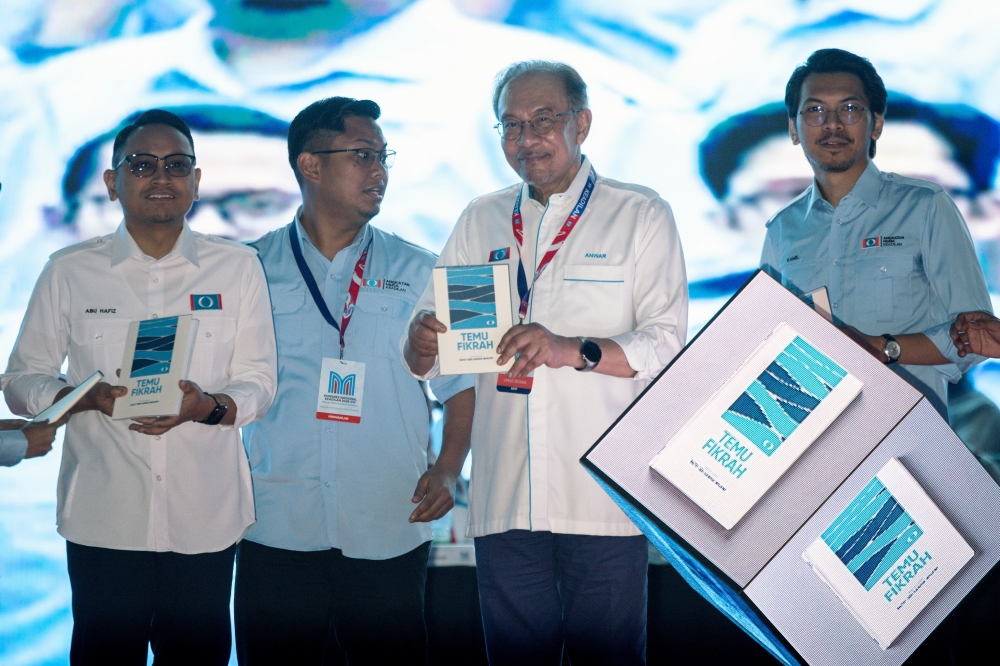
Prime Minister Datuk Seri Anwar Ibrahim unveiled Temu Fikrah in Melaka on August 16, positioning the document as both a philosophical framework and practical handbook for PKR Youth activities and engagement. The launch represents a significant effort by the ruling coalition to crystallise its ideological approach among younger party members, translating broader government principles into actionable party strategy for the youth demographic—a critical constituency in Malaysian politics.
Temu Fikrah translates roughly as "gathering of ideas" or "intellectual congress," reflecting its dual purpose as both manifesto and operational manual. The document articulates three core pillars: courage in addressing contemporary challenges, creativity in developing solutions, and alignment with the government's Madani governance framework. This tripartite approach signals PKR's attempt to distinguish itself within the Pakatan Harapan coalition while reinforcing the administration's overarching policy direction.
The emphasis on courage addresses a persistent criticism levelled against Malaysian political parties—that youth wings often function as rubber-stamp organisations lacking genuine agency. By explicitly enshrining bravery in the manifesto, PKR leadership appears to be granting legitimacy to dissenting voices within youth structures, provided such dissent occurs within party frameworks and respects broader coalition commitments. This calibrated approach attempts to balance internal party democracy with coalition stability, a perennial challenge for Anwar's administration.
Creativity as a pillar carries particular resonance for Malaysia's digital-native youth cohort. The document's emphasis on innovative thinking responds to younger voters' demands for fresh approaches to persistent problems—unemployment, housing affordability, education relevance, and climate action. PKR Youth's manifesto appears designed to position the party as forward-thinking rather than entrenched, an image advantage in competing with opposition parties for younger demographic support.
The Madani governance framework, the government's signature policy architecture, centres on prosperity, sustainability, and social cohesion. By embedding this explicitly in PKR Youth's manifesto, the party ensures younger members internalise and advocate for government priorities. This cascading approach—from national policy framework to party manifesto to youth wing operations—represents a comprehensive effort to align party machinery with government direction, strengthening coherence across institutions.
Launching the document in Melaka, a state where PKR holds significant representation, carries symbolic weight. The venue choice reinforces the party's grassroots presence and underscores that policy development occurs not only at federal level but through engagement with local party structures. Melaka's historical and political significance in Malaysian governance adds gravitas to the occasion, positioning it as more than a routine party event.
The timing of the launch warrants analysis. With 2023 general elections concluded and mid-term political positioning beginning, PKR demonstrates institutional maturity through documented policy frameworks. This contrasts with more reactive, ad-hoc political management, suggesting the party leadership seeks to build durable structures rather than manage immediate crises. For Malaysian voters observing party discipline and coherence, such documentation signals serious governance intent.
PKR Youth's previous activism has sometimes generated friction with party leadership, particularly regarding demands for greater autonomy in policy positions. Temu Fikrah may partly function as a mechanism for channelling youth energy productively while maintaining central party control. The document presumably clarifies operational boundaries, decision-making processes, and escalation procedures, transforming youth enthusiasm into managed party activity.
The manifesto's reception among PKR Youth members will prove instructive. Enthusiastic adoption suggests the document resonates with grassroots membership and represents genuine consultation outcomes. Conversely, lukewarm reception might indicate disconnect between leadership vision and member priorities, revealing organisational challenges within Malaysia's ruling coalition. Youth engagement metrics—rally attendance, social media discourse, recruitment numbers—will indicate whether Temu Fikrah galvanises the youth wing or remains a ceremonial exercise.
Regionally, PKR's documented policy framework contributes to broader Southeast Asian trends of parties establishing detailed governance principles. As Malaysian politics matures post-democratisation, institutional documentation and transparent policy frameworks increasingly distinguish serious governance parties from personality-driven movements. This positions PKR competitively within the regional political landscape.
The Madani governance emphasis reflects the administration's broader challenge: delivering tangible improvements in living standards while maintaining coalition cohesion and addressing competing policy demands. By enlisting PKR Youth explicitly in this agenda, Anwar signals that youth constituencies bear responsibility for implementing and popularising government programmes—a delegation that carries both opportunity and obligation.
Moving forward, Temu Fikrah's practical impact will depend on implementation mechanisms. Without accompanying resource allocation, training programmes, and accountability structures, the manifesto risks becoming a symbolic document divorced from operational reality. The true test emerges through observing whether PKR Youth activities demonstrably reflect these stated principles or whether institutional practice diverges from published commitments.
Ultimately, this manifesto launch represents PKR's attempt to professionalise and systematise youth engagement, embedding generational renewal within documented governance frameworks. For Malaysian observers, it exemplifies how established parties adapt to sustain relevance and control within increasingly sophisticated political environments, using institutional documentation as both ideological statement and organisational tool.

