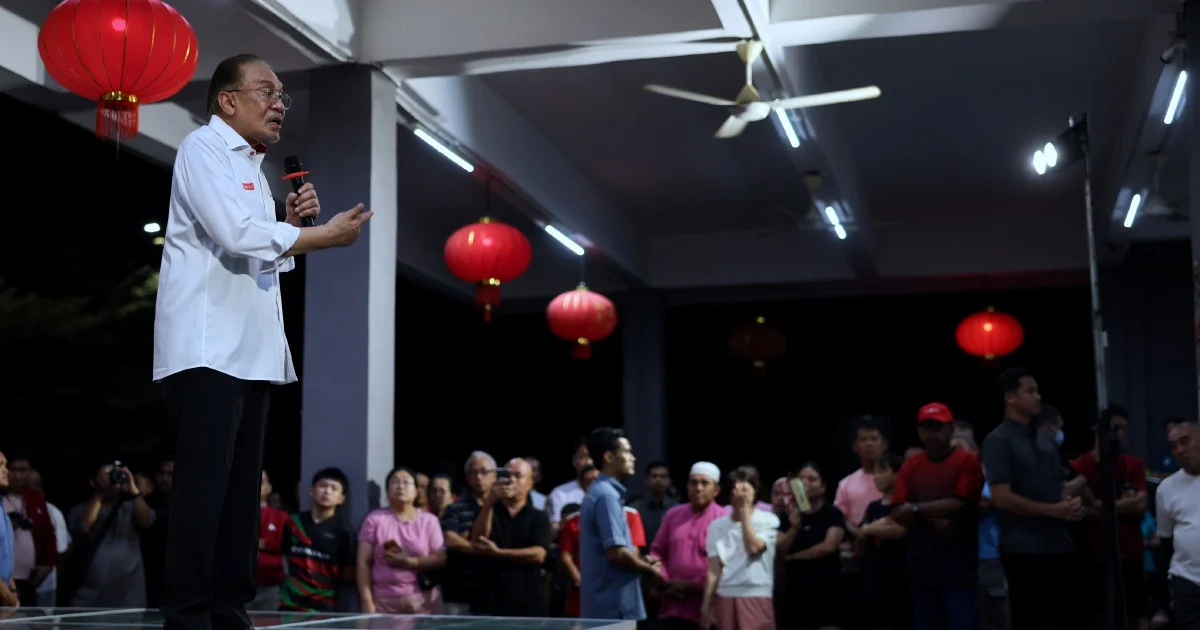
Prime Minister Datuk Seri Anwar Ibrahim has committed to bringing Malaysia's durian price crisis to the negotiating table during his forthcoming trip to China, pledging to engage Chinese Premier Li Qiang on strategies to revive flagging sales and support the country's beleaguered fruit producers. The commitment, made during his visit to Tangkak, signals the government's recognition that the current oversupply situation demands urgent diplomatic intervention at the highest levels, particularly with Malaysia's largest trading partner in Southeast Asia.
The collapse in durian prices has created substantial hardship across Malaysia's major growing regions, where farmers face mounting losses as the market becomes saturated with domestic supply. The glut, which has accumulated throughout the current season, has forced many smallholder and commercial producers to operate at a significant loss, threatening both their livelihoods and the viability of Malaysia's multi-billion ringgit durian export sector. This pressure has intensified calls for government action beyond domestic market management, pointing to the necessity of aggressive external demand stimulation.
China remains the critical market for Malaysian durian exports, having emerged as the dominant buyer of the nation's premium fruit over the past decade. The Chinese market's appetite for high-quality durian has historically provided a crucial outlet for Malaysian growers, particularly for premium varieties that command superior prices. However, recent market dynamics, including increased competition from Thai and Vietnamese producers and shifting consumer preferences, have eroded Malaysia's traditional market share, leaving exporters struggling to move inventory at profitable price points.
Anwar's planned discussions with Premier Li Qiang represent an attempt to leverage bilateral relations to secure commitments that could facilitate improved market access and potentially increased purchasing volumes from Chinese distributors and retailers. Such high-level engagement sends a clear signal of Malaysia's commitment to the durian trade relationship and positions the government as an active player in addressing supply chain challenges. The timing of the initiative, coming as the crisis reaches critical levels, underscores the urgency with which the administration views the situation.
The durian industry's struggles extend beyond immediate price concerns, reflecting deeper structural challenges facing Malaysian agriculture. As a premium export commodity that generates substantial foreign exchange earnings, durian's performance carries significance beyond the farming community, affecting rural economies and contributing to employment across supply chains ranging from harvesting to logistics and export services. Sustained weakness in durian revenues therefore impacts broader economic performance in key agricultural regions.
Previous market interventions have proven limited in their effectiveness, demonstrating that supply management alone cannot resolve the current imbalance between domestic production and available demand. The government's pivot toward diplomatic engagement suggests recognition that solutions must involve expanding actual buyer commitment rather than simply managing the existing market. This represents a shift toward treating the durian challenge as a trade facilitation problem rather than purely as a domestic agricultural matter.
China's role as a buyer extends beyond simple commercial transactions, given the strategic importance Beijing places on agricultural trade relationships and food security infrastructure. Discussions with Premier Li Qiang could potentially address regulatory barriers, logistics coordination, or promotional initiatives that might accelerate Chinese market absorption of Malaysian durian supplies. The bilateral relationship provides potential leverage for creative solutions that go beyond traditional price negotiations.
The durian sector also faces emerging competition that contextualizes Malaysia's urgency in securing Chinese market support. Thailand and Vietnam have both invested significantly in durian production and marketing, developing established distribution networks in China that rival Malaysian exporters. Without deliberate effort to reinforce Malaysia's market position and secure customer loyalty, the country risks losing ground to competitors who may offer lower prices, faster logistics, or aggressive promotional campaigns.
For Malaysian consumers and the broader agricultural community, the success of Anwar's diplomatic mission carries real implications. A breakthrough in Chinese purchasing commitments could stabilize prices within weeks, providing relief to growers and potentially encouraging continued investment in durian production and processing infrastructure. Conversely, failure to secure meaningful commitments could force painful market adjustments, including reduced planting and potential consolidation within the industry.
The government's multi-pronged approach, combining diplomatic engagement with domestic policy adjustments, suggests awareness that Malaysia's durian recovery requires both external demand stimulus and internal industry resilience. By engaging at the premier level, the administration is signaling that durian matters to Malaysia's national development agenda and merits attention comparable to other significant trade sectors. Whether such high-level attention translates into concrete commercial outcomes remains uncertain, but the effort demonstrates commitment to an industry that rural Malaysia depends upon significantly.
The Beijing visit thus assumes importance beyond standard bilateral courtesy, becoming instead a critical juncture for addressing an agricultural crisis with real human consequences for farming communities nationwide. The conversations Anwar pursues with Premier Li Qiang will likely shape market dynamics for Malaysian durian over coming months, with implications extending through supply chains and rural economies across the country's major growing regions.

