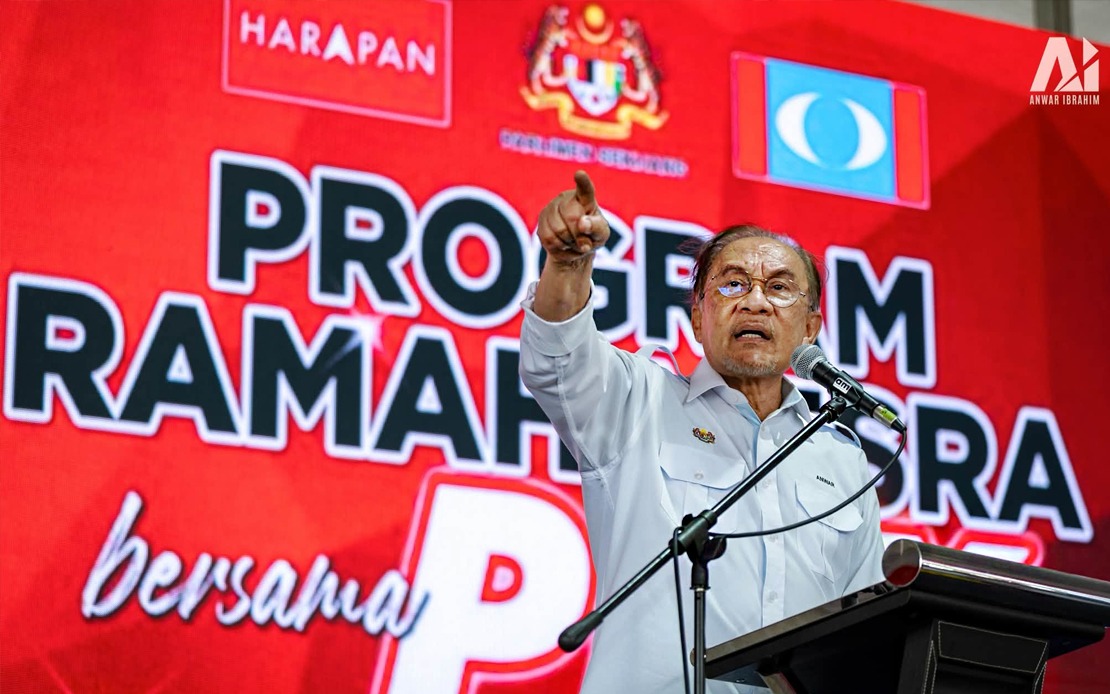
Prime Minister Datuk Seri Anwar Ibrahim has committed to leveraging Malaysia's diplomatic relationship with China to tackle a deepening crisis facing the nation's durian farmers, whose incomes have been eroded by a sharp price decline following simultaneous peak harvesting across Peninsular Malaysia. Speaking at a meet-the-people session in the Gambir state constituency in Tangkak on July 5, Anwar signalled that trade negotiations with China would top his agenda during an upcoming visit to Beijing next month, with the explicit goal of securing greater market access for Malaysian durian and stabilizing prices that have left growers struggling.
The timing of the announcement reflects growing pressure on the government to respond to the farm-gate crisis affecting one of Malaysia's most valuable export commodities. When the durian harvest peaks simultaneously across multiple states, the resulting surge in supply without corresponding international demand creates a buyer's market that devastates smallholder and medium-scale producers who lack storage capacity or direct export channels. This structural vulnerability has become a recurring problem as Malaysia's durian industry has expanded, with farmers bearing the full brunt of price volatility while middlemen and exporters capture what margins remain.
Anwar's approach hinges on deepening commercial ties with China, which represents the world's largest consumer market for premium durian and has become increasingly important to Malaysian exports in recent years. China's appetite for the fruit has grown exponentially as rising incomes and changing consumer preferences in major cities have elevated durian from a regional delicacy to a luxury good commanding high retail prices. However, Chinese regulatory standards for imported agricultural products remain stringent, and market access is often contingent on bilateral diplomatic relationships and official trade agreements rather than pure commercial logic.
The Prime Minister acknowledged this complexity during his remarks, noting that China maintains exacting quality and safety requirements that Malaysian suppliers must navigate. Despite these hurdles, Anwar expressed confidence in his personal relationship with Chinese Premier Li Qiang, framing the upcoming talks as an opportunity to persuade Beijing to expand quota allocations or streamline import procedures for Malaysian durian. The bilateral dimension of agricultural trade demonstrates how geopolitical relationships and economic interests intersect, particularly in Southeast Asia where China's purchasing power represents both opportunity and leverage.
The Gambir constituency address also highlighted the broader political context within which this issue resonates. The event brought together Pakatan Harapan leaders including Johor Election director Datuk Seri Amirudin Shari, Deputy Natural Resources and Environmental Sustainability Minister Syed Ibrahim Syed Noh, and the party's candidate for the Gambir state seat. For a government that has positioned itself as farmer-friendly and responsive to rural constituencies, the durian crisis represents a test of its ability to deliver tangible support during agricultural downturns—a political vulnerability that opposition parties would readily exploit.
Beyond the durian issue, Anwar used the platform to defend the government's management of fuel prices, a touchstone issue for Malaysian consumers and a barometer of public confidence in economic stewardship. He emphasized that Malaysia maintains some of the world's lowest fuel prices despite global market pressures stemming from Middle East geopolitical instability and supply disruptions. The Finance Minister stressed that maintaining below-market fuel pricing requires deliberate policy intervention and cabinet-level decision-making, framing price restraint as a political choice rather than an inevitable market outcome.
Current retail fuel prices set from July 1 to 8 stand at RM3.37 per litre for RON95 and RM3.97 per litre for diesel, but consumers benefit from subsidised rates of RM1.99 per litre for RON95 and RM2.10 per litre for diesel through the BUDI MADANI initiative. This substantial gap between retail and subsidised prices reflects the government's fiscal commitment to shielding household budgets from energy price shocks, a policy that has significant budgetary implications as crude oil markets respond to supply constraints and geopolitical tensions. The Prime Minister's insistence that Malaysia uniquely resists fuel price increases—even in defiance of orthodox economic principles—reflects an understanding that fuel subsidies serve both material and political functions in the Malaysian economy.
The dual focus on agricultural support and energy price management underscores how governments navigate competing demands between sectoral interests and broader macroeconomic stability. For farmers like those facing durian price collapses, policy intervention through market access and trade negotiations offers a medium-term solution by expanding outlets for surplus production. For consumers more broadly, fuel price controls provide immediate relief but raise questions about long-term fiscal sustainability and the efficiency of subsidy mechanisms. Anwar's willingness to engage both issues demonstrates how Malaysian political leadership attempts to balance rural and urban constituencies, even when interventions carry significant economic costs.
The durian price crisis also reflects structural challenges within Malaysian agriculture that extend beyond commodity cycles. The industry's concentration in certain states, the limited availability of post-harvest infrastructure, and smallholder farmers' weak bargaining position relative to export companies all contribute to income vulnerability. While securing additional Chinese market access would provide relief in the current cycle, addressing systemic issues would require longer-term investments in cold chain infrastructure, farmer cooperatives, and value-chain upgrades that transform durian production from a commodity competition into a branded, quality-differentiated export sector.
Anwar's diplomatic initiative signals recognition that Malaysia's agricultural prosperity increasingly depends on trade relationships and market access agreements rather than production volume alone. The commitment to raise durian with Premier Li Qiang during next month's visit represents a concrete undertaking that will be scrutinized by farmers and agricultural interests. Success would validate the government's claim that high-level diplomatic relationships translate into tangible economic benefits for local producers, while failure would reinforce perceptions that political promises lack follow-through.

